

Why Order Actually Matters
Skincare products are formulated assuming they'll contact skin in a particular way. Molecular size, pH, and base composition all interact - which is why layering order isn't just convention, it's functional. A serum applied over a heavy cream, for instance, can't penetrate through that occlusive barrier to reach where it's meant to work.
The guiding principle is straightforward: go from thinnest to thickest. Water-based, lightweight formulas absorb first; richer creams and occlusives seal everything in last. This sequence allows each layer to interact with the skin rather than sitting on top of the previous product.
For a deeper look at how individual ingredients function within this sequence, see our practical reference on active ingredients. And if your routine has grown unwieldy, our guide on signs you're overcomplicating your routine can help you cut back strategically.
Gentle Cleanser
Removes surface debris and excess oil so subsequent products can absorb properly.
Toner or Essence
Rebalances skin pH and primes the surface to improve absorption of the next layer.
Targeted Serum
Delivers concentrated active ingredients (e.g., vitamin C, hyaluronic acid) to address specific concerns.
Moisturizer
Seals in prior layers and provides hydration or occlusivity to prevent water loss.
Broad-spectrum SPF (morning only)
Protects skin from UV damage - always the final step in any morning routine.
How to Layer Your Routine Step by Step
The steps below apply to both morning and evening routines, with minor differences noted. Morning routines always end with SPF; evening routines may include richer repair-focused products like retinol or barrier creams instead.
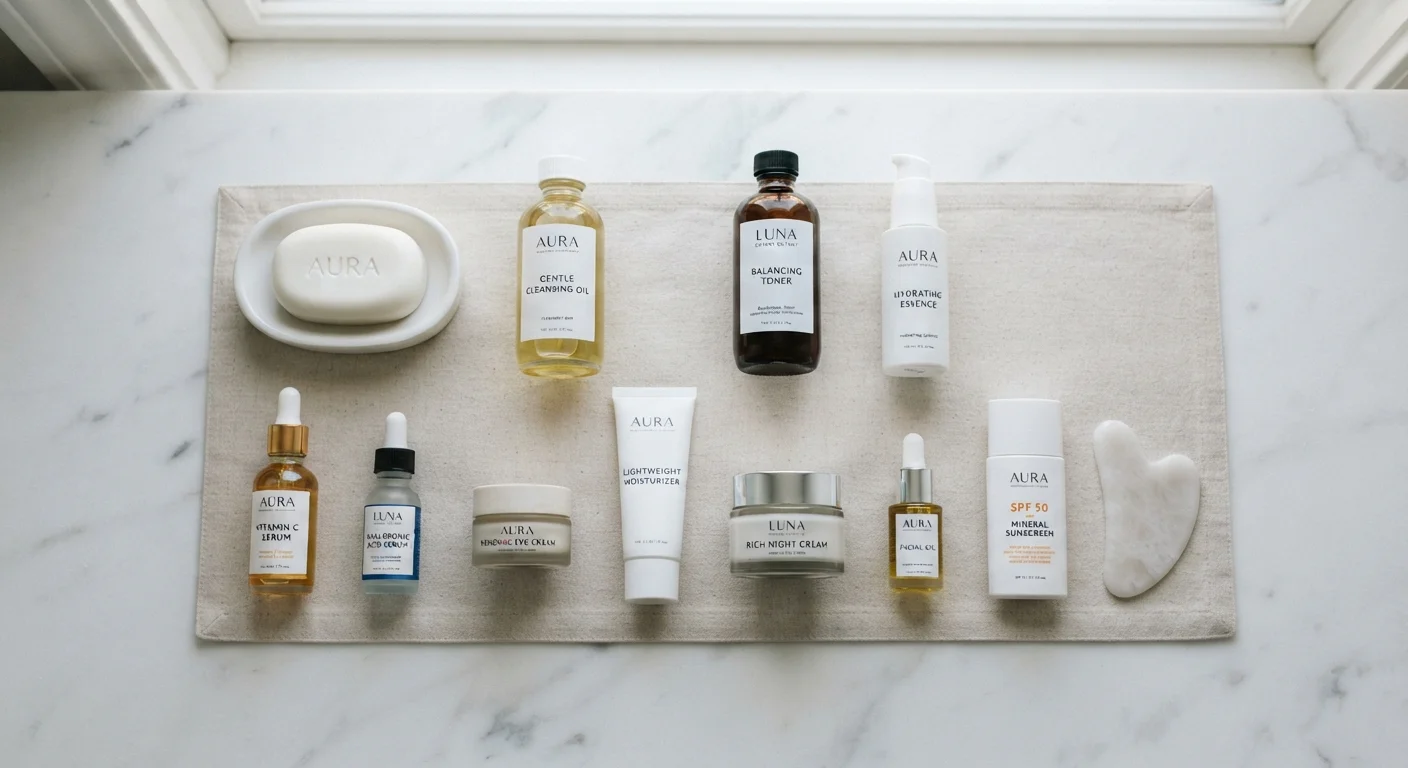
What you will need
Cleanse with lukewarm water
Start with a gentle cleanser suited to your skin type. Apply to damp skin, massage for 30-60 seconds, then rinse with lukewarm water - not hot, which can strip the skin barrier. Pat dry with a clean towel rather than rubbing.
Apply toner or essence (if using)
While skin is still slightly damp, apply toner or essence using clean fingertips or a cotton pad. These thin, water-based products restore pH balance and create a receptive surface for the layers that follow. Allow 20-30 seconds to settle before proceeding.
Apply any targeted serums
Serums are the workhorse of most routines - concentrated formulas designed to address specific concerns like hyperpigmentation, fine lines, or dehydration. Apply a few drops to fingertips and press gently into skin. If you use more than one serum, apply the thinner, more watery one first, followed by thicker gel or oil-based serums.
Apply eye cream (if using)
The under-eye area has thinner skin than the rest of the face and benefits from targeted formulations. Use your ring finger to gently tap a small amount along the orbital bone - not directly on the lash line. Apply before moisturizer so the thicker cream doesn't block absorption.
Apply moisturizer
Moisturizer locks in all prior layers and provides a barrier to reduce transepidermal water loss (TEWL - the natural evaporation of moisture through the skin). Use an amount roughly the size of a nickel, warmed briefly between fingertips, and press into skin with upward strokes. Allow 30-60 seconds before the final step.
Apply SPF (morning routine only)
Sunscreen is the final step, every morning, regardless of weather. Apply a generous, even layer across the full face and neck. Most dermatologists recommend approximately a quarter teaspoon for the face alone. Allow it to set for 1-2 minutes before applying makeup, if applicable.
Sunscreen Is Never Optional in the Morning
Regardless of how many steps are in your routine, SPF is the final morning layer and should not be skipped or applied mid-sequence. Applying other products over sunscreen can physically dilute the protective film and reduce its effectiveness. If you're indoors all day, SPF is still recommended for incidental UV exposure from windows.
Don't Mix Incompatible Actives in One Layer
Certain active ingredients can destabilize or irritate when applied directly on top of each other - for example, vitamin C (ascorbic acid) and niacinamide at high concentrations, or retinol and exfoliating acids in the same step. If you use multiple actives, consider separating them into morning and evening routines. When in doubt, consult a dermatologist before combining strong ingredients.
Keep Your Routine Sustainable
A four-step routine you actually complete every day will outperform an eight-step routine you skip half the time. If you're pressed for time in the morning, see our 5-minute morning routine guide for a streamlined approach that still delivers results.
If you're building a routine tailored to your specific skin type, our overview of how routines differ by skin type is a useful companion. For broader skincare fundamentals, the Beauty Basics skincare hub covers essential topics in depth.
The content on this site is for informational purposes only and is not a substitute for professional advice. Always consult a qualified professional for guidance specific to your situation.