

What Speed Limits Actually Tell You — and What They Don't
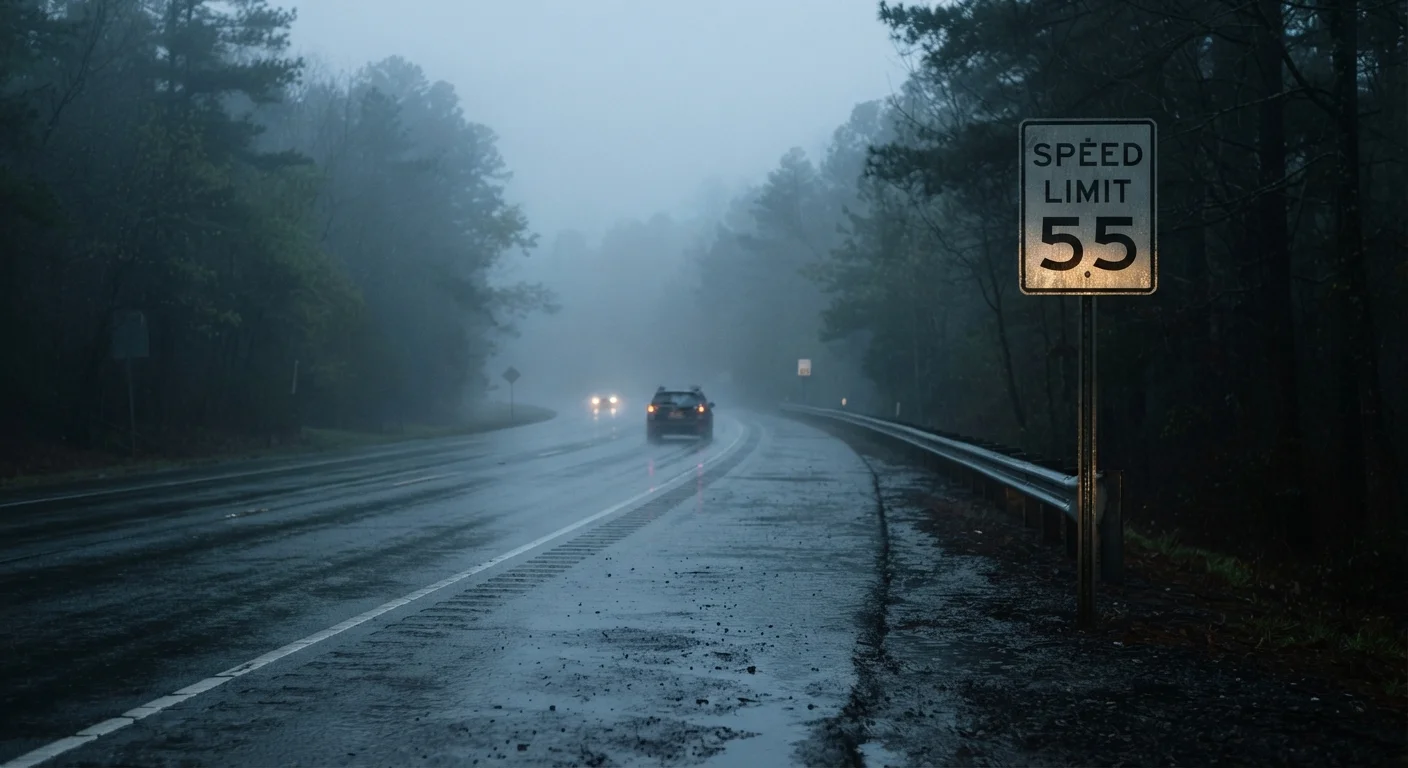
A speed limit sign communicates one narrow piece of information: the maximum speed permitted by law under favorable conditions on that road segment. It does not tell you the appropriate speed for rain, nighttime driving, heavy traffic, construction detours, or any other variable that may be present when you pass it.
Traffic engineers establish posted limits through studies examining road geometry, sight-line distances, lane widths, pedestrian activity, and historical crash data — all assessed under normal, favorable conditions. When those baseline conditions change, the limit becomes a ceiling you may need to stay well beneath, not a target to reach.
Speed Limit ≠ Safe Speed
Traffic laws in every U.S. state include a 'basic speed law' requiring drivers to travel at a speed that is reasonable and prudent for existing conditions — regardless of the posted limit. Driving at the posted limit in fog, ice, or heavy rain can result in a traffic citation or liability in a collision even if you technically obeyed the sign. When in doubt, slow down.
Understanding this distinction is the foundation of what traffic safety professionals call situational speed management — continuously adjusting your speed to match the total environment around you, not the number on a sign.
Common Myths That Put Drivers at Risk
Several deeply held beliefs about speed limits contribute to preventable crashes every year. The myth-and-fact pairs below address the most persistent of these misconceptions with the evidence needed to correct them.
Myth
As long as I'm driving at or below the speed limit, I'm driving safely and legally.
Fact
Every U.S. state has a basic speed law requiring drivers to travel at a speed reasonable for actual conditions, regardless of the posted limit.
Posted speed limits are set by traffic engineers for ideal daytime conditions on dry pavement with normal traffic flow. They represent a legal ceiling, not an endorsement that a given speed is appropriate at all times. Driving at 65 mph on a dry interstate on a clear afternoon may be perfectly reasonable. Driving that same 65 mph in heavy rain, construction zones, or reduced-visibility conditions may be unlawful — and dangerous — even though you haven't technically exceeded the sign.
Officers and courts routinely cite drivers for unsafe speed even when driving at or below the posted limit, applying the basic speed law standard that exists in all 50 states.
Myth
If traffic around me is moving at the speed limit, I should match that speed regardless of conditions.
Fact
Group behavior does not create a safety standard. Following a crowd traveling too fast for conditions multiplies — not reduces — your risk.
Traffic psychology produces a well-documented phenomenon called 'velocity normalization,' where drivers unconsciously match surrounding speeds and perceive that pace as safe. In deteriorating weather or reduced visibility, this can be dangerous. A chain of vehicles all moving at highway speeds in fog share the same compressed reaction time and inadequate stopping distances.
Safe driving requires independent judgment. If conditions warrant a lower speed, slow down and use your hazard lights to signal awareness to following drivers — even if others around you haven't adjusted.
Myth
Speed limits already account for wet or slippery roads, so I don't need to slow down further.
Fact
Speed limits are calibrated for dry pavement. Wet or icy roads can more than double stopping distances, requiring proportionally lower speeds.
Braking distance increases dramatically on compromised surfaces. On dry asphalt, a vehicle traveling 60 mph requires roughly 180 feet to stop after braking begins. On wet pavement, that distance can grow by 50% or more. On ice, stopping distances can be four to ten times longer than on dry road, depending on temperature and tire condition.
Speed limits do not change to reflect current weather. The responsibility for adapting to surface conditions rests entirely with the driver. For a deeper look at how to calibrate speed in rain, fog, and snow, see our guide on adapting to adverse weather conditions.
Myth
Driving slowly in traffic is always safer, so the slower the better.
Fact
Driving significantly below the flow of traffic introduces its own crash risk by creating speed differentials that other drivers cannot anticipate.
While slowing for conditions is correct, impeding traffic flow without cause creates rear-end collision risk and forces other drivers to make sudden lane changes. Many states have minimum speed laws or 'impeding traffic' statutes for exactly this reason. The goal is a speed that reflects actual road conditions — not the absolute minimum possible. In heavy urban traffic, urban road hazards present unique challenges that require both caution and predictable behavior within the traffic stream.
Myth
School zone and work zone speed limits only matter when children or workers are visibly present.
Fact
Reduced speed limits in these zones are legally enforceable during designated hours, regardless of whether anyone is visibly present at that moment.
School zone limits are typically active during specified morning and afternoon windows — and in some jurisdictions, during all school hours — whether or not you can see students nearby. Work zone limits apply whenever posted, even outside active construction hours, because hazards like uneven pavement, missing guardrails, or altered lane configurations remain present. Fines in these zones are often doubled under state law. Treat the sign as the authority, not your visual assessment of who is around.
~29%
Of fatal crashes involving speeding
According to the National Highway Traffic Safety Administration (NHTSA), speeding — including speed inappropriate for conditions — is a factor in roughly 29% of all traffic fatalities in recent reporting years.
4–10x
Stopping distance increase on ice vs. dry road
Traffic safety researchers and driver education authorities consistently cite ice as multiplying stopping distances four to ten times compared to dry pavement, depending on temperature and tire type.
Practical Factors That Should Govern Your Speed
When approaching any driving situation, consider the full picture rather than just the posted sign:
- Surface condition: Wet, icy, graveled, or debris-strewn pavement all extend stopping distance. Reduce speed proportionally.
- Visibility: Fog, smoke, glare, and darkness reduce the distance over which you can identify and respond to hazards. Your speed should never outrun your ability to stop within the visible road ahead.
- Traffic density: Dense traffic compresses the time available to react to sudden stops. Increase following distance and reduce speed accordingly.
- Vehicle load: A fully loaded vehicle — whether passengers, cargo, or a trailer — has a longer stopping distance and different handling characteristics than an empty one.
- Fatigue or distraction: Reaction time degrades with fatigue. If alertness is reduced, speed should be too.
Reduced Visibility Demands Immediate Speed Reduction
When visibility drops below your stopping distance — such as in dense fog or heavy snow — you are effectively driving blind. If you cannot stop within the distance you can see ahead, you are traveling too fast for conditions. This is true even at 25 mph. Reduce speed until your sight line comfortably exceeds your estimated stopping distance.
The safest drivers treat the posted speed limit as the upper boundary of a range — and select their actual speed from within that range based on current, real-world conditions.
The content on this site is for informational purposes only and is not a substitute for professional advice. Always consult a qualified professional for guidance specific to your situation.