

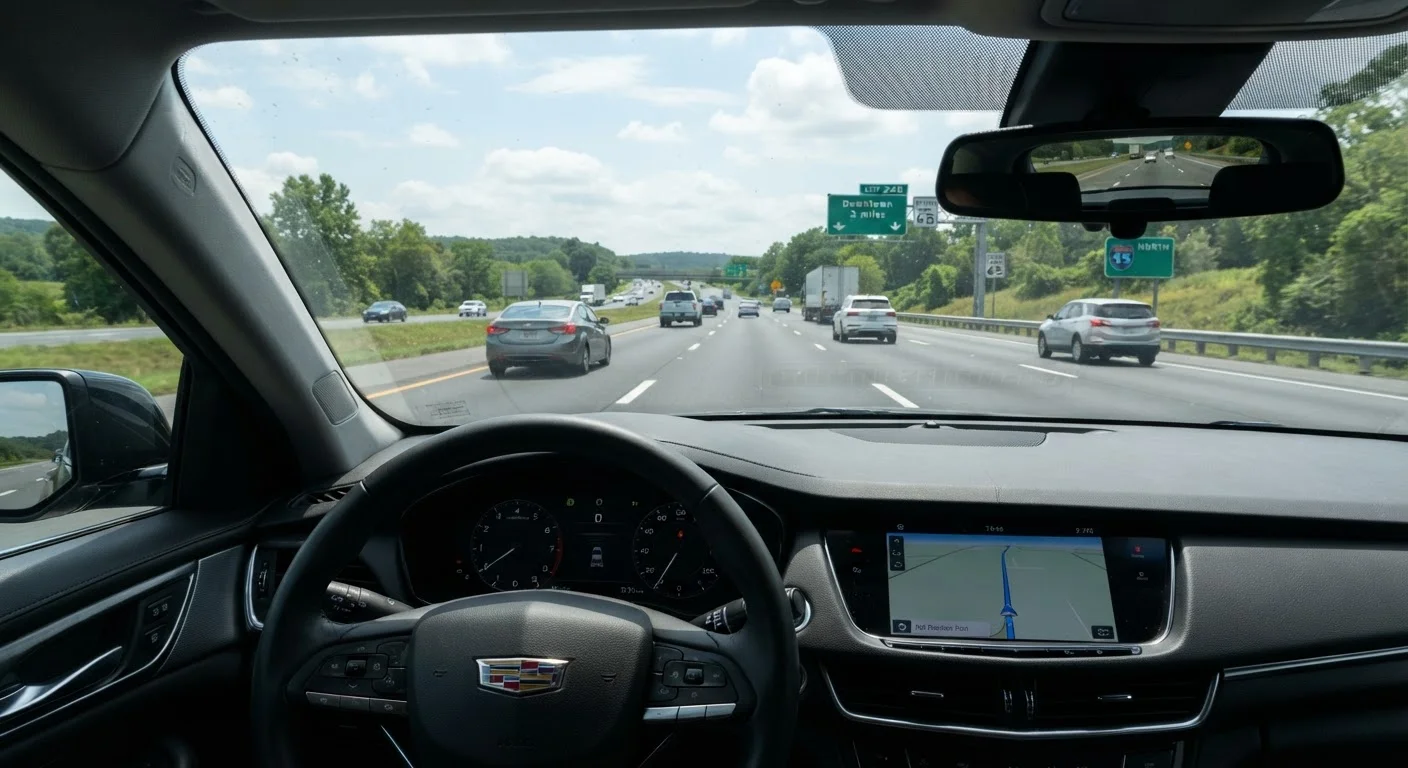
Why Time, Not Distance, Is the Right Measure
Most drivers know they're supposed to leave space ahead — but the two-second rule specifically uses time rather than car lengths or feet. That distinction matters more than it might seem.
At 30 mph, two seconds of travel equals about 88 feet. At 65 mph, it's nearly 200 feet. A fixed distance like "one car length" would be wildly inadequate at speed. By anchoring the rule to time, drivers automatically maintain a gap that scales with how fast they're going — no mental math required.
Reaction time is the other factor at work here. Research consistently suggests that average driver reaction time — from perceiving a hazard to applying the brakes — falls in the range of 1.5 seconds under normal conditions. Add the physical braking distance on top of that, and a two-second gap becomes the practical minimum just to have a fighting chance of stopping in time.
Make a Habit Before You Need It
Practice counting your two-second gap during routine, low-pressure drives — commutes, errands, or quiet roads. Building the habit in easy conditions means it will be available automatically when traffic, weather, or stress makes driving more demanding.
How to Apply It on the Road
Applying the two-second rule is straightforward once it becomes habit:
- Choose a stationary reference point ahead — a road sign, an overpass, a painted line, or a shadow.
- The moment the vehicle in front passes that marker, begin counting: "one-one-thousand, two-one-thousand."
- If your front bumper hasn't reached the marker by the time you finish counting, your gap is sufficient.
- If you arrive sooner, ease off the accelerator — don't brake sharply — until the gap opens back up.
Practice this in light traffic first, where you can concentrate without pressure. Over time it becomes intuitive, and you'll start sensing safe following gaps without actively counting every time.
~29%
Of all U.S. crashes that are rear-end collisions
According to the National Highway Traffic Safety Administration, rear-end crashes are one of the most frequently occurring crash types on American roads.
1.5 sec
Average driver perception-reaction time
Transportation safety research commonly cites 1.5 seconds as a baseline perception-reaction time under normal, alert driving conditions — accounting for much of the two-second minimum.
When Two Seconds Isn't Enough
The two-second rule was designed for dry pavement, good visibility, and alert drivers. Real conditions frequently fall outside those parameters, and the rule needs to be adjusted accordingly.
Weather and Road Surface
Rain reduces tire traction and increases stopping distance significantly. Ice can multiply stopping distance by four to ten times compared to dry asphalt. In these conditions, safety organizations broadly recommend doubling the gap to at least four seconds — and six or more on ice.
Large or Heavy Vehicles
If you're driving a truck, van, or vehicle towing a trailer, your own stopping distance is longer — extend your following gap to account for the extra weight. Conversely, if you're following a large commercial truck, increase your gap to maintain visibility around it and give yourself more time to react to what the truck driver sees first.
Driver Fatigue or Distraction
Tired or distracted drivers have measurably slower reaction times. If you're fatigued, the smart adjustment isn't just increasing your following distance — it's taking a break. But while still on the road, a larger gap provides some additional margin.
Motorcyclists Need Extra Consideration
When following a motorcycle, the standard two-second rule still applies — but many experienced riders and safety instructors recommend three to four seconds. Motorcycles can stop faster than cars in some conditions, and riders are far more vulnerable to a rear-end impact. Giving extra space is both a safety measure and a show of road courtesy.
The Real Cost of Tailgating
Rear-end collisions are among the most common crash types in the United States, and following too closely is a primary contributing factor. Beyond the immediate risk of collision, tailgating creates a chain reaction of braking through traffic — the root cause of many highway slowdowns that seem to appear from nowhere.
Giving the vehicle ahead adequate space isn't just a safety courtesy. It smooths traffic flow, reduces fuel consumption through less aggressive acceleration and braking, and keeps you out of legal liability if the driver in front stops suddenly. The two-second rule costs nothing and requires no equipment — just awareness and the willingness to ease off the gas.
This article is for general informational purposes only. Always follow the traffic laws and guidelines applicable in your state or jurisdiction.
Frequently Asked Questions
Watch for the vehicle ahead to pass a fixed roadside marker — a sign, shadow line, or overpass edge. Then count 'one-one-thousand, two-one-thousand.' If your front bumper reaches that marker before you finish counting, you need to ease off and create more space.
Two seconds is considered the minimum under ideal conditions. At freeway speeds of 65–70 mph, a two-second gap translates to roughly 190–200 feet. Many safety professionals recommend three seconds as a more comfortable baseline on highways.
Increase your gap to at least four seconds in rain, snow, ice, or fog. Also give more space when following motorcycles, large trucks, or vehicles that appear to be driving erratically. Heavy loads and downhill grades also extend stopping distance significantly.
Yes, though urban traffic often makes it harder to maintain. At lower city speeds the physical gap will be shorter, but the time buffer still matters — intersections, pedestrians, and sudden stops make reaction time just as critical in town as on the highway.
All U.S. states have laws prohibiting following too closely, though how 'too closely' is defined varies by state. Violations can result in fines, and if a rear-end collision occurs, the following driver is almost always presumed at fault.
The content on this site is for informational purposes only and is not a substitute for professional advice. Always consult a qualified professional for guidance specific to your situation.