

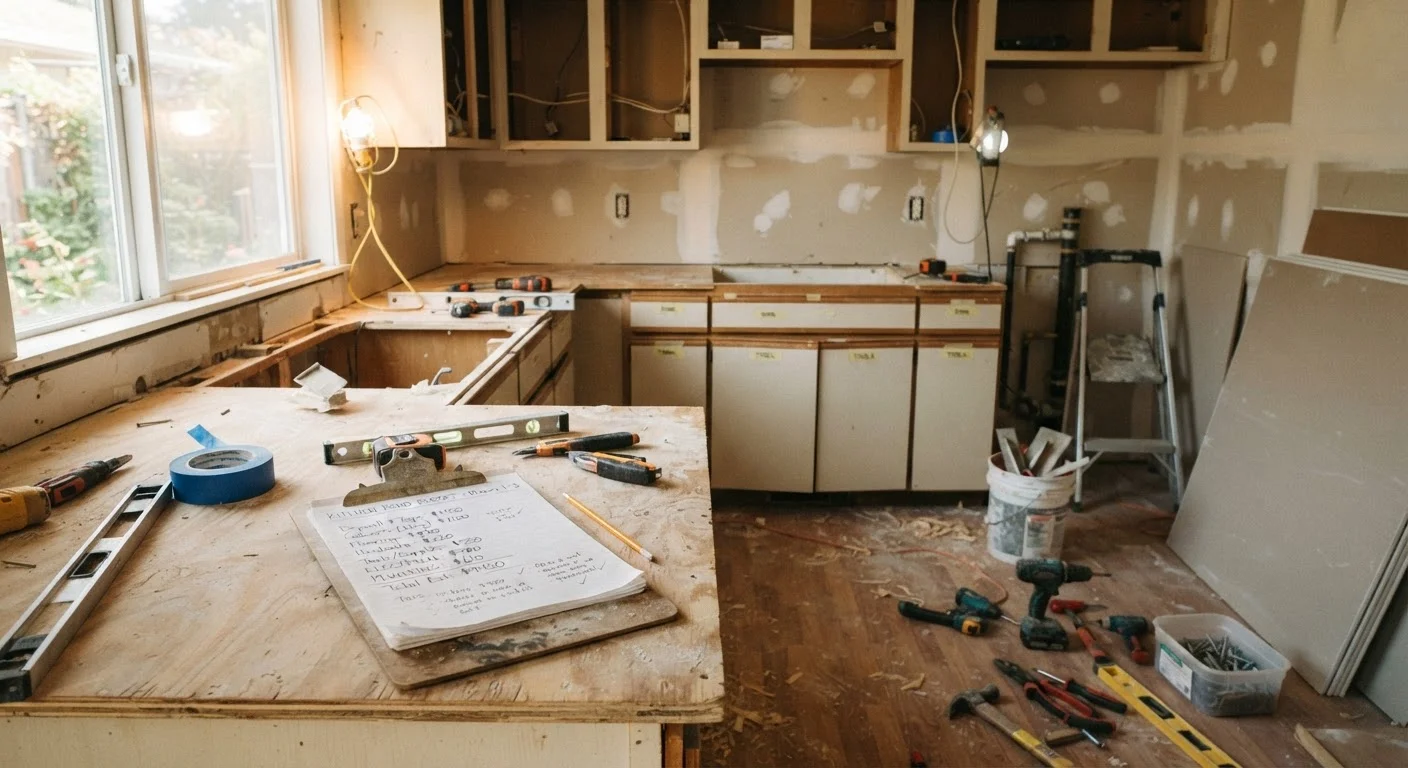
Why Renovation Costs Almost Always Run Over
Cost overruns are so common in home renovation that many contractors and project managers treat them as a baseline assumption rather than a worst-case scenario. According to general industry data, a significant majority of renovation projects exceed their initial budget — often by 20% or more. The reasons aren't mysterious, and most of them are preventable with the right habits from the start.
If you're planning your first remodel, see our guide to what to expect before a renovation starts for a broader look at sequencing and planning. For now, let's focus on the specific mistakes that turn manageable projects into financial headaches — and what to do instead.
Setting a budget without a detailed scope of work.
Why it happens: Homeowners often estimate costs based on broad project categories ('a new bathroom') rather than specific tasks, materials, and labor hours.
Forgetting permit costs, inspection fees, and disposal charges.
Why it happens: These 'soft costs' don't appear in material quotes and often aren't mentioned upfront, so they catch homeowners off guard mid-project.
Accepting a single quote and treating it as the market price.
Why it happens: Getting quotes takes time, and a first quote that sounds reasonable can feel like enough — especially when enthusiasm for the project is high.
Allowing scope creep to go untracked.
Why it happens: Small additions feel minor in the moment — swapping a fixture, adding an outlet, extending tile work. But change orders accumulate quickly and rarely come cheap.
Skipping the contingency fund entirely.
Why it happens: Homeowners often use their entire available budget on planned work, leaving no buffer because they assume the plan will hold.
Building a Budget That Actually Holds
Setting a realistic renovation budget isn't about guessing conservatively — it's about building structure around the unknowns. Every renovation has visible costs (materials, labor) and invisible ones (permits, disposal fees, lead times, temporary accommodation if work is extensive). A budget that only accounts for the visible half will fail.
80%+
Renovation projects that exceed initial budget
Industry surveys consistently find the majority of remodels run over budget, often due to inadequate contingency planning and scope changes.
15–20%
Recommended contingency buffer above estimated costs
Construction professionals and financial planners widely cite this range as the minimum safety margin for residential renovation projects.
Start by getting at least three written quotes from licensed contractors, with itemized scopes of work. Verbal estimates are nearly worthless for budgeting — they don't bind anyone to anything and often omit line items the contractor assumes you know about. A written scope protects you when disagreements arise and gives you an apples-to-apples basis for comparing bids.
Build in a contingency of at least 15–20% above your total estimated cost. This isn't pessimism — it's standard financial practice for any project involving construction. Older homes, in particular, tend to reveal surprises once walls open: outdated wiring, inadequate insulation, plumbing that doesn't meet current code. The contingency fund exists precisely for these moments.
The same discipline applies in personal finance broadly. The spending habits that make any budget work — tracking, reviewing, and adjusting regularly — translate directly to renovation project management. Check your spend against your plan weekly, not just at the end.
Permits Aren't Optional — Check Before You Build
Many homeowners skip permits to save money or time, but unpermitted work can create serious problems: difficulty selling the home, voided homeowner's insurance, and mandatory demolition of non-compliant work. Always verify which permits your project requires with your local building authority before construction begins. Requirements vary significantly by municipality and project type.
Finally, resist the urge to expand scope once work is underway. The phenomenon known as scope creep — deciding mid-project to also redo the flooring, or upgrade the fixtures — is the single most reliable way to blow a renovation budget. Decide what's in and what's out before anyone picks up a tool, and hold that line.
For room-specific guidance, our kitchen renovation myths article examines which popular upgrade assumptions actually hold up under scrutiny.
The content on this site is for informational purposes only and is not a substitute for professional advice. Always consult a qualified professional for guidance specific to your situation.