

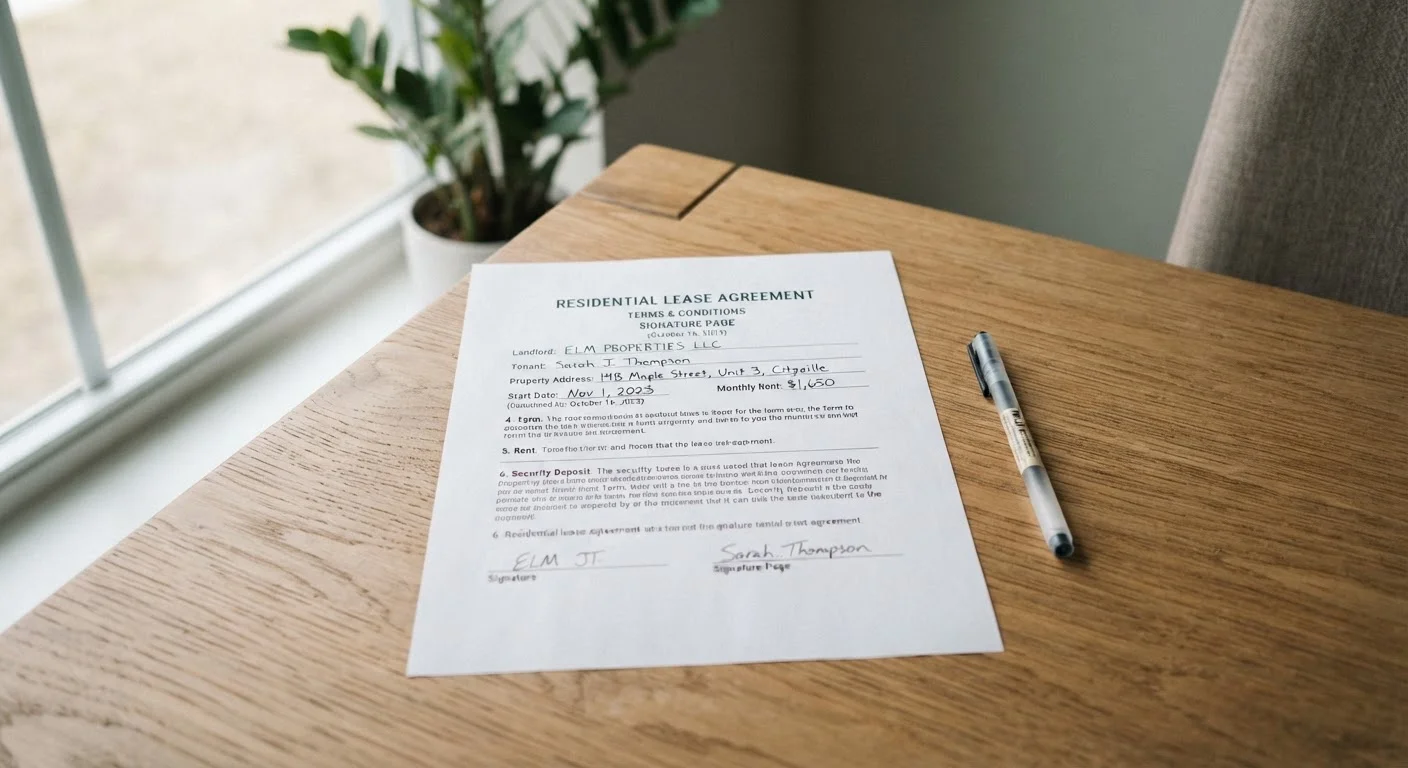
The Parties, the Property, and the Term
Every lease opens with the basics: who is renting, what is being rented, and for how long. This section identifies all tenants who will live there — and only those named on the lease have legal occupancy rights. If a roommate isn't listed, they have no formal standing and the named tenant bears full legal responsibility for them.
The lease term specifies the start and end date of your tenancy. A fixed-term lease (commonly 12 months) means you've committed to that duration. A month-to-month arrangement continues until either party gives proper notice. Pay attention to what happens at the end of your term: many leases automatically convert to month-to-month if you don't renew, while others require a formal renewal notice weeks in advance.
For a broader orientation to the renting process, what first-time renters should know before signing covers the full picture from application to move-in.
Rent, Fees, and the Security Deposit
The rent section states the monthly amount, the due date, and the grace period (if any) before late fees apply. Read the late fee clause closely: some leases charge a flat fee; others calculate a percentage of rent per day. Both are common, but the amounts vary widely.
The security deposit is where many disputes originate. The lease should specify the deposit amount, what it can be used for (typically unpaid rent and damage beyond normal wear and tear), and how long the landlord has to return it after you move out. State law sets the maximum deposit amount and return deadline in most jurisdictions — your lease cannot override these statutory limits.
42 days
Maximum security deposit return window (varies by state)
State landlord-tenant laws set specific deadlines for returning security deposits, ranging from 14 to 60 days depending on jurisdiction.
2x rent
Typical maximum security deposit cap
Many states cap security deposits at one to two months' rent, though limits differ; some states impose no cap at all.
30–60 days
Standard move-out notice requirement
Most residential leases require written notice of intent to vacate 30 to 60 days before the lease end date, even on fixed-term agreements.
Watch for additional fees buried in this section: application fees, administrative fees, amenity fees, or required renters insurance. These are separate from rent and the deposit, and each should be itemized clearly.
Maintenance, Repairs, and the Habitability Standard
This section divides responsibility: what the landlord must maintain and what falls to you. Landlords are legally required to keep a property habitable — meaning functioning heat, plumbing, and a weatherproof structure — regardless of what the lease says. No clause can strip you of that right.
Your responsibilities typically include keeping the unit clean, not damaging walls or fixtures beyond ordinary use, and reporting maintenance problems promptly. The lease may specify timelines for reporting issues and consequences for failing to do so. Some leases also include appliance responsibility — clarify whether the landlord or tenant handles repairs to dishwashers, washers, or HVAC filters.
Document Everything at Move-In
Walk through the entire unit on your first day, complete the landlord's inspection checklist in full, and photograph every room — including inside closets, appliances, and under sinks. Email the photos and checklist to the landlord the same day to create a timestamped record. This documentation is your strongest defense if deposit deductions are disputed at move-out.
The concept of normal wear and tear matters enormously here. Scuffs from furniture, minor nail holes, and faded paint typically qualify; large stains, broken fixtures, or unauthorized alterations typically do not. Understanding this distinction protects your deposit when you leave.
For a full glossary of rental terms you'll encounter throughout your tenancy, this plain-language rental terminology reference covers 40 key definitions.
Rules, Restrictions, and Addendums
Lease rules govern day-to-day living: noise policies, guest limits, parking assignments, smoking restrictions, and subletting rights. Subletting clauses are particularly important — most leases require written landlord approval before you can let someone else occupy the unit, even temporarily. Violating this can be grounds for termination.
Pet policies, when applicable, usually appear as a separate addendum rather than in the main lease body. Addendums carry identical legal weight. A pet addendum may specify allowed species, size limits, a non-refundable pet fee, or an additional monthly pet rent. Confirm whether any pet deposit is refundable or not — this distinction matters financially.
Other common addendums include move-in/move-out inspection checklists, parking agreements, and storage unit terms. Document the condition of the unit on arrival by completing the inspection checklist thoroughly and keeping a dated photo record. This single step is one of the most effective ways to protect your deposit.
Verbal promises about repairs or concessions that don't appear in the lease or its addendums are legally unenforceable. Common myths about renting addresses why verbal agreements so often fail tenants in practice.
Termination, Early Exit, and Renewal
The early termination clause defines what you owe if you need to leave before the lease ends. Some leases charge a flat fee (often one or two months' rent); others hold you liable for all remaining rent until a new tenant is found. A few states require landlords to make reasonable efforts to re-rent the unit, which can limit your exposure — but don't rely on this without checking your state's law.
Notice requirements for moving out at the natural end of the lease are just as important. Most leases require written notice — typically 30 to 60 days — even if the lease has a fixed end date. Missing this window can trigger an automatic renewal or convert you to a month-to-month tenancy at a higher rate.
Finally, scan for any landlord entry clause. State law typically requires advance notice (often 24–48 hours) before a landlord can enter for non-emergency reasons. The lease should reflect this — and if it doesn't, state law still applies. Knowing your entry rights is a basic protection worth confirming before you sign.
This article provides general educational information about rental lease agreements and is not legal advice. Lease terms and tenant protections vary by state and locality. Consult a qualified attorney or local tenant rights organization for guidance specific to your situation.
Frequently Asked Questions
No. Once both parties sign, the lease terms are locked in for its duration. A landlord can propose changes for a lease renewal, but cannot alter the current agreement unilaterally. Any mid-tenancy modifications require written consent from both parties.
The state law generally prevails. Courts routinely strike clauses that violate tenant protection statutes — for example, a clause waiving the landlord's duty to maintain habitable conditions. The rest of the lease typically remains in force.
It can be. Month-to-month tenancy offers flexibility but less stability — either party can end the arrangement with the required notice period, often 30 days. A fixed-term lease guarantees your right to stay through the end date, provided you meet your obligations.
Yes, in most cases. Addendums are additional documents that attach to the lease — covering pets, parking, storage, or other specifics. Both tenant and landlord should sign and date each one. Keep copies of every page, including all addendums.
Often, yes. Rent, move-in date, minor clauses, and sometimes pet fees are negotiable depending on the landlord and market conditions. See our <a href="/home-living/renting/negotiating-rent-whats-actually-on-the-table">guide to negotiating rent</a> for practical strategies.
Ask the landlord or property manager for a written explanation. If the clause has significant financial or legal implications, consider consulting a tenant rights organization or a local attorney before signing. Never assume ambiguous language will work in your favor.
The content on this site is for informational purposes only and is not a substitute for professional advice. Always consult a qualified professional for guidance specific to your situation.