

Why Breakage Builds Quietly
Hair breakage rarely announces itself dramatically. It accumulates - a few snapped strands here, some frizzy shorter pieces there - until one day the damage is undeniable. The problem is that most of the habits responsible feel harmless, even hygienic. Wrapping your hair tightly in a towel, pulling it back into a snug ponytail, or washing it every single morning all feel like acts of care. But repeated mechanical stress erodes the hair's outer cuticle layer over time, leaving the inner cortex exposed and prone to snapping.
Understanding why a habit causes harm makes it far easier to change. The mistakes below are some of the most common - and most overlooked - causes of chronic breakage.
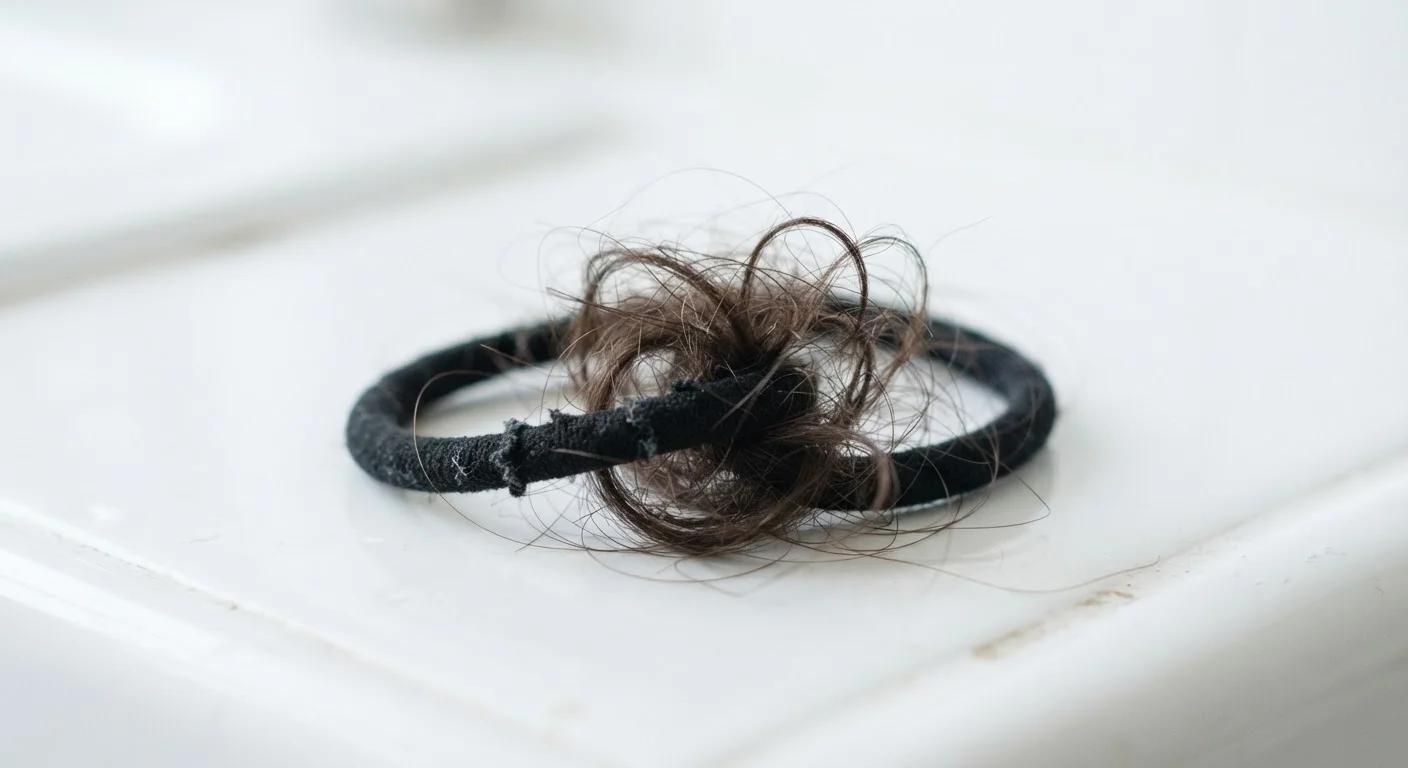
Using tight elastic hair ties pulled directly against the hair shaft.
Why it happens: Tight ponytails and buns feel secure and neat, and most people don't connect their elastic to the breakage they see at the hairline or mid-shaft.
Vigorously rubbing wet hair with a terry cloth towel to dry it faster.
Why it happens: It's a habit learned from childhood and reinforced by speed - rubbing feels efficient. What it actually does is rough up the hair's cuticle and cause significant friction-related breakage, especially when hair is at its most vulnerable wet state.
Overwashing hair, stripping natural oils that protect the strand.
Why it happens: Daily washing feels clean and fresh, and many people associate oiliness with poor hygiene rather than recognizing sebum as a protective barrier.
Detangling from the roots down rather than from the ends up.
Why it happens: Starting at the root feels logical - it's how brushing is often taught. But forcing a brush through mid-shaft tangles toward the ends creates compounding knots and significantly increases the mechanical force on each strand.
Sleeping on a rough cotton pillowcase without protecting the hair.
Why it happens: Most people simply don't connect their pillowcase to hair damage. Eight hours of friction against a coarse surface adds up to significant cuticle abrasion night after night.
Building a Routine That Protects Instead of Damages
Correcting breakage doesn't require replacing everything in your bathroom cabinet. Most of the fixes are about technique and frequency rather than products. If you're not sure where to start, our guide to building a haircare routine from scratch offers a grounded starting point without unnecessary complexity.
One area worth examining closely is moisture balance. Hair that is chronically dry is far more brittle and susceptible to mechanical breakage - meaning even gentle handling causes snapping. Protein and moisture balance plays a direct role here: too much protein without adequate moisture leaves hair stiff and snap-prone, while too little protein means strands lack the structural integrity to resist everyday stress.
Wet Hair Is Especially Vulnerable
Hair swells when it absorbs water, which temporarily weakens the bonds holding the cuticle in place. This makes aggressively brushing, towel-rubbing, or pulling wet hair far more damaging than doing the same to dry hair. Treat wet hair with noticeably more care - less tension, less friction, fewer tools - until it has at least partially dried.
If you've already made adjustments and breakage persists, it may be time to assess your routine more systematically. Signs that your current routine isn't working can help you identify what's actually driving the problem - rather than changing everything at once and not knowing what helped.
Small, consistent changes tend to outperform dramatic overhauls. Your hair grows roughly half an inch per month, which means patience is built into the process. Protect what you have, reduce unnecessary stress on the strand, and the results become visible over time.
The content on this site is for informational purposes only and is not a substitute for professional advice. Always consult a qualified professional for guidance specific to your situation.