

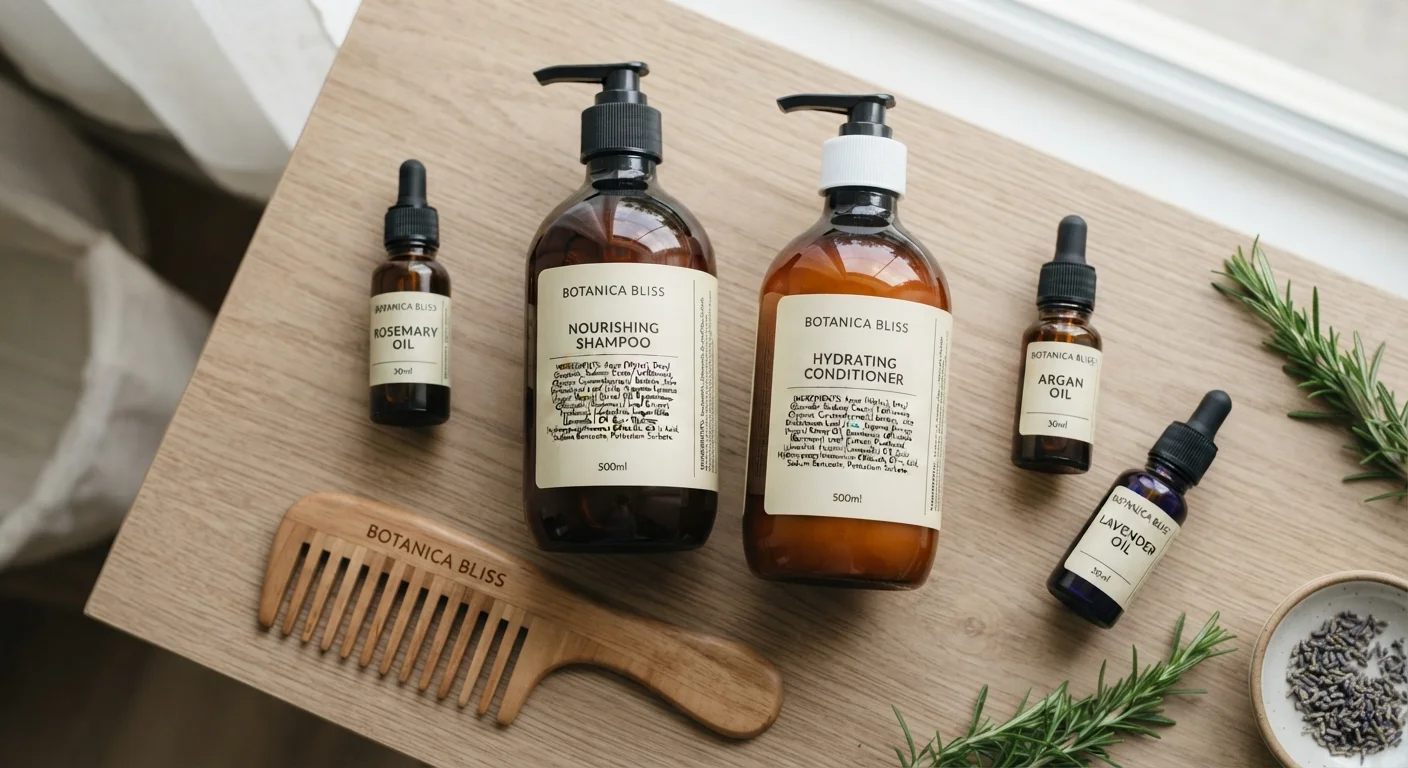
How a Shampoo Label Is Structured
Before evaluating any ingredient, it helps to understand how the list itself works. Under US FDA rules, cosmetic ingredients must appear in descending order of concentration - the ingredient present in the greatest amount comes first. This means the first five or six ingredients typically make up the bulk of the formula.
For most shampoos, the first ingredient is water, followed closely by one or more surfactants. Ingredients appearing near the bottom of the list - often fragrance components, preservatives, or specialty actives - are present in very small quantities, sometimes well under one percent. A compelling-sounding botanical extract listed nineteenth on a twenty-ingredient label contributes very little to the formula's performance.
Ingredients use INCI names, a standardized international system. These names can look intimidating but are consistent across brands, making it possible to compare formulas once you recognize key terms. If you want a broader primer on reading INCI lists, our skincare ingredient label guide covers the same framework as it applies to skincare products.
| Ingredient listing order | Descending by concentration (highest first) (FDA cosmetic labeling requirements) |
| Most common primary surfactant | Sodium laureth sulfate (SLES) (Cosmetic formulation industry standard) |
| "Sulfate-free" regulation | No legal definition; a marketing term only (FDA cosmetic claims guidance) |
| Silicone buildup concern | Primarily affects fine or low-porosity hair over repeated use (Cosmetic chemistry literature) |
| Typical shampoo water content | 60-80% of formula by weight (Standard cosmetic formulation references) |
| "Natural" label claim status | Not legally defined by FDA for cosmetics (FDA cosmetic labeling guidance) |
Surfactants and Sulfates: The Cleansing Core
Surfactants do the actual cleansing work. They have a water-attracting end and an oil-attracting end, which lets them surround oil, dirt, and product residue so it rinses away. The most widely used primary surfactants in shampoos are sulfates - specifically sodium laureth sulfate (SLES) and sodium lauryl sulfate (SLS).
SLES is milder than SLS because it undergoes a process called ethoxylation, which reduces its potential for scalp irritation. SLS is a more aggressive cleanser; it's effective but more likely to strip natural oils and cause irritation in people with sensitive scalps. Whether either is a concern for you depends on your hair type and scalp condition, not on marketing terms like "harsh" or "gentle."
"Sulfate-free" formulas substitute milder surfactants such as sodium cocoyl isethionate, cocamidopropyl betaine, or sodium lauroyl methyl isethionate. These cleanse effectively but typically produce less lather - lather is a cosmetic feature, not a measure of cleansing power. Sulfate-free formulas can be a sensible choice for color-treated, chemically processed, or dry hair, since they remove less of the hair's natural lipid layer per wash. They are not inherently superior for all hair types.
Label Claims Are Not Regulated Like Drug Claims
Words like "strengthening," "repairing," and "nourishing" have no legally standardized definition in US cosmetic regulation. The FDA requires that ingredients be accurately listed, but it does not pre-approve the efficacy claims on cosmetic packaging. Understanding the actual ingredient list is a more reliable guide than front-of-label language. For a deeper look at this, see our guide to decoding haircare label claims.
Silicones, Conditioners, and What They Coat
Many shampoos contain conditioning agents designed to offset the stripping effect of surfactants. Silicones are among the most common. They deposit a smooth film on the outer cuticle layer of the hair shaft, reducing friction during combing, adding visual shine, and improving the feel of the hair immediately after washing.
The practical concern with silicones is accumulation. Water-insoluble silicones - such as dimethicone - do not rinse away easily and can build up over time, particularly on fine or low-porosity hair. This buildup can weigh hair down, dull shine, and prevent moisture from penetrating the shaft. Water-soluble silicones and cyclomethicone evaporate more readily and tend to accumulate less. If you use silicone-heavy products consistently, periodic use of a clarifying shampoo can help remove buildup. Our guide to clarifying vs. everyday shampoos explains when and how to incorporate that step.
Other conditioning agents include cationic compounds like behentrimonium chloride, which bind electrostatically to damaged areas of the hair shaft, and humectants like glycerin and panthenol, which attract and hold moisture. These are generally well tolerated across hair types and appear in both rinse-off and leave-in formulas.
Surfactant
A compound that reduces surface tension between water and oils, allowing shampoo to lift and rinse away dirt and sebum. Most shampoos contain one primary surfactant and one or more secondary surfactants.
Sulfate
A class of strong anionic surfactants - including sodium lauryl sulfate (SLS) and sodium laureth sulfate (SLES) - commonly used in shampoo for their effective cleansing and foaming properties.
Silicone
A synthetic polymer that coats the hair shaft to reduce friction, add shine, and improve combability. Common forms include dimethicone and cyclopentasiloxane.
INCI Name
International Nomenclature of Cosmetic Ingredients - the standardized, globally recognized naming system used on product labels. Ingredients appear in descending order by concentration.
Cationic Conditioner
A positively charged conditioning agent that binds to the negatively charged surface of damaged hair, providing detangling and smoothing effects. Behentrimonium chloride is a common example.
Humectant
An ingredient that draws moisture from the environment into the hair shaft. Glycerin and panthenol are frequently used humectants in shampoo formulas.
Preservatives, Fragrance, and the Remainder of the Formula
Preservatives prevent bacterial and fungal contamination in water-based formulas - they are a functional safety necessity, not a warning sign. Common preservatives include phenoxyethanol, sodium benzoate, and potassium sorbate. Parabens (methylparaben, propylparaben) were historically standard; many brands have moved away from them, though established safety reviews have not found them harmful at concentrations used in cosmetics.
Fragrance - listed as "fragrance" or "parfum" - is a single entry that can represent dozens of undisclosed components. This is the ingredient most commonly associated with contact dermatitis and scalp sensitivity. If you have a reactive scalp, fragrance-free formulas are worth prioritizing.
Specialty ingredients like proteins (hydrolyzed keratin, silk amino acids), plant extracts, and oils often appear toward the end of the list. At low concentrations their functional impact is limited, though some - particularly small hydrolyzed proteins - may penetrate the hair shaft to a degree. For a realistic look at what oils can and cannot do at the hair shaft level, see our article on oils in haircare.
This article is for general informational purposes. It does not constitute medical or dermatological advice. If you have a scalp condition or experience persistent irritation, consult a qualified healthcare professional.
The content on this site is for informational purposes only and is not a substitute for professional advice. Always consult a qualified professional for guidance specific to your situation.