

Why Curly Hair Behaves Differently
The shape of a hair follicle determines curl pattern, and that shape has real consequences for how a strand behaves. A curved follicle produces a curved strand, and because that strand twists along its length, the outermost layer - the cuticle - doesn't lie as flat as it does on straight hair. Those slightly raised cuticle edges mean two things: moisture escapes more easily, and the surface catches more easily on neighboring strands, causing tangling.
This structural reality is why so much standard haircare advice - designed around straight or wavy hair - doesn't translate. Recommendations to lather vigorously, brush from root to tip, or towel-dry briskly can all cause friction damage that disrupts the curl's natural clumping pattern and leads to frizz.
If you're building your knowledge from the ground up, the no-overwhelm guide to starting a haircare routine is a useful companion to the curl-specific steps below.
What You'll Need Before You Start
You don't need a specialized product lineup - you need the right tools and a clear understanding of what each one does.
What you will need
Wide-tooth comb or wet detangling brush
Used to detangle hair gently while conditioner is applied, minimizing breakage on wet strands.
Sulfate-free shampoo
Cleanses the scalp without stripping the natural oils that curly hair needs to stay moisturized.
Rinse-out conditioner
Adds slip to make detangling easier and helps seal the cuticle after cleansing.
Microfiber towel or cotton T-shirt
Absorbs water without creating the friction that disrupts curl clumping and causes frizz.
Leave-in conditioner or curl gel
Applied after washing to support curl definition and reduce frizz as hair dries.
Step-by-Step: Washing Curly Hair Without the Damage
Follow these steps in order. Skipping or reordering them - particularly detangling before conditioning - is where most damage occurs.
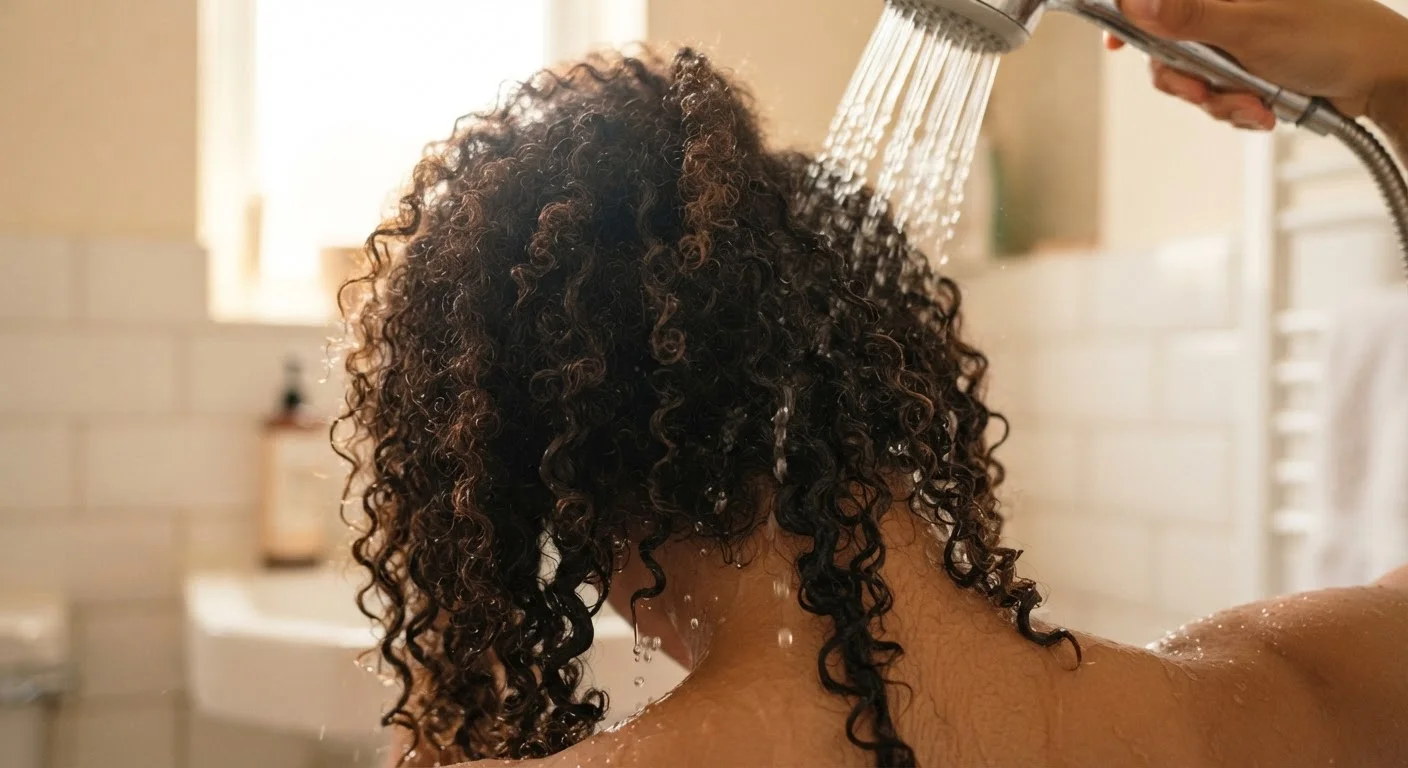
Saturate hair thoroughly with warm water
Before applying any cleanser, run water through your hair for at least 60 seconds. Curly hair resists absorbing water quickly due to its structure, and a proper soak softens the cuticle, making cleansing and detangling easier. Water temperature matters: very hot water opens the cuticle aggressively and can increase frizz.
Apply shampoo to the scalp only - not the lengths
Squirt or dispense a small amount of shampoo directly onto the scalp and use your fingertips (not fingernails) to work it in with gentle circular motions. The goal is to cleanse the scalp where oil and product collect. When you rinse, the diluted shampoo passing over the lengths is sufficient - applying concentrated shampoo to already-dry curl ends strips them unnecessarily.
Rinse completely, then apply conditioner generously
Rinse shampoo out thoroughly, then apply a generous amount of conditioner from mid-length to ends. For tighter curl patterns, working conditioner into sections helps ensure even coverage. Don't skimp - conditioner provides the slip that makes the next step possible without damage.
Detangle from ends to roots while conditioner is still in
Using a wide-tooth comb or wet detangling brush, start at the ends of your hair and work upward in small sections. Never start at the root and drag downward - this compresses tangles and creates the breakage that gets blamed on fragile curls. Hold each section near the root while you work through it to reduce tension on the scalp.
Rinse with cool water
Cool water encourages the cuticle to lie flatter, which reduces frizz and helps lock in the moisture the conditioner delivered. You don't need cold water - lukewarm to cool is sufficient. Finish rinsing until the water runs clear, but avoid over-rinsing curl-dense hair, where a trace of conditioner can remain without causing buildup.
Dry with a microfiber towel using a scrunching motion
Gently press and scrunch sections of hair upward toward the scalp with your microfiber towel or cotton T-shirt. Do not rub or wring. The scrunch motion encourages curls to clump in their natural pattern; rubbing with terrycloth roughens the cuticle and separates curl clumps, producing the frizzy triangle shape many people associate (incorrectly) with their natural texture. Air-dry or diffuse on low heat afterward. For more on how heat tools affect hair structure, see what the science says about heat styling and damage.
Consistency Beats Product Switching
Many people cycle through cleansers and conditioners looking for a formula that fixes frizz or dryness, when the real variable is technique. Give any adjusted wash method at least four to six wash cycles before evaluating results - hair and scalp need time to respond to a changed routine. See how frequency and technique interact in a hair routine for broader context on building a consistent practice.
Common Myths Worth Dropping
Myth: Curly hair should only be washed once a week. Wash frequency should match your scalp's oil production, not your curl type. If your scalp gets oily every few days, washing it on that schedule is appropriate. Infrequent washing can lead to buildup that weighs curls down and irritates the scalp.
Myth: Co-washing (conditioner-only washing) is essential for curls. Co-washing works well for tightly coiled, very dry textures but can cause buildup for others - particularly if you use styling products regularly. A sulfate-free, low-lather shampoo applied to the scalp only is a reasonable middle ground for many curl types.
Myth: You need the full Curly Girl Method to have healthy curls. The method offers useful principles - gentle cleansing, leaving some moisture in, avoiding harsh friction - but it's a framework, not a prescription. Apply what fits your hair and lifestyle. For a structured way to evaluate what's already working before making any changes, see this routine assessment checklist.
Scalp Symptoms Need Professional Attention
Persistent scalp flaking, itching, redness, or hair shedding that seems excessive are not routine wash-method problems. These can signal conditions like seborrheic dermatitis, scalp psoriasis, or other dermatological issues that require evaluation by a licensed dermatologist. This article provides general hair-washing guidance and is not a substitute for professional medical advice.
The content on this site is for informational purposes only and is not a substitute for professional advice. Always consult a qualified professional for guidance specific to your situation.