

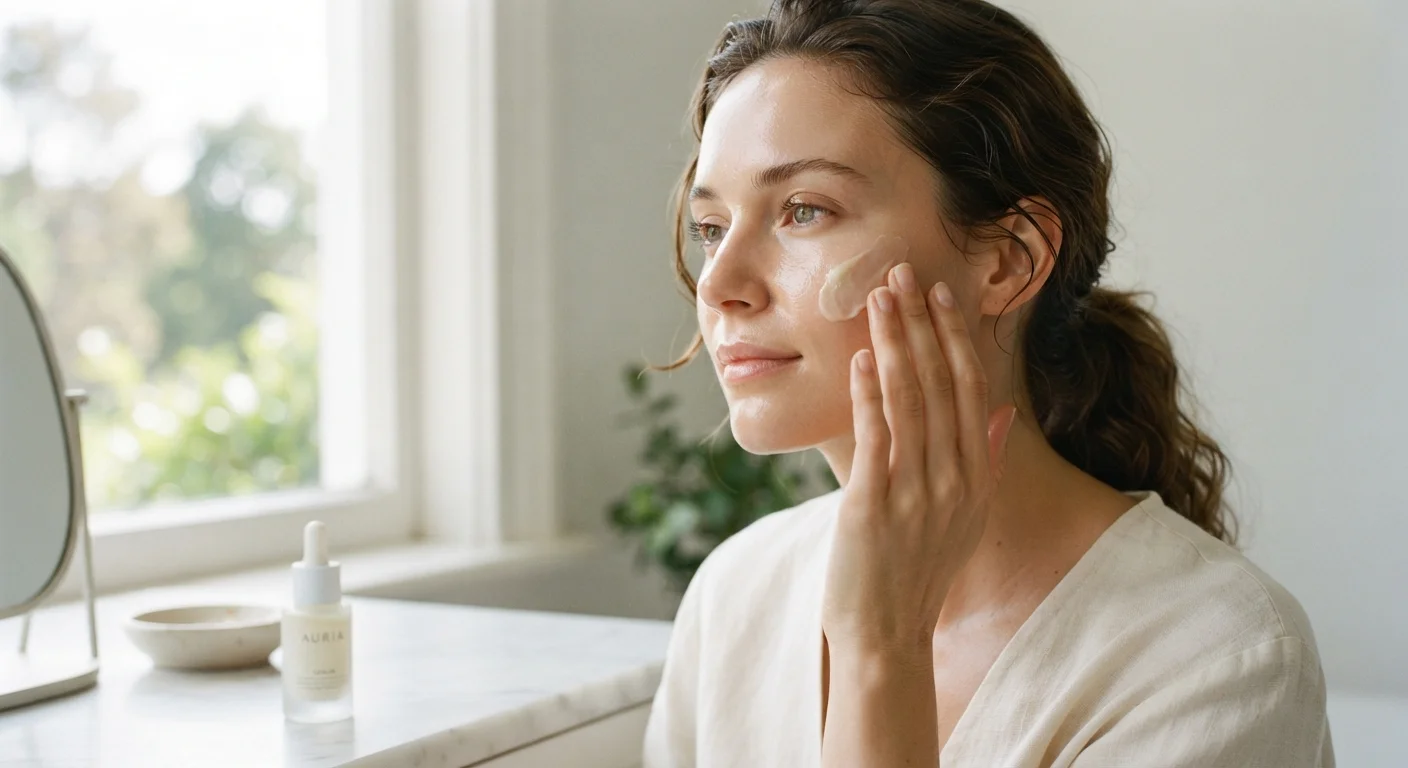
How Hormones Shape Your Skin
Skin isn't static - it's a living organ that responds to internal chemistry as much as external environment. Hormones, the body's chemical messengers, influence the speed of cell turnover, how much oil sebaceous glands produce, how well the skin retains moisture, and how quickly it heals after irritation or injury.
Estrogen, progesterone, testosterone, and cortisol all play roles. Estrogen, for instance, is associated with collagen production and moisture retention. When estrogen levels drop - as they do in perimenopause - skin can become noticeably thinner and drier. Testosterone, present in all bodies at varying levels, stimulates sebaceous glands, which is why androgen surges during puberty typically trigger increased oiliness and acne. As the concept of skin type makes clear, these qualities shift across a lifetime rather than staying fixed.
Understanding the hormonal driver behind a skin change helps you respond sensibly rather than reactively.
Hormonal Skin Changes Are Not the Same as Skin Conditions
Fluctuating skin driven by hormones is a normal physiological process - it isn't a flaw or a diagnosis. That said, some conditions (such as hormonal acne, melasma, or rosacea) may be triggered or worsened by hormonal shifts and benefit from clinical evaluation. If changes are severe, sudden, or affecting quality of life, a board-certified dermatologist is the appropriate first stop - not a new product haul.
Puberty and Early Adulthood
During puberty, rising androgen levels cause sebaceous glands to enlarge and produce more sebum. This increased oil production is the primary reason adolescent skin is prone to clogged pores and breakouts. Skin texture may also shift - pores appear larger when they're consistently filled with oil and dead skin cells.
Practical approaches for oilier, acne-prone skin include using a gentle, non-comedogenic (pore-friendly) cleanser twice daily, incorporating a water-based or gel moisturizer rather than skipping hydration entirely, and looking at ingredients like salicylic acid (a beta-hydroxy acid) or benzoyl peroxide for targeted breakout support. The goal is to keep the barrier intact while managing excess oil - stripping the skin with harsh cleansers can backfire by triggering even more oil production.
For guidance on building a reliable foundation, see our routines hub for step-by-step approaches to everyday skincare.
Match your cleanser's strength to your current oil production, not your historical skin type.
Hormonal shifts can flip oily skin dry and dry skin oily within months. Using a cleanser calibrated to what your skin is doing now - rather than what it once did - prevents over-stripping or insufficient cleansing. This protects the skin barrier and reduces reactive breakouts.
Layer hydration starting with lightweight, water-binding ingredients before heavier occlusives.
As estrogen fluctuates, the skin's ability to retain water changes. Layering hydration - applying humectants like hyaluronic acid to damp skin first, then sealing with a moisturizer - makes each step more effective. This approach is useful whether skin has become suddenly drier or patchier.
Keep a simple skin journal during transitional hormonal periods.
Hormonal skin patterns often follow cycles - weekly, monthly, or seasonal. Noting texture, oiliness, and breakout location relative to your cycle or life stage helps identify patterns quickly, so routine adjustments are targeted rather than guesswork-based.
Maintain broad-spectrum SPF use consistently, regardless of skin changes.
UV exposure accelerates collagen breakdown and worsens pigmentation issues like melasma, both of which become more pronounced during hormonal fluctuations. SPF is one of the few skincare steps with strong, consistent evidence behind it across all skin types and life stages.
Introduce active ingredients slowly and one at a time during hormonal transitions.
Skin sensitized by hormonal shifts is more reactive. Adding multiple new actives simultaneously makes it impossible to identify what helps, what irritates, or what might be causing unexpected purging. A slow, deliberate approach prevents avoidable setbacks.
Pregnancy and Postpartum Skin
Pregnancy triggers significant hormonal surges - estrogen and progesterone rise dramatically, while the body's increased blood volume can give skin a flushed, more reactive quality. Some people experience melasma (patches of darker pigmentation driven by hormonal influence on melanin production) or increased sensitivity. Others notice their previously dry skin becomes more oily, or vice versa.
Postpartum, the rapid drop in estrogen and progesterone can cause skin to feel suddenly dry, dull, or prone to new breakouts - a kind of mini-hormonal withdrawal. Hair shedding is also common during this period for similar reasons.
During pregnancy, ingredient safety matters more than usual. Many dermatologists advise caution around retinoids (vitamin A derivatives), high-dose salicylic acid, and certain chemical sunscreen filters during pregnancy. Always consult your OB-GYN or dermatologist before introducing or continuing any active skincare ingredient during pregnancy or while breastfeeding. This is content for general information only and is not medical advice.
Perimenopause and Beyond
The transition to menopause is one of the most significant hormonal shifts skin experiences. As estrogen declines, collagen production slows - skin may thin, lose elasticity, and become considerably drier. The moisture-binding ability of the skin's outer layer decreases, so hydration evaporates faster. Many people also notice increased sensitivity or reactivity to products they previously tolerated well.
Routine priorities tend to shift toward richer moisturizers with ingredients like ceramides, hyaluronic acid, and glycerin that support the skin barrier. Gentle exfoliation (rather than aggressive scrubbing) can help with the dullness that accompanies slower cell turnover. Broad-spectrum SPF remains essential - sun exposure continues to be the leading external driver of visible skin aging at any age.
If skin changes feel sudden, severe, or distressing, a dermatologist can help distinguish hormonal causes from other conditions and advise on options appropriate for your specific situation. See signs your routine isn't working for help identifying when it's time to reassess what you're using.
~30%
Collagen loss in first five years post-menopause
Research published in dermatology literature suggests skin loses roughly 30% of its collagen in the five years following menopause, largely driven by declining estrogen levels.
~90%
Of acne cases linked to hormonal androgen activity
Dermatology research consistently identifies androgens as the primary hormonal driver of acne, triggering excess sebum production in the majority of acne cases across age groups.
Building Adaptable Habits
The most resilient skincare approach is one built around principles rather than rigid product lists. Hormones will keep shifting - across the menstrual cycle, with seasons, with stress, and with age. Routines that can flex will serve you better than chasing a single fixed formula.
A few durable principles: protect the barrier first (gentle cleansing, consistent moisturizing, daily SPF); introduce active ingredients one at a time so you can identify what helps or irritates; pay attention to how your skin feels across different weeks of your cycle, not just day-to-day. Nighttime is also when skin does significant repair work - see our guide on what your skin does while you sleep for a deeper look at that window.
And because hormonal skin changes sometimes overlap with seasonal ones, why your routine works in summer but fails in winter is worth reading alongside this article.
This article is for general informational and educational purposes only and is not a substitute for professional medical advice. Always consult a qualified healthcare provider for any personal skin concerns, especially during pregnancy, postpartum, or significant hormonal transitions.
The content on this site is for informational purposes only and is not a substitute for professional advice. Always consult a qualified professional for guidance specific to your situation.