

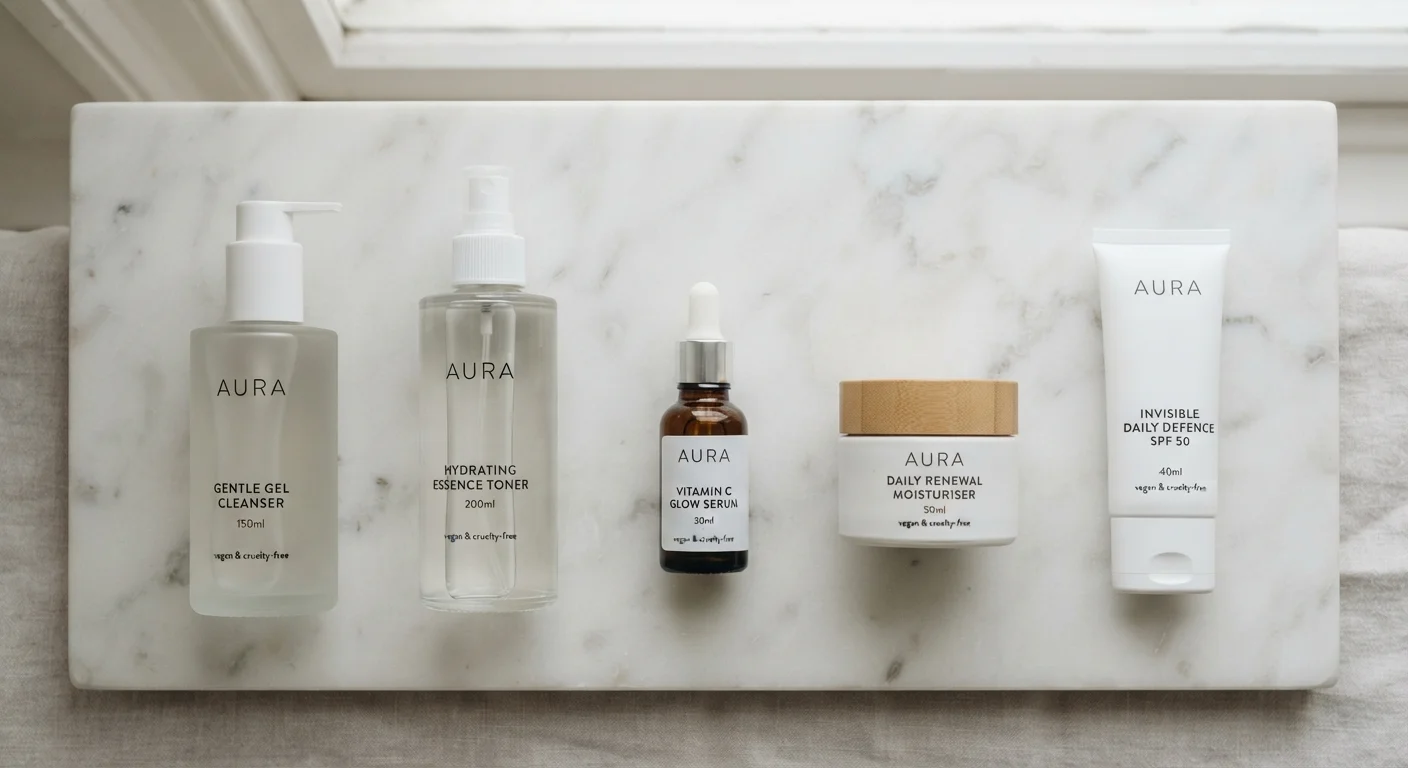
Why Order Actually Matters
Skincare layering isn't a ritual invented by the beauty industry - it's rooted in basic chemistry and skin biology. Your skin has a semi-permeable barrier that controls what passes through. Products applied to a clean surface, in the right sequence, have a meaningfully better chance of delivering their active ingredients where they're needed.
The foundational rule is straightforward: apply products from thinnest to thickest consistency. Lightweight, water-based formulas have small molecular structures that penetrate readily. Thicker creams and occlusive oils create a physical barrier - which is useful for sealing in hydration, but counterproductive if it's sitting between your skin and an active serum you're trying to absorb.
A second principle: oil and water don't mix. Water-based products cannot pass through an oil layer. If you apply a facial oil before your vitamin C serum, the serum will largely sit on top of the oil rather than reaching your skin. Sequence your products so water-based actives always go first.
If you're just establishing your first routine, our guide to building a skincare routine from nothing is a useful starting point before applying the layering logic here.
Gentle facial cleanser
Removes surface debris, excess oil, and residual makeup to prepare skin for active ingredients.
Toner or essence
Rebalances skin pH and adds a foundational layer of hydration before serums.
Targeted serum or treatment
Delivers concentrated active ingredients - such as vitamin C, niacinamide, or hyaluronic acid - at the step where they absorb best.
Eye cream
Formulated for the delicate periorbital area; applied before heavier occlusive moisturisers.
Moisturiser
Seals in hydration from earlier layers and supports the skin barrier.
Broad-spectrum SPF (morning only)
Protects skin from UVA and UVB damage; applied as the absolute final step in a daytime routine.
Facial oil (optional)
Adds a lipid-rich occlusive layer; always applied after water-based products and before SPF if used in the morning.
The Step-by-Step Sequence
The sequence below covers a complete routine. Not everyone uses every product listed - if a step doesn't apply to you, simply skip it. The relative order of the steps you do use remains the same.
What you will need
Cleanse
Start every routine - morning or evening - with a clean canvas. Use a gentle cleanser suited to your skin type and rinse thoroughly with lukewarm water. Pat (don't rub) your face dry with a clean towel. Active ingredients applied to skin that still carries sunscreen residue, pollution, or sebum simply cannot penetrate effectively.
Tone or prep (if using)
If your routine includes a toner, essence, or pH-balancing mist, apply it now to slightly damp skin. These products typically have a water-thin consistency and help condition the skin surface, making it more receptive to the serums that follow. Apply by pressing gently into skin rather than wiping.
Apply water-based serums and treatments
This is the step where most active ingredients - vitamin C, niacinamide, hyaluronic acid, peptides - belong. Apply the thinnest, most fluid serum first. If you use more than one serum, wait approximately 30-60 seconds between each to allow absorption before the next layer. Press serums gently into skin rather than rubbing.
Apply eye cream (if using)
Eye creams are typically thicker than serums but lighter than full moisturisers, which is why they go here. Use your ring finger - it naturally applies the least pressure - and gently tap a small amount around the orbital bone. Avoid dragging the skin.
Moisturise
Apply your moisturiser while your skin is still slightly tacky from the serum layer - this helps lock in the hydration already present. A moisturiser's job is to reinforce the skin barrier and prevent water loss (a process called transepidermal water loss, or TEWL). Apply using upward, gentle strokes and allow it to absorb before moving on.
Apply facial oil (if using)
Oils are lipid-based and cannot be penetrated by water-soluble products applied over them. Always apply after your water-based moisturiser, not before. Warm a few drops between palms and press into skin. In a morning routine, this step comes immediately before SPF.
Apply SPF (morning routine only)
Sunscreen is the final step in every morning routine, full stop. Apply a generous, even layer to your face and neck - dermatology guidelines generally recommend about a quarter teaspoon for the face alone. Allow it to sit for a minute before applying makeup. Do not apply any additional skincare over it.
SPF Must Always Be Your Final Step
Applying anything over sunscreen - including a facial oil or powder-free moisturiser - can dilute its UV-filtering ability. In a morning routine, SPF is always the last skincare step. If you use a facial oil, apply it before SPF, not after.
Common Layering Mistakes to Avoid
Even with good products, a few missteps can undermine your routine's effectiveness:
- Applying too many products at once. Piling on five serums back-to-back without absorption time means many of them never fully penetrate. Keep active layers to one or two per routine.
- Using retinol in the morning. Retinol is photosensitive and should be reserved for evening use only. Even with SPF on top, daytime retinol is generally considered unnecessary and potentially irritating.
- Skipping SPF because you're indoors. UVA rays - the type most associated with skin ageing - penetrate glass. SPF belongs in your morning routine regardless of whether you go outside.
Don't Layer Conflicting Actives
Certain ingredients interact poorly when applied together. Vitamin C (ascorbic acid) and niacinamide can reduce each other's efficacy at high concentrations, and retinol used alongside strong exfoliating acids (such as AHAs or BHAs) can cause significant irritation. If you use both, separate them into morning and evening routines, or use on alternate days. For personalised guidance on ingredient combinations, consult a dermatologist.
If you're unsure whether your current routine has grown too complex, these signs you're overcomplicating your routine can help you reassess. And before introducing any new product into an existing routine, run through this practical checklist first.
The 'Sandwich' Trick for Retinol Sensitivity
If your skin is new to retinol and prone to dryness or irritation, apply a thin layer of moisturiser before your retinol, then another thin layer over it. This 'sandwich' method slows absorption slightly, which can reduce irritation without eliminating the ingredient's benefit.
This article is for general informational and educational purposes only. It is not a substitute for professional dermatological or medical advice. If you have a skin condition, persistent irritation, or concerns about a specific ingredient, consult a qualified dermatologist or healthcare provider.
The content on this site is for informational purposes only and is not a substitute for professional advice. Always consult a qualified professional for guidance specific to your situation.