

Start here
Why Most Beginners Overcomplicate It
Next
Understanding Your Skin Type
Core skills
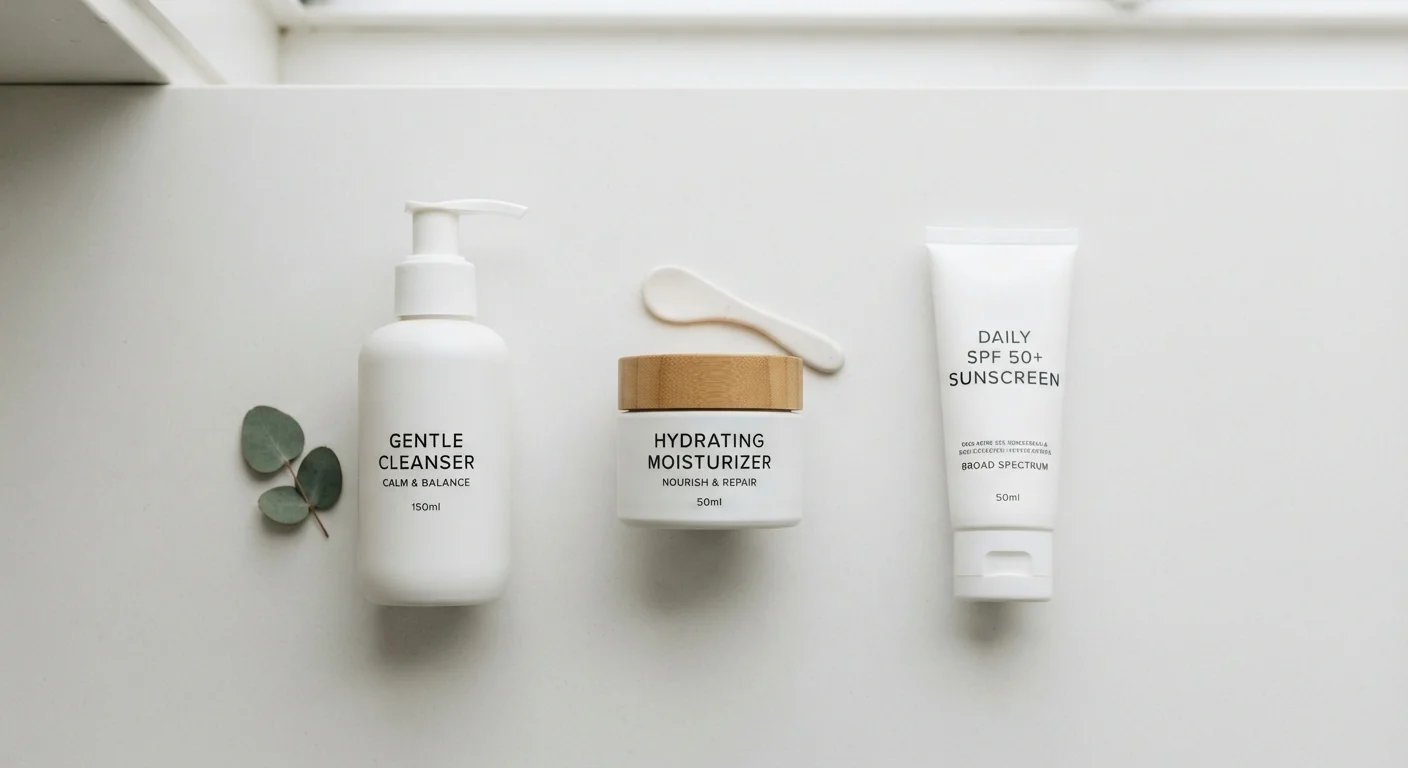
The Three Products Every Routine Needs
Apply it
Building Morning and Evening Sequences
When you're ready
When to Add More (and What to Add)
Why Most Beginners Overcomplicate It
Skincare content online tends to feature ten-step routines, ingredient stacking, and language that assumes you already know your niacinamides from your ceramides. That noise is the biggest barrier to actually starting. The truth is that a routine done consistently with a handful of products outperforms a complex regimen used sporadically every time.
The goal at the beginning is not optimization - it's habituation. You're training yourself to show up for your skin daily. Once that habit is solid, layering in additional steps becomes easy rather than overwhelming. See our newcomer's starting point guide for a broader look at building sustainable beauty habits from zero.
Start with What You'll Actually Use
Resist the urge to build a full routine before you know what your skin responds to. One cleanser, one moisturizer, one SPF - bought, used daily, and assessed over four weeks - will teach you more about your skin than any ten-step haul. Consistency is the variable that matters most at this stage.
Understanding Your Skin Type
Skin type determines which product textures work best for you - not whether your skin needs care. Every skin type benefits from cleansing, moisturizing, and SPF.
Skin barrier
The outermost layer of skin that acts as a protective seal, keeping moisture in and irritants out. A healthy barrier means skin feels comfortable and resilient.
Transepidermal water loss (TEWL)
The process by which water evaporates through the skin's surface. Moisturizers help slow this process, keeping skin hydrated.
Non-comedogenic
A label indicating a product is formulated to avoid clogging pores. Useful guidance for oily or acne-prone skin types, though not a guarantee.
Broad-spectrum SPF
Sunscreen protection that covers both UVA (aging) and UVB (burning) rays. 'Broad-spectrum' must appear on the label for a product to claim full UV protection.
Active ingredient
An ingredient added to a skincare product because it has a specific, documented effect on the skin - such as retinol for texture or niacinamide for barrier support.
Ceramides
Lipid (fat) molecules naturally found in the skin barrier. In skincare, they're added to moisturizers to help reinforce and repair the barrier.
- Dry skin tends to feel tight, may flake, and absorbs moisturizer quickly. Richer creams and gentle, non-stripping cleansers suit it well.
- Oily skin produces excess sebum, appears shiny, and is prone to enlarged pores. Gel cleansers and lightweight, non-comedogenic moisturizers work better than thick creams. (And yes - oily skin still needs moisturizer.)
- Combination skin is oily in the T-zone (forehead, nose, chin) and drier on the cheeks. A balanced, medium-weight moisturizer is usually the practical middle ground.
- Sensitive skin reacts easily to fragrances, alcohol, and harsh actives. Fragrance-free, minimal-ingredient formulas reduce the risk of irritation.
Skin type can also shift with seasons, hormones, and age, so treat it as a working hypothesis rather than a permanent label.
The Three Products Every Routine Needs
Before anything else, get these three steps working consistently.
1. A Gentle Cleanser
Cleansing removes dirt, oil, pollutants, and sunscreen residue. The most important quality is that it cleans without stripping the skin's natural moisture barrier. A tight or squeaky feeling after washing is a sign the cleanser is too harsh. Gel formulas suit oily skin; cream or micellar options are gentler for dry or sensitive types.
2. A Moisturizer
Moisturizers maintain the skin's barrier function and prevent transepidermal water loss - the process by which skin loses moisture to the environment. Look for ingredients like glycerin, hyaluronic acid, or ceramides, which are well-studied for barrier support. Texture preference (gel vs. lotion vs. cream) is largely personal and depends on skin type.
3. Broad-Spectrum Sunscreen (SPF 30 or Higher)
Sunscreen is the most evidence-supported protective step in any routine. Chronic UV exposure is the leading environmental cause of premature skin aging and increases skin cancer risk. Apply it every morning as the final step, even on cloudy days. Mineral (zinc oxide, titanium dioxide) and chemical filters are both effective - choose whichever formula you'll actually use consistently.
Building Morning and Evening Sequences
Once your three core products are in place, organizing them into morning and evening sequences makes the habit easier to maintain.
Morning
- Cleanse (or rinse with water if skin is not oily overnight)
- Moisturize
- Apply sunscreen - this is always the final step before makeup or going outside
Evening
- Cleanse - more thorough than the morning cleanse, especially if you wore SPF or makeup
- Moisturize
That's it for a starter routine. If you want a structured way to make the morning sequence even more efficient, our 5-minute morning skin routine guide maps out a realistic sequence for busy days.
Double Cleansing: Worth Knowing About
If you wear heavy SPF or makeup, a single cleanser may not fully remove everything. Double cleansing - using an oil-based cleanser first, then a water-based one - is a common PM technique for more thorough removal. It's not mandatory for beginners with minimal product use, but it's worth knowing once your routine grows.
When to Add More (and What to Add)
After four to six weeks of consistent use, your skin barrier should feel more stable and you'll have a clearer read on how it responds. At that point, it's reasonable to consider adding a single active ingredient - one at a time, with at least two to four weeks between introductions.
Common starting actives and what they broadly do:
- Vitamin C (ascorbic acid): An antioxidant that helps address uneven tone and is used in the morning beneath SPF.
- Niacinamide: A B3 vitamin that supports the skin barrier and is generally well-tolerated across skin types.
- Retinoids (retinol, adapalene): Vitamin A derivatives with strong evidence for skin texture and fine lines; start slowly (1-2 nights per week) and always at night.
- AHAs/BHAs (glycolic acid, salicylic acid): Chemical exfoliants that address texture and congestion. Not recommended for daily use when starting out.
For a thorough breakdown of how these ingredients work and who they suit, see our active ingredients reference guide. And if you're simultaneously building habits in other areas, our complete daily beauty routine guide covers how skincare fits alongside haircare and other daily steps.
This article is for general informational and educational purposes only. It is not a substitute for professional medical or dermatological advice. If you have a skin condition, experience persistent irritation, or are unsure whether a product or ingredient is appropriate for you, consult a qualified healthcare provider or board-certified dermatologist.
Frequently Asked Questions
A cleanser, moisturizer, and broad-spectrum SPF 30+ sunscreen cover the essentials for most people. These three steps protect the skin barrier, maintain hydration, and guard against UV damage - the foundation everything else builds on.
Wash your face with a gentle cleanser, pat dry, and observe your skin after 30-60 minutes without applying anything. If it feels tight or flaky, it leans dry; if it looks shiny all over, it's oily; shine only in the T-zone suggests combination skin; and if it feels comfortable and balanced, it's likely normal.
UV radiation can penetrate windows and cause cumulative skin damage even with limited outdoor exposure. Dermatology consensus is that daily SPF use is beneficial regardless of time spent outside. For very limited outdoor exposure, a moisturizer with SPF may be sufficient.
Skin cell turnover takes roughly four to six weeks, so most ingredient-driven results require consistent daily use for at least that long. Active ingredients like retinoids and vitamin C typically show meaningful changes after eight to twelve weeks.
Many actives are safe when introduced gradually. Start with a low concentration, use less frequently than the label suggests, and add only one new active at a time. If you notice persistent redness, burning, or peeling, reduce frequency or stop use and consult a dermatologist.
Not necessarily at the start. A cleanser and moisturizer can be used in both AM and PM routines. The key difference is SPF in the morning and, once you're ready to advance, optional actives like retinoids reserved for nighttime.
The content on this site is for informational purposes only and is not a substitute for professional advice. Always consult a qualified professional for guidance specific to your situation.