

Why Routine Myths Are So Sticky
Skincare advice travels fast online, and misinformation travels faster. A claim gets repeated enough times that it starts to feel like established fact - even when it contradicts how skin actually functions. The result? People spend more money, create more irritation, and see fewer results than they would with a straightforward, evidence-informed approach.
This article addresses the most persistent routine myths circulating right now and replaces them with what the evidence actually supports. If you're starting from scratch, getting the fundamentals right from the beginning will save you a lot of trial and error.
Myth
If a product tingles or stings, it means it's working.
Fact
Tingling is a sign of irritation, not efficacy. A product doing its job shouldn't hurt.
The "tingle = results" idea likely originates from certain active ingredients - like some acids or menthol-containing products - that produce a mild sensation. But sensation is not a mechanism of action. When your skin stings or burns, that's your nerve endings signalling disruption to the skin barrier, not a sign of deeper penetration or accelerated results. Repeated irritation compromises the skin barrier, which is the opposite of what a good routine should do.
Myth
Oily skin doesn't need moisturiser - it already produces enough moisture.
Fact
Oil (sebum) and water-based hydration are different things. Oily skin can be dehydrated and still needs a moisturiser.
Sebum is lipid-based and its job is to protect, not to hydrate. Skin hydration refers to water content within skin cells - a separate function. When oily skin is stripped of moisture (often by harsh cleansers), the skin may actually increase sebum production in response. A lightweight, non-comedogenic moisturiser supports the skin barrier without clogging pores or adding visible grease.
Myth
You only need SPF in summer or on sunny days.
Fact
UVA radiation - the primary driver of premature skin ageing - is present year-round and penetrates cloud cover and glass.
UVB rays (which cause sunburn) do vary with season and geography, but UVA rays maintain consistent intensity throughout the year. Daily broad-spectrum SPF protects against both. Skipping sunscreen on overcast or indoor days leaves skin exposed to the cumulative UVA damage that contributes to uneven tone, loss of elasticity, and increased skin cancer risk over time. SPF is not a seasonal product - it's a daily one.
Myth
Natural ingredients are always gentler and safer than synthetic ones.
Fact
Safety and efficacy depend on the ingredient's chemistry and concentration, not whether it came from a plant or a lab.
Many natural extracts are potent allergens or irritants - essential oils, citrus extracts, and certain botanical fragrances among them. Meanwhile, many lab-synthesised ingredients are exceptionally well-tolerated and rigorously tested. Fragrance in skincare is a useful case study: plant-derived fragrance ingredients are among the most common causes of contact sensitisation, regardless of their natural origin. Evaluate ingredients on their evidence profile, not their source.
Myth
You need to switch products regularly because your skin 'gets used to' them.
Fact
Skin does not build tolerance to effective skincare ingredients. Consistency is usually what generates visible results.
This myth leads people to abandon routines just as they're beginning to work. Most evidence-based ingredients - including retinoids, niacinamide, and chemical exfoliants - require weeks to months of consistent use before visible changes occur. If a product stops feeling effective, the more likely explanation is that your skin has normalised (less irritation, better barrier function) rather than becoming immune to its benefits. If you find yourself constantly rotating products, signs you're overcomplicating your routine is worth a read.
The Routines That Actually Deliver Results
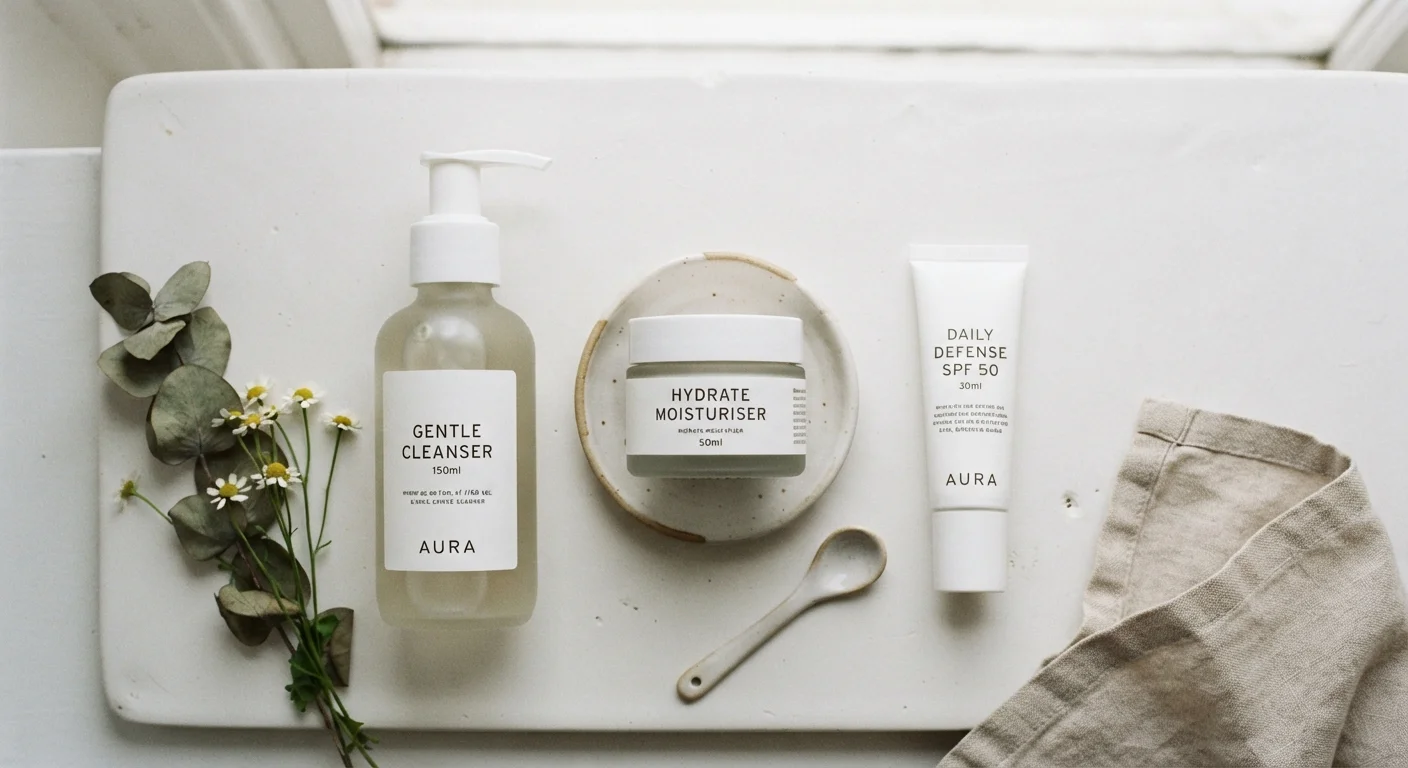
Once you strip away the myths, a functional skincare routine is notably simple: a gentle cleanser, a moisturiser suited to your skin type, and a broad-spectrum SPF applied every morning. Active ingredients like retinoids or chemical exfoliants can be added strategically, but they're additions to a working foundation - not the foundation itself.
4-6 weeks
Minimum time to assess a new routine
Dermatologists generally recommend allowing at least four to six weeks before evaluating whether a new skincare product or routine change is producing results.
3 steps
Core steps in an evidence-based daily routine
Cleanser, moisturiser, and SPF form the minimum effective daily routine supported by skin health research; everything else is optional enhancement.
One of the most overlooked factors in whether a routine works is application order. Layering products incorrectly reduces their efficacy regardless of what's in them. See the logic explained in our guide to layering skincare products in the right order.
If you've been consistent for four to six weeks and your skin still isn't responding well, the issue likely isn't effort - it's fit. Signs your current routine isn't working can help you pinpoint what to adjust without starting over entirely.
This article is for general informational purposes only and does not constitute medical or dermatological advice. If you have a skin condition or persistent concern, consult a qualified healthcare professional.
The content on this site is for informational purposes only and is not a substitute for professional advice. Always consult a qualified professional for guidance specific to your situation.