

Start here
Why Starting Simple Is the Right Move
Next
The Core Three: Cleanse, Moisturize, Protect
Then
Building the Habit: Timing and Consistency
When you're ready
When to Add More (and When Not To)
Expand
Extending Your Routine Beyond Skin
Why Starting Simple Is the Right Move
Most people abandon beauty routines not because they lack motivation, but because they start with too much. A shelf full of serums, toners, and treatments feels impressive until the morning you're running late and skip all of it. Complexity is the enemy of consistency.
The goal at this stage isn't a flawless complexion - it's building a repeatable behavior. Research on habit formation consistently shows that simpler actions are easier to repeat until they become automatic. A practical approach to building your first skincare routine starts with the fewest steps that still deliver measurable benefit.
If you're also working on broader daily structure, the same principle applies across domains - see building a first daily wellness routine from scratch for how this logic plays out beyond beauty.
Skin barrier
The outermost layer of skin that acts as a protective seal, keeping moisture in and irritants out. A healthy barrier is the foundation of good skin.
Humectant
An ingredient that draws water molecules into the skin from the air or deeper skin layers. Common examples include glycerin and hyaluronic acid.
Emollient
An ingredient that fills gaps in the skin barrier and softens the surface, helping to lock in moisture. Oils, butters, and fatty acids act as emollients.
Broad-spectrum SPF
A sunscreen rating indicating protection against both UVA rays (linked to aging and long-term damage) and UVB rays (linked to burning). SPF 30 or higher is the standard recommendation.
pH-balanced cleanser
A face wash formulated to match skin's natural acidity level (roughly 4.5-5.5 on the pH scale), which helps avoid disrupting the skin barrier during cleansing.
Active ingredient
A skincare ingredient included specifically to produce a measurable change in the skin - such as niacinamide for tone or a chemical exfoliant for texture. Actives are typically introduced after you've established a basic routine.
The Core Three: Cleanse, Moisturize, Protect
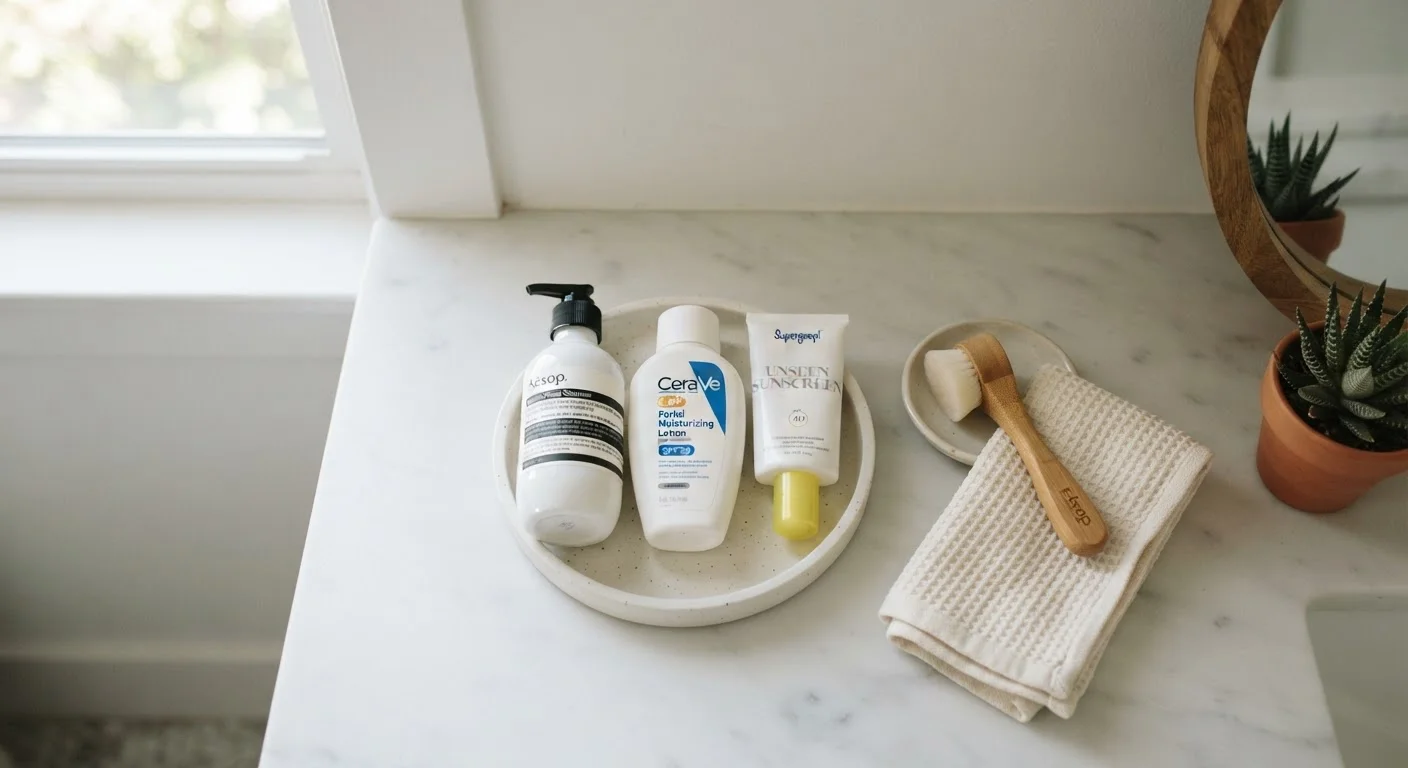
Every effective skincare routine, regardless of how sophisticated it eventually becomes, rests on three foundational steps.
1. Cleanse
A gentle, pH-balanced cleanser removes dirt, excess oil, and environmental residue without stripping the skin barrier. Avoid formulas with harsh sulfates if your skin tends to feel tight after washing. Cleansing once in the evening is the minimum; twice daily (morning and night) works for most skin types.
2. Moisturize
Moisturizer maintains the skin's barrier function and prevents water loss - this matters for every skin type, including oily skin. Look for humectant ingredients like glycerin or hyaluronic acid, which draw moisture into skin, paired with emollient ingredients that seal it in. Applying while skin is slightly damp improves absorption.
3. Protect
Broad-spectrum sunscreen with SPF 30 or higher is the single most evidence-supported skincare step for preventing long-term skin damage. Apply it as the last step every morning, rain or shine. This one habit, done consistently, has more cumulative impact than most other products combined.
For a detailed look at how each of these steps fits into a full daily structure, everything that belongs in a complete daily beauty routine breaks it down step by step.
Test New Products on a Small Area First
Before applying any new cleanser or moisturizer to your entire face, try it on a small patch of skin - the inner arm or just below the jawline - for a few days. This simple step can save you from a widespread reaction. It's especially useful if you have sensitive skin or haven't used skincare products regularly before.
Building the Habit: Timing and Consistency
The most effective routine is one you actually do. Anchor your routine to an existing daily behavior - brushing your teeth is the classic trigger - so it doesn't require a separate decision each day.
Morning routine (3-5 minutes): Cleanse lightly, apply moisturizer, finish with sunscreen. This is your protection phase.
Evening routine (3-5 minutes): Cleanse thoroughly to remove sunscreen and the day's buildup, then moisturize. Evening is when skin repair is most active, so this step is worth prioritizing even when you're tired.
Missing one day doesn't matter. Missing most days does. A simple routine done six days out of seven outperforms an elaborate one done twice a week. Track your streak if that helps - habit apps or a basic calendar check mark both work.
Don't Skip Sunscreen on Cloudy Days
UV radiation penetrates cloud cover, so skipping SPF on overcast days still leaves skin exposed to cumulative damage. Make sunscreen application a fixed morning step regardless of the weather forecast. This is one of the few beauty habits with strong, long-term scientific backing for skin health outcomes.
When to Add More (and When Not To)
After four to six weeks of consistent core steps, you may want to address specific concerns - uneven tone, dryness, or occasional breakouts. This is the right time to consider a targeted addition, but introduce only one new product at a time, with at least two weeks between introductions.
Common additions for beginners include a weekly gentle exfoliant, a niacinamide serum for skin tone, or a richer overnight moisturizer in dry months. Before decoding ingredient labels and active percentages, key terms every routine-builder should understand is a useful plain-language reference.
It's also worth knowing that more is not always better. the case for a one-product routine makes a compelling argument for staying minimal - and the trade-offs are worth understanding before you expand.
Extending Your Routine Beyond Skin
Once your skincare routine feels genuinely automatic - you do it without thinking - it's a natural moment to consider haircare. The same principle applies: start with the basics, and only add steps once they're needed.
A foundational haircare routine involves little more than choosing the right shampoo frequency for your hair type, using a conditioner consistently, and protecting hair from heat if you style regularly. building a haircare routine when you're starting from scratch walks through exactly this without pushing unnecessary products.
The throughline across all of this is the same: fewer steps done consistently beat elaborate routines done occasionally. Start where you are, repeat what works, and add only when you have a clear reason to. That approach builds not just a routine, but lasting confidence in how you care for yourself.
This article is for general informational purposes only and does not constitute medical or dermatological advice. If you have skin concerns, a persistent reaction to a product, or a condition requiring treatment, consult a qualified healthcare professional.
Frequently Asked Questions
Three products cover the essentials: a gentle cleanser, a moisturizer suited to your skin type, and a broad-spectrum SPF 30+ sunscreen for daytime. That's a complete, functional routine. Adding more only makes sense once these steps feel automatic and you have a specific concern to address.
Skin typically cycles through new cells every four to six weeks, so most dermatologists suggest giving a routine at least four weeks before judging results. Hydration improvements from moisturizer may appear sooner, while texture or tone changes take longer. Patience and consistency are the most important variables.
Yes, and intentionally so. Mornings call for protection - sunscreen is non-negotiable during daylight hours. Evenings are better suited for any treatment steps, since skin undergoes repair processes overnight. You don't need to use the same products twice daily unless that's all you have.
Absolutely. Price does not reliably predict effectiveness in skincare. Drugstore cleansers and fragrance-free moisturizers often contain the same functional ingredients as higher-priced alternatives. Focus on ingredient lists and formulation rather than brand prestige or marketing claims.
Stop using that product immediately and let your skin return to its baseline before reintroducing anything new. This is precisely why adding one product at a time matters - it makes it straightforward to identify the culprit. If irritation is persistent or severe, consult a dermatologist.
Not necessarily at first. Your cleanser and moisturizer can be the same for both sessions. The key difference is that sunscreen belongs in the morning routine only, while nighttime is the better moment for any exfoliating or treatment products if you eventually add them.
The content on this site is for informational purposes only and is not a substitute for professional advice. Always consult a qualified professional for guidance specific to your situation.