

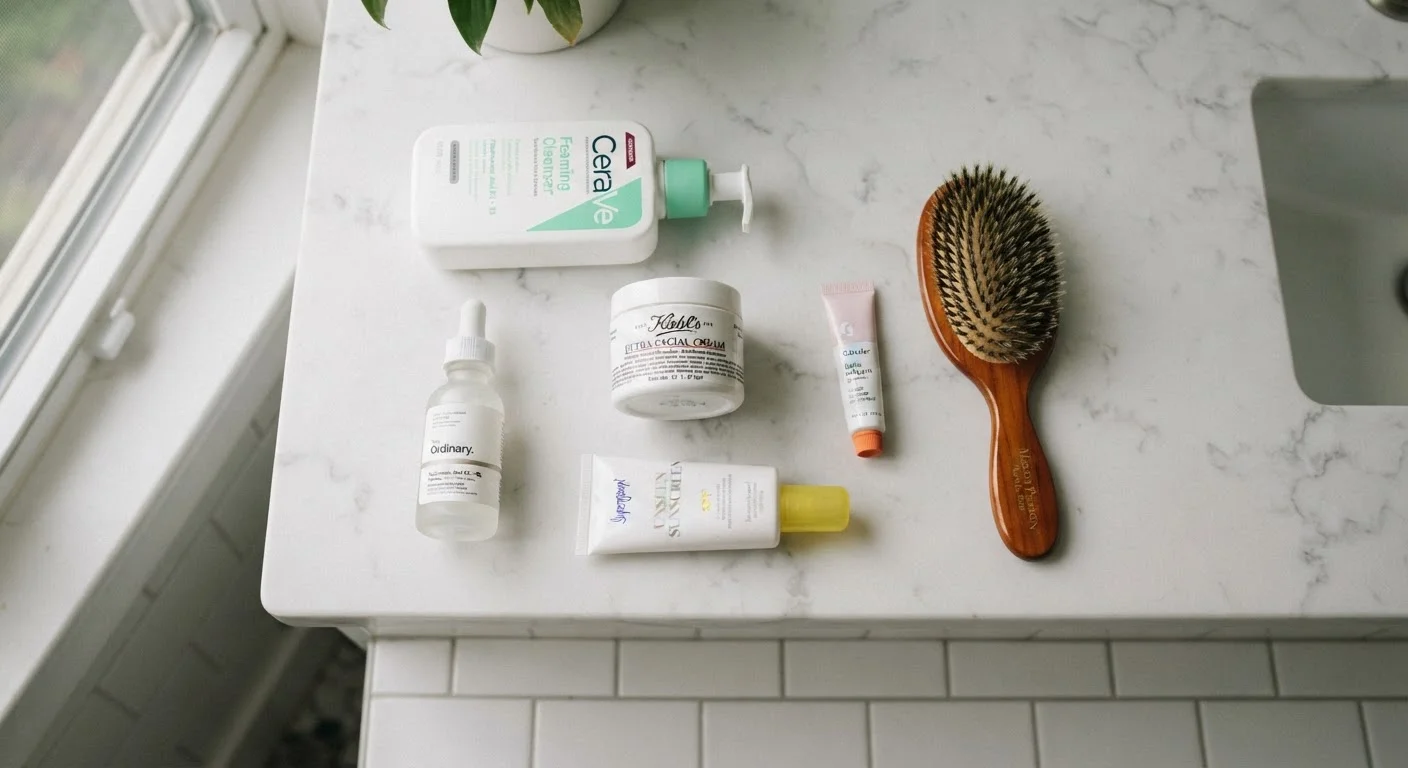
Why a Daily Routine Outperforms Occasional Effort
Skin and hair respond to consistency above all else. Most active ingredients - from niacinamide in serums to conditioning agents in leave-in treatments - require repeated, cumulative exposure to produce visible change. A well-chosen five-step routine used daily will outperform an elaborate ten-step ritual used twice a week.
The goal of this guide is to map every element that genuinely belongs in a complete daily beauty routine and explain why each step earns its place. Explore our skincare essentials hub and haircare hub for deeper dives into specific concerns.
80%
Of visible skin aging attributed to UV exposure
Research published in dermatology literature consistently identifies UV radiation as the primary environmental factor in premature skin aging.
28 days
Average skin cell turnover cycle
Skin replaces its surface cells approximately every four weeks, which is why consistent ingredient use is necessary before evaluating results.
2x
Moisture retention with damp-skin application
Studies on topical moisturizers show that application to slightly damp skin significantly improves moisture retention compared to dry skin application.
The Morning Skincare Sequence
Morning skincare is fundamentally about protection. Your skin has spent the night in repair mode; now it needs to be shielded from UV radiation, pollution, and moisture loss throughout the day.
Cleanser
A gentle, pH-balanced cleanser removes overnight sebum and any residue without stripping the skin barrier. If your skin feels tight after washing, the cleanser may be too harsh. Most skin types do well with a low-lather gel or cream formula in the morning.
Toner or Hydrating Mist (optional)
A hydrating toner - not an astringent - can restore surface moisture and prep skin for serums. This step is optional but beneficial for dry or dehydrated skin types.
Serum
Serums deliver concentrated actives in a lightweight base. In the morning, antioxidant serums (such as those containing vitamin C or niacinamide) help neutralize free-radical damage from UV and pollution. Apply to clean, slightly damp skin before heavier layers.
Moisturizer
Moisturizer seals in hydration from the layers beneath and supports the skin barrier. Choose a weight that suits your skin type - lighter gels for oily skin, richer creams for dry.
Sunscreen
SPF is the single most evidence-supported step in any skincare routine. Broad-spectrum SPF 30 or higher applied every morning protects against UV-induced damage regardless of the season or your skin tone. Apply it as the final skincare step, after moisturizer.
SPF Is Required Year-Round - No Exceptions
UVA rays - the primary driver of skin aging and a contributor to skin cancer risk - penetrate clouds and glass. Skipping sunscreen on overcast days or when spending time near windows still exposes skin to meaningful UV radiation. Broad-spectrum SPF 30 or higher every morning is the standard recommendation from dermatology organizations for all skin tones and skin types.
The Evening Skincare Sequence
Evening skincare shifts the focus to repair and renewal. Skin cell turnover is most active at night, and this is when treatment-focused ingredients can work without UV interference.
Makeup Remover or Cleansing Oil (if needed)
If you wear makeup or sunscreen, a dedicated first-cleanse step - a cleansing oil, balm, or micellar water - ensures these are fully broken down before your main cleanser.
Cleanser
Follow up with a gentle cleanser to remove sweat, pollutants, and remaining residue. This double-cleanse approach is only necessary in the evening when there is more to clear away.
Treatment Serum or Retinoid
Nighttime is the appropriate window for more active treatments. Retinoids (vitamin A derivatives) are among the most studied ingredients for supporting skin cell renewal; they are also photosensitive and must be used at night only. If retinoids are new to you, start slowly and consult a dermatologist before introducing them, particularly if you have sensitive skin or any underlying skin condition.
Wait 20-30 minutes after applying a retinoid before following with moisturizer. This reduces potential irritation while allowing the active ingredient time to absorb properly.
Layering moisturizer immediately over a retinoid can dilute its efficacy and, for some formulas, alter the pH environment needed for activation.
When in doubt about product order, apply the product with the lowest pH first. Serums typically have a lower pH than moisturizers and work best applied directly to clean skin.
pH compatibility between layered products affects how well actives penetrate and function; correct sequencing minimizes ingredient conflict.
Night Moisturizer or Face Oil
A richer moisturizer or a few drops of a nourishing facial oil helps replenish moisture lost during the day and supports the skin's overnight repair process.
Daily Haircare Essentials
Not every hair type needs washing every day, but every hair type benefits from a consistent daily approach. For a thorough primer on structuring this routine from the ground up, see our guide on building a haircare routine from scratch.
Washing Frequency
How often you shampoo depends on your scalp's oil production, hair texture, and styling habits. Coarser, drier, or curly hair typically needs less frequent washing than fine, straight hair. Overwashing strips the scalp of natural oils and can contribute to dryness and breakage.
Conditioner - Every Wash Day
Conditioner is not optional. It restores surface smoothness, reduces static, and helps protect against mechanical damage from brushing. Apply from mid-lengths to ends, avoiding the scalp if your hair tends to get oily at the roots.
Daily Moisture and Protection
On non-wash days, a lightweight leave-in conditioner or hair oil applied to the ends can maintain moisture balance and reduce frizz. If you use heat-styling tools regularly, a heat protectant should be applied every time - without exception.
Heat Styling Without Protection Causes Cumulative Damage
Regular use of blow dryers, flat irons, or curling tools without a heat protectant product causes progressive structural damage to the hair shaft that cannot be reversed - only grown out. This applies even at lower heat settings. Make heat protection part of every styling session, not an occasional addition.
Body, Lips, and the Steps People Skip
A complete daily beauty routine extends below the chin. These steps are brief but meaningfully support overall skin health.
Body Moisturizer
Applying a body lotion or cream after showering - while skin is still slightly damp - locks in surface moisture effectively. Areas like elbows, knees, and heels are prone to dryness and benefit from slightly richer formulas.
Lip Care
Lip skin lacks oil glands and dehydrates faster than facial skin. A simple balm applied morning and evening keeps lips comfortable and prevents cracking, especially in dry or cold climates. If your lip balm contains SPF, so much the better.
Hand Cream
Hands are washed dozens of times a day and exposed to UV constantly. Applying a lightweight hand cream after each wash, or at minimum morning and night, prevents premature dryness and supports skin barrier integrity.
Building a Routine You'll Actually Stick To
The most effective routine is one you perform reliably. A few practical principles help with adherence:
- Sequence matters more than timing. Apply products thinnest to thickest - this allows each layer to absorb properly and prevents heavier formulas from blocking lighter ones.
- Introduce one new product at a time. Adding multiple new products at once makes it impossible to identify what caused a reaction or what's driving improvement.
- Keep daily steps short. Reserve more intensive treatments - exfoliation, masks, deep-conditioning treatments - for weekly use. For guidance on structuring those additions, see how weekly add-ons complement a daily routine.
- Store products where you'll see them. Habit formation is aided by visibility. A routine left on the bathroom counter gets used; one buried in a drawer often doesn't.
Start with Three Steps, Then Build
If a full routine feels overwhelming, begin with just cleanser, moisturizer, and SPF in the morning. These three steps cover the most critical bases and take under two minutes. Add additional steps one at a time as each becomes habit.
This article is for general informational purposes only and does not constitute medical or dermatological advice. If you have a skin condition, persistent irritation, or any health concern, consult a qualified dermatologist or healthcare professional.
The content on this site is for informational purposes only and is not a substitute for professional advice. Always consult a qualified professional for guidance specific to your situation.