

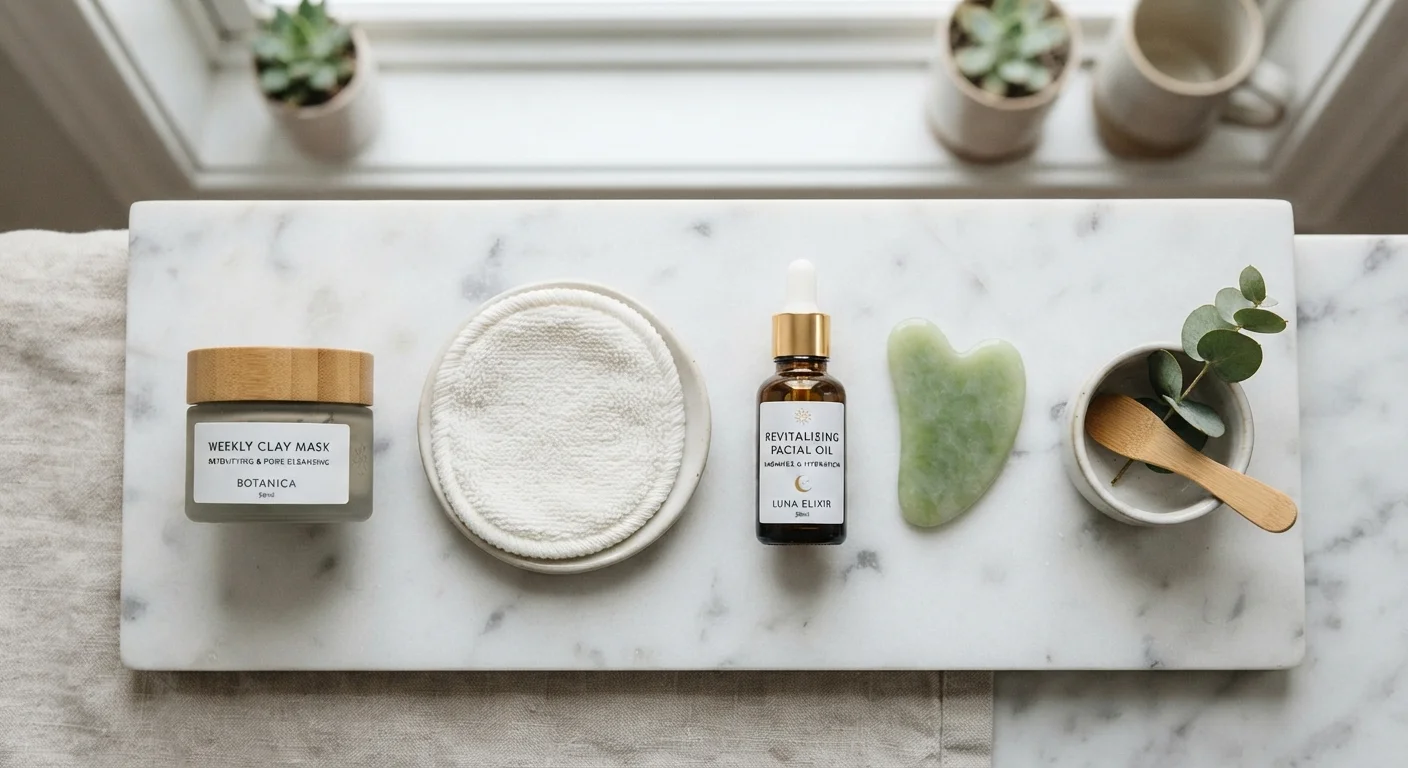
Why Weekly Steps Exist in the First Place
A well-built daily routine handles the fundamentals: cleansing, moisturizing, and sun protection. Those steps create the stable baseline your skin needs to function well. But some beneficial processes - deeper exfoliation, intensive hydration, or targeted pore care - work best when applied less frequently, allowing the skin time to respond and recover between sessions.
Think of weekly add-ons as maintenance intervals rather than daily necessities. Just as consistent daily habits outperform sporadic product use, the same logic applies here: a focused weekly treatment used regularly will outperform a powerful product used randomly. The goal is a layered system - daily steps protecting and nourishing, weekly steps refining and addressing specific concerns.
Before reaching for something new, it's worth knowing what your daily routine should already include so weekly additions fill genuine gaps rather than duplicate effort.
Chemical Exfoliation (1-2 Times Per Week)
Chemical exfoliants - typically alpha-hydroxy acids (AHAs) like glycolic or lactic acid, or beta-hydroxy acids (BHAs) like salicylic acid - work by loosening the bonds between dead skin cells, encouraging them to shed more evenly. The result over time is a smoother texture and a more even tone.
Once or twice a week is sufficient for most skin types; more frequent use can disrupt the skin barrier. AHAs tend to suit drier or dull skin, while BHAs are oil-soluble and better suited to oily or acne-prone skin. Always follow with moisturizer and apply SPF the next morning, as freshly exfoliated skin is more vulnerable to UV damage.
Chemical exfoliants work best at 1-2 times weekly - more frequent use risks barrier disruption.
A Targeted Face Mask
Masks are concentrated treatments designed to sit on the skin longer than a cleanser or serum, allowing active ingredients more contact time. Clay or charcoal masks draw out excess oil and can help manage enlarged pores; hydrating sheet masks or overnight masks deliver an intensive moisture boost; brightening masks often contain vitamin C or niacinamide to address uneven tone.
The key is matching the mask type to your current skin concern rather than using the same mask year-round. Apply once weekly, and avoid layering a mask on the same night as chemical exfoliation - both are active steps that can compound sensitivity when combined.
Match mask type to your current skin concern - one well-chosen mask outperforms several used randomly.
A Facial Oil or Barrier-Support Treatment
Facial oils aren't an everyday essential for everyone, but used once or twice weekly - especially during colder months or periods of stress - they can reinforce the skin barrier and reduce transepidermal water loss (TEWL), the process by which moisture escapes through the skin's surface.
Oils high in linoleic acid (such as rosehip or squalane-blended formulas) tend to suit a range of skin types without feeling heavy. Apply after your moisturizer as the final step in an evening routine, where they can work undisturbed overnight.
A weekly facial oil can reinforce the skin barrier and reduce moisture loss, especially in dry conditions.
Scalp Care
Scalp health is an easy omission from weekly routines, yet the scalp is skin - subject to the same buildup, dryness, and sensitivity concerns as the face. A weekly scalp scrub or clarifying rinse can remove product residue and sebum buildup that regular shampooing doesn't fully address.
For those with dry or flaky scalps, a weekly nourishing scalp oil massage before washing can improve circulation and hydration. For oily scalps, a gentle clarifying shampoo used once weekly (rather than daily) tends to regulate oil production more effectively than daily washing. For broader context on everyday haircare essentials, scalp maintenance is the foundation everything else builds on.
The scalp is skin - a weekly clarifying or nourishing treatment supports everything your daily haircare does.
A Targeted Spot or Concern Treatment
Some ingredients - retinoids, high-concentration vitamin C, or enzyme-based treatments - are too potent or potentially irritating for daily use when you're first introducing them, or simply work effectively at a lower frequency. Using these as a weekly or twice-weekly step rather than daily allows the skin to adapt gradually.
This approach also applies to targeted skincare for specific concerns like hyperpigmentation or texture. Introducing one targeted treatment at a time and auditing what's actually working before adding more prevents both skin overload and routine creep.
Starting potent actives at weekly frequency lets the skin adapt before you consider increasing use.
Building It Into a Routine That Actually Sticks
The most common mistake with weekly add-ons is adding several at once without a plan. Layering a new exfoliant, a mask, and a targeted serum in the same week - or even the same evening - can overwhelm the skin and make it impossible to identify what's helping or causing a reaction.
Assign Each Add-On a Specific Day
Treat your weekly additions like scheduled appointments rather than impulse decisions. Writing them into a set day - exfoliation on Sunday, a mask on Wednesday - removes the guesswork and prevents accidental doubling up of active ingredients in one session. Consistency in timing also makes it easier to notice patterns in how your skin responds.
A smarter approach is to assign each weekly step its own day. For example, chemical exfoliation on Sunday evening and a hydrating mask mid-week creates natural separation. If you're uncertain whether a new product suits your skin before committing it to your routine, run through a quick pre-addition checklist covering patch testing and ingredient compatibility.
Pay attention to how your skin looks and feels across the week. If a weekly step is leaving your skin tight, flaky, or persistently irritated, that's a sign of frequency or formulation mismatch - not a reason to add more product on top. Knowing the signals that a routine needs adjustment is as important as knowing what to add.
This article is for general informational purposes only and does not constitute medical or dermatological advice. Consult a qualified healthcare or skincare professional for personal concerns.
The content on this site is for informational purposes only and is not a substitute for professional advice. Always consult a qualified professional for guidance specific to your situation.