

What the Skin Barrier Actually Is
Skincare conversations tend to focus on active ingredients - retinol percentages, vitamin C formulations, exfoliation frequencies. But all of those conversations quietly depend on one foundational structure: the skin barrier. Without a healthy barrier, even well-formulated products underperform.
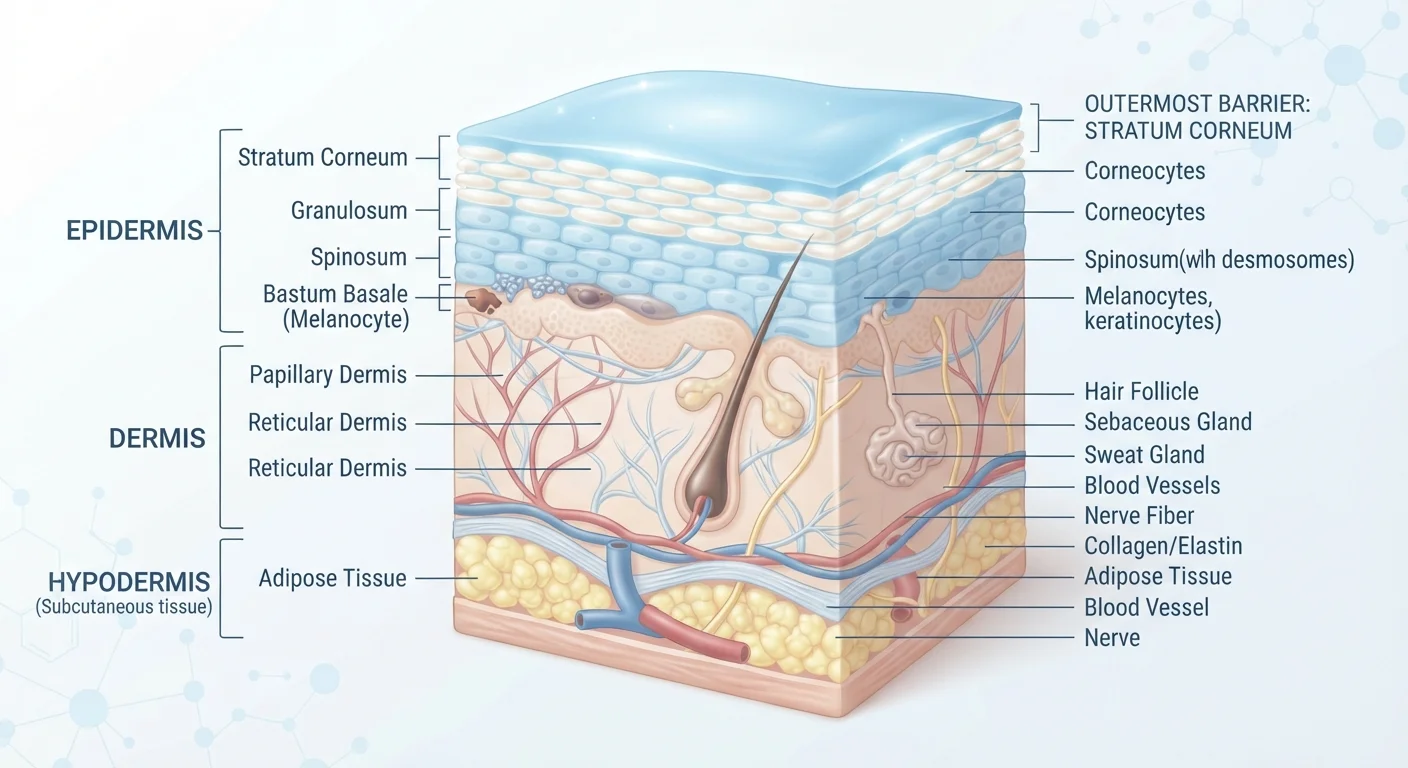
The stratum corneum is the outermost layer of the epidermis, composed of flattened, dead skin cells surrounded by a lipid matrix made primarily of ceramides, cholesterol, and free fatty acids. These lipids don't just sit there passively - they form a selectively permeable seal that allows the skin to retain water while keeping harmful substances out.
Think of it less like a wall and more like a well-maintained membrane: dynamic, responsive, and capable of self-repair - but only up to a point.
The Barrier Is Not Just About Dryness
Many people associate barrier damage exclusively with dry or flaky skin. In reality, a compromised barrier can look like persistent redness, breakouts, or general reactivity to products that were previously well-tolerated. Skin type and barrier health are related but distinct concepts - oily, combination, and normal skin types can all experience barrier disruption.
What Damages the Skin Barrier
Barrier disruption is more common than most people realise, and the causes are often things marketed as beneficial skincare habits.
- Over-exfoliation: Physical scrubs and chemical exfoliants (AHAs, BHAs) remove dead skin cells, but used too frequently, they thin the barrier before it can rebuild. Two to three times per week is often cited as a reasonable ceiling for most skin types.
- Harsh or alkaline cleansers: Skin's natural pH sits around 4.7-5.75. Cleansers with a high pH disrupt this balance and strip protective lipids. Foaming cleansers that leave skin feeling 'squeaky clean' are often the culprit.
- Environmental factors: Cold, dry air, wind, and UV radiation all degrade the lipid matrix. Indoor heating compounds this by reducing humidity.
- Too many active ingredients at once: Stacking retinoids, acids, and potent antioxidants without adequate buffering is one of the more common routes to reactive, sensitised skin.
As noted in our skincare myths article, the 'burning or tingling means it's working' belief is one of the more damaging ideas in popular skincare - that sensation is often a sign of irritation, not efficacy.
~50%
Ceramide content of the skin's lipid matrix
Research published in dermatology literature estimates ceramides make up approximately 50% of the total lipid content in the stratum corneum, making them its most abundant structural component.
4.7-5.75
Healthy skin surface pH range
Studies on skin pH suggest this mildly acidic range supports the enzyme activity required for barrier maintenance and helps inhibit pathogenic bacteria.
2-4 weeks
Typical skin cell turnover cycle
The epidermis renews itself roughly every two to four weeks in younger adults, a cycle that slows with age - affecting how quickly barrier damage can repair itself.
How to Support and Restore Barrier Function
Barrier recovery is less about finding the right rescue product and more about removing what's causing the damage and giving the skin what it needs to rebuild.
Simplify first
When the barrier is compromised, the priority is reducing the number of products and active ingredients used. A gentle, low-pH cleanser, a moisturiser with barrier-supportive lipids, and SPF is often enough to allow recovery. Introducing new actives during this window typically prolongs the problem.
Look for ceramides, cholesterol, and fatty acids
These three lipid types mirror what's naturally found in the stratum corneum. Products containing all three in a physiologically relevant ratio are thought to be more effective at supporting repair than those containing only one. This is general information - a dermatologist can provide more tailored guidance for your skin's specific needs.
Protect against environmental stressors
Daily SPF use protects the lipid matrix from UV degradation. In dry or cold climates, using a humidifier indoors and applying moisturiser to slightly damp skin can reduce transepidermal water loss (TEWL - the rate at which water evaporates through the skin).
Understanding the right order for applying your products also matters. See our guide on layering skincare products in the right order to understand how sequence affects what your skin actually absorbs.
Recovery Often Means Doing Less
If your skin has become reactive or unpredictable, resist the urge to layer in more treatments. A two-to-four week 'routine reset' - gentle cleanser, barrier-supportive moisturiser, SPF - gives the skin the stability it needs to repair. Reintroduce actives one at a time after your skin has settled.
Why This Matters More Than Your Serum
Active serums - vitamin C, retinol, peptides - can deliver real benefits, but only when the skin is in a state to receive them. A compromised barrier means higher sensitivity, unpredictable absorption, and a greater likelihood of irritation. Spending on high-potency actives while neglecting barrier health is a bit like watering a cracked pot.
Nighttime is also when much of the skin's natural repair activity peaks - making your evening routine a particularly useful time to prioritise barrier-supportive ingredients rather than aggressive actives. Our article on what your skin does while you sleep explains the biology in more detail.
The skin barrier doesn't require expensive intervention. It requires consistency, restraint, and an understanding of what it actually needs. That shift in thinking - from 'what should I add?' to 'what might I be disrupting?' - is often where meaningful skin improvement begins.
This article is for general informational and educational purposes only. It is not a substitute for professional medical or dermatological advice. If you have persistent skin concerns, consult a qualified healthcare provider or dermatologist.
Frequently Asked Questions
Common signs include persistent redness, stinging when applying products that didn't previously cause irritation, flaking, tightness after cleansing, and unexpected breakouts. If your skin feels reactive across the board, barrier damage is a likely culprit.
Mild barrier disruption can improve within a week or two with a simplified, gentle routine. More significant damage may take four to six weeks, as the skin's natural cell turnover cycle is roughly that length. Individual results vary based on age, environment, and overall skin health.
Yes. Excess sebum production is separate from barrier integrity. People with oily skin can still strip their barrier through harsh cleansers or over-exfoliation, leading to dehydration and reactive oiliness. This is one of the more persistent <a href="/beauty-basics/routines/skincare-routine-myths-that-keep-circulating-online">skincare routine myths</a> worth understanding.
Not necessarily. Many standard moisturisers containing ceramides, fatty acids, and cholesterol can support barrier recovery. The bigger priority is removing whatever is disrupting the barrier - whether that's a harsh exfoliant, a detergent cleanser, or too many active ingredients at once.
Yes. UV exposure degrades the lipid matrix that holds the barrier together and accelerates cellular damage. Daily broad-spectrum SPF is one of the most evidence-backed steps for long-term barrier protection.
The content on this site is for informational purposes only and is not a substitute for professional advice. Always consult a qualified professional for guidance specific to your situation.