

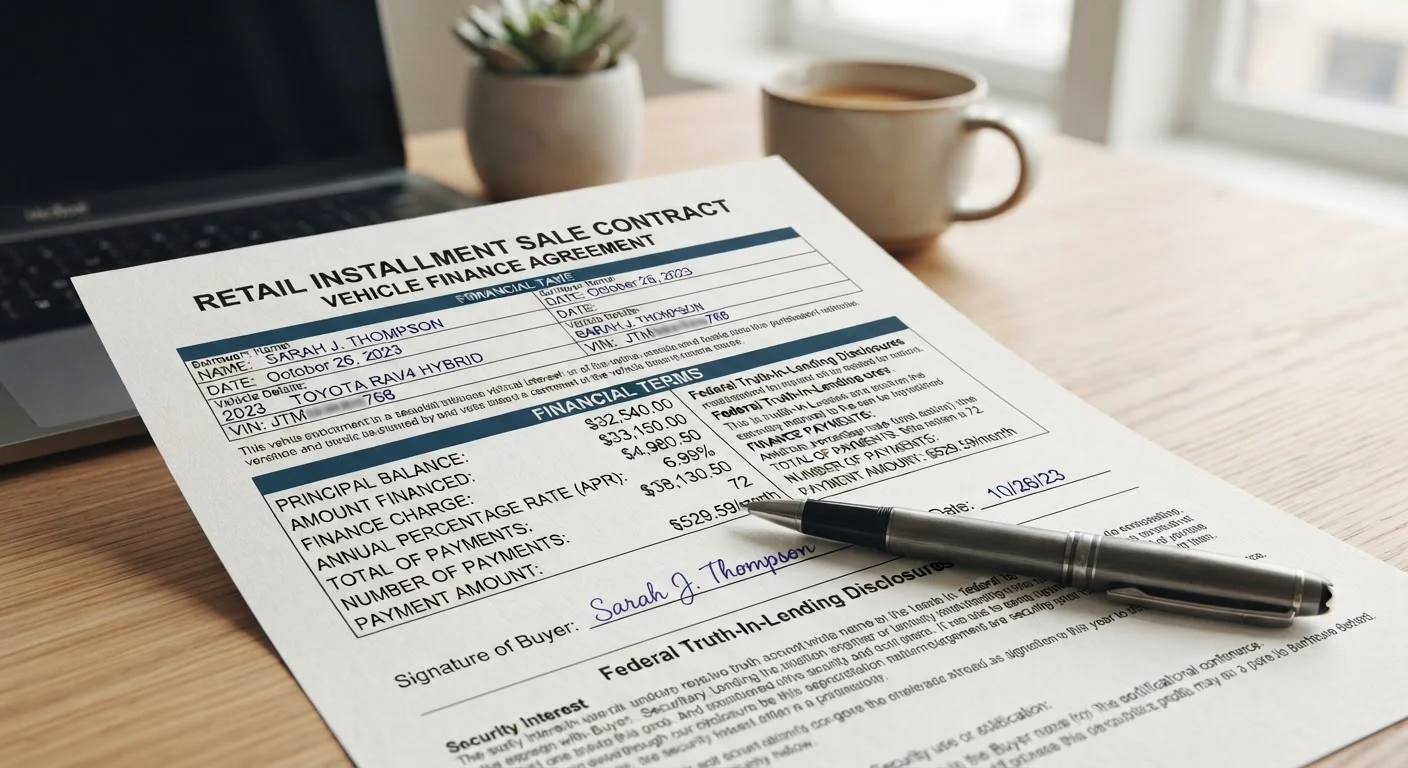
Why Auto Loan Vocabulary Matters
Walk into a dealership finance office without a working knowledge of loan terminology, and the paperwork can feel deliberately opaque. Interest rates, origination fees, and amortization schedules all affect what you actually pay — yet these terms are rarely explained before you sign. This reference breaks down every key term you'll encounter on a car loan offer, so you can compare offers with confidence and ask the right questions. For a broader look at where financing fits in the buying process, see The Full Vehicle Purchase Journey, Explained.
| Typical auto loan term range | 24 to 84 months (Consumer Financial Protection Bureau) |
| APR includes | Interest rate + lender fees |
| Effect of longer loan term | Lower monthly payment, more total interest |
| Down payment impact | Reduces principal and often improves APR offer |
| Amortization weighting | Interest-heavy early; principal-heavy later |
Core Loan Terms Defined
These are the terms that appear on virtually every auto loan disclosure. Understanding each one in isolation — and how they interact — is the foundation of smart borrowing.
Principal
The original amount borrowed, excluding interest and fees. Your monthly payments gradually reduce the principal balance — a process called amortization.
APR (Annual Percentage Rate)
The yearly cost of borrowing expressed as a percentage, incorporating the interest rate plus most lender fees. It allows for standardized comparison across loan offers.
Loan Term
The agreed repayment period, typically expressed in months (e.g., 48, 60, or 72 months). Longer terms reduce monthly payments but increase total interest paid.
Amortization
The schedule by which loan payments are divided between interest and principal over time. Early payments are weighted more heavily toward interest; later payments reduce principal faster.
Down Payment
An upfront cash amount paid at purchase that reduces the loan principal. A larger down payment generally results in lower monthly payments and less total interest.
Loan-to-Value Ratio (LTV)
The ratio of the loan amount to the vehicle's value. A lower LTV signals less risk to lenders and may qualify the borrower for a more favorable interest rate.
Prepayment Penalty
A fee some lenders charge if the borrower pays off the loan early. Not all auto loans include this clause — check before making extra payments.
Balloon Payment
A large lump-sum payment due at the end of some loan agreements. Loans with balloon payments often have lower monthly installments but a significant final obligation.
A common source of confusion is the relationship between APR and interest rate. The interest rate is the base cost of borrowing the principal. The APR folds in additional lender fees, giving a more complete picture of annual cost. Always compare APRs across offers rather than interest rates alone. For a broader look at how these terms appear in credit agreements, see Key Credit Terms Every Borrower Should Recognise.
Interest Rate vs. APR: Not the Same Thing
Lenders are required by the Truth in Lending Act (TILA) to disclose the APR on consumer loan offers, not just the interest rate. When comparing multiple loan offers, always use the APR column — it's the most standardized cost measure available. A loan advertised with a low interest rate may carry a higher APR once fees are included.
How Loan Structure Affects Total Cost
Two loans with identical APRs can cost very different amounts depending on how they're structured. Loan term length has an outsized effect: a longer term lowers monthly payments but increases the total interest paid over the life of the loan. Shorter terms mean higher monthly obligations but significantly less interest overall.
$7,000+
Additional interest on a 72-month vs. 48-month loan
Illustrative estimate based on a $30,000 loan at 7% APR — actual amounts vary by lender and rate.
20%
Common recommended minimum down payment
Financial guidance organizations frequently cite 20% as a target to avoid being underwater on a new vehicle loan.
Down payments directly reduce principal, which in turn reduces the interest calculated against it. A larger down payment lowers your loan-to-value ratio, which lenders view favorably — often translating to a better APR offer. If you're weighing dealership financing against a bank or credit union, see Financing Through a Dealer vs. a Bank or Credit Union for a comparison of how each source approaches these variables.
Leasing introduces a parallel but distinct set of terms — residual values, money factors, and capitalized cost — that function differently from loan financing. If you're considering that route, Leasing a Car: What You're Actually Agreeing To explains the fine print.
This article is for general informational and educational purposes only and does not constitute personalized financial or legal advice. Consult a qualified financial professional before making borrowing decisions based on your individual circumstances.
The content on this site is for informational purposes only and is not a substitute for professional advice. Always consult a qualified professional for guidance specific to your situation.