

Our Verdict
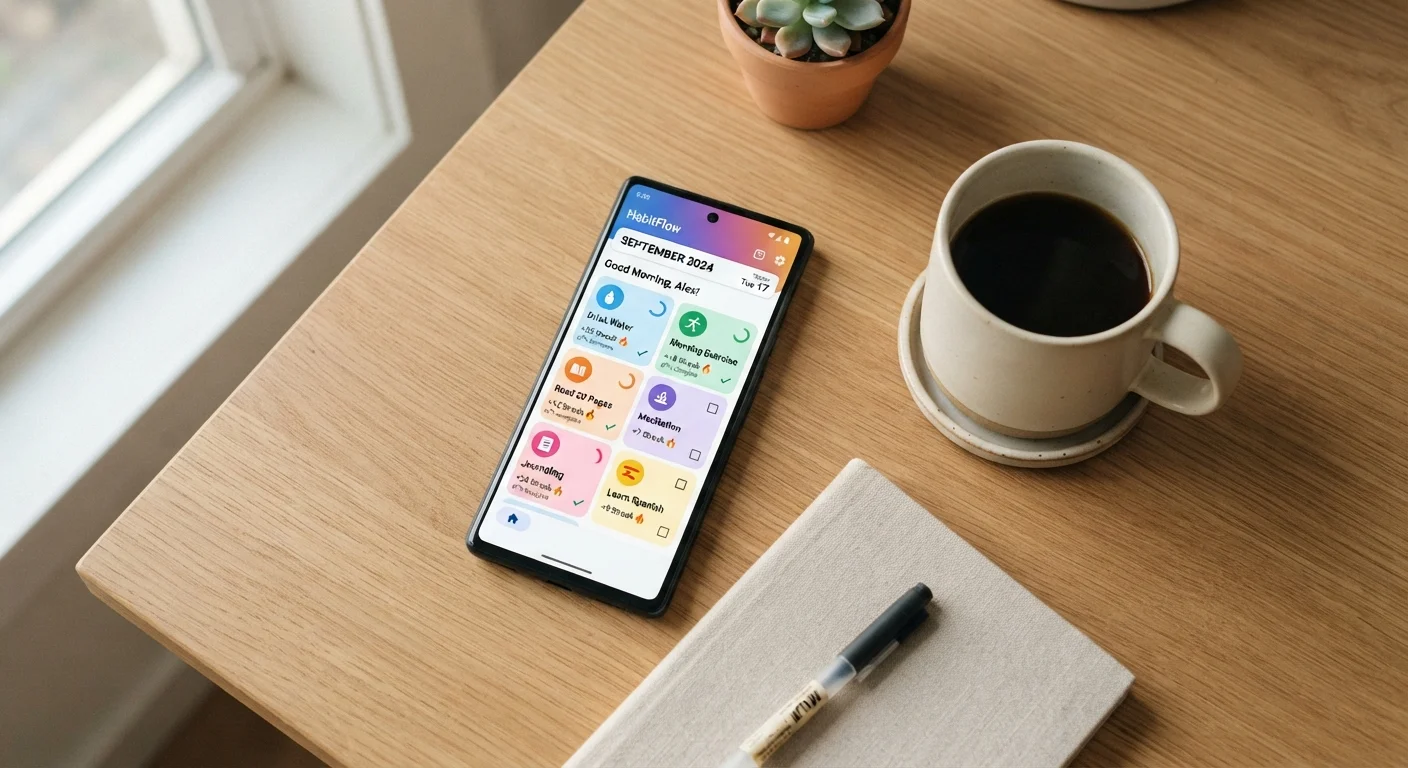
Habit apps and streak trackers are genuinely useful tools for building early momentum — but they carry real psychological risks if the streak becomes the point rather than the behavior. Used with intentionality and realistic expectations, they can provide the structure beginners need. Relied on rigidly, they can replace internal motivation with app dependency.
People who are new to habit formation and benefit from external accountability, visible progress, and structured reminders — particularly for low-stakes habits like hydration, journaling, or light movement.
What Habit Apps and Streak Tracking Actually Do
Habit tracking apps — from simple checkbox lists to streak-based gamification platforms — are built around a core behavioral principle: what gets measured gets managed. By logging a behavior daily, you create a visible record of consistency that activates the brain's reward circuitry in small but meaningful ways.
Streak counters specifically exploit what researchers call the "fresh start effect" and loss aversion. Once you've built a 14-day streak, the prospect of losing it tomorrow feels costly — which can be enough to get you off the couch on a hard day. This is by design, not accident.
For a plain-language breakdown of the underlying science, see our habit formation glossary, which covers concepts like cue-routine-reward loops that most apps quietly rely on.
Makes progress visible and tangible
Seeing a chain of completed days on a calendar creates a concrete sense of momentum. Research in behavioral psychology suggests that visual feedback increases follow-through, especially in early habit formation stages.
Reduces reliance on willpower alone
Reminders and prompts lower the cognitive load of remembering to do a new behavior. This is particularly useful in the first few weeks before a habit becomes automatic.
Provides a low-stakes accountability structure
For people without a gym partner or coach, an app can serve as a lightweight accountability mechanism — a daily prompt that says "did you do this today?" without judgment.
Supports reflection with data over time
Many apps generate weekly or monthly summaries that help users spot patterns — which days they most often skip, which habits cluster together, and where they consistently succeed.
Lowers the barrier to starting
The act of logging even a tiny version of a behavior — two minutes of stretching rather than a full workout — can preserve a streak while reinforcing the identity of someone who "does the thing."
Where Habit Apps Can Work Against You
The same mechanisms that make streak trackers motivating can also make them counterproductive. When the streak becomes the goal, it displaces the actual behavior change you set out to build. Skipping a workout becomes catastrophized as "ruining everything," even though research on habit formation consistently shows that missing a single day has minimal effect on long-term habit consolidation.
There's also the problem of metric fixation: apps reward checking boxes, not quality. Someone logging a "meditation" session that lasted 45 distracted seconds gets the same green checkmark as a genuinely focused practice. The number looks good; the habit isn't forming.
And for people prone to anxiety or perfectionism, streak pressure can create a new source of stress rather than reducing one. Auditing your habits weekly — asking whether a tool is helping or adding friction — is one practical way to catch this pattern early.
Streak anxiety can undermine intrinsic motivation
When avoiding a broken streak becomes the driver, you're being motivated by fear of loss rather than genuine interest in the habit. Over time, this can erode the internal motivation that sustains long-term behavior change.
Encourages checkbox completion over quality
Apps reward the act of logging, not the quality of the behavior. A habit that gets marked "done" in 30 distracted seconds builds the appearance of consistency without the substance.
One missed day can cause total abandonment
Studies on self-regulation suggest that all-or-nothing thinking — common with streak systems — makes people more likely to abandon a habit entirely after a single slip, rather than simply resuming.
Can create app dependency rather than real habits
If the app reminder is the only thing triggering the behavior, the habit hasn't truly formed — it's been outsourced to a notification. Remove the app, and the behavior often disappears with it.
May add cognitive clutter and decision fatigue
Managing multiple tracked habits simultaneously can feel like a second job. Research on decision fatigue suggests that too many daily obligations — even small ones — reduce overall follow-through.
Choosing the Right Tracking Method for You
Apps aren't the only option, and they aren't right for everyone. Paper journals, wall calendars, and apps each have distinct trade-offs — and the best method is usually the one you'll actually use consistently without dreading it.
If you find that apps generate more guilt than momentum, consider pairing a simpler analog system with a behavioral strategy like habit stacking — attaching a new behavior to something you already do reliably. This approach builds routines through context, not app dependency.
66 days
Average time to form a new habit automatically
A study published in the European Journal of Social Psychology found habit automaticity took an average of 66 days to develop, with a wide range depending on behavior complexity.
~40%
Of daily behaviors that are habitual
Research published in Personality and Social Psychology Bulletin estimated that roughly 40% of people's daily actions are habits rather than conscious decisions.
For practical inspiration without the pressure, a month of small, low-effort habit experiments offers a useful starting point. The emphasis there is on trying and observing — not on maintaining an unbroken chain.
Missing a Day Won't Break Your Habit
Research by habit scientist Phillippa Lally and colleagues found that missing an occasional day did not meaningfully slow habit formation over the long run. What matters is overall consistency across weeks, not a perfect unbroken record. If you miss a day, the most evidence-aligned response is simply to continue the next day without self-criticism — not to restart from zero.
The content on this site is for informational purposes only and is not a substitute for professional advice. Always consult a qualified professional for guidance specific to your situation.