

Start here
What Mindfulness Actually Is
Set expectations
What to Realistically Expect
Try it now
Your First Mindfulness Practice
Make it stick
Building a Sustainable Habit
Troubleshoot
Common Pitfalls and How to Avoid Them
What Mindfulness Actually Is
Mindfulness is often described as paying attention to the present moment on purpose and without judgment. That's it. No special equipment, no spiritual beliefs, no years of training required to begin.
In practice, it means noticing what's happening — in your body, your thoughts, your surroundings — without immediately reacting to, labeling, or trying to change it. For a few seconds or a few minutes, you observe rather than operate on autopilot.
The concept is widely misrepresented. It doesn't mean achieving a blank mind, constant calm, or some elevated state of consciousness. For a clearer breakdown of what the term does and doesn't cover, see our article on what mindfulness actually means.
Mindfulness
The practice of deliberately paying attention to the present moment — thoughts, sensations, or surroundings — without judging what you find.
Breath awareness
A foundational mindfulness exercise where you focus attention on the physical sensations of breathing, using breath as an anchor for the present moment.
Body scan
A practice where you slowly move attention through different parts of the body, noticing physical sensations without trying to change them.
Mind-wandering
The natural tendency of the mind to drift to thoughts about the past, future, or unrelated topics — an expected part of any mindfulness session, not a mistake.
Non-judgment
Observing your thoughts and experiences without labeling them as good or bad, right or wrong — a key attitude cultivated through mindfulness practice.
MBSR
Mindfulness-Based Stress Reduction — a structured, evidence-informed program developed in a clinical setting that uses mindfulness techniques to address stress and related challenges.
What to Realistically Expect
New practitioners frequently report two surprises: how busy the mind is once you actually notice it, and how unfamiliar it feels to simply sit without doing anything. Both are normal — and both are useful information.
Mindfulness research, including studies on structured programs like Mindfulness-Based Stress Reduction (MBSR), suggests that regular practice is associated with reductions in perceived stress and improvements in attentional control. However, effects vary by person, and mindfulness is not a substitute for professional mental health care. If you're managing a clinical condition, consult a qualified healthcare provider before using mindfulness as a primary strategy.
Mindfulness Is Not a Medical Treatment
While mindfulness is studied in clinical contexts, it is a general wellness skill — not a prescribed therapy or replacement for professional mental health care. If you're dealing with anxiety, depression, trauma, or any clinical condition, work with a licensed mental health provider who can guide you appropriately. Mindfulness may complement care, but that decision belongs to you and your provider.
Early sessions often feel awkward or fruitless. That discomfort is not failure — it's what learning a new skill feels like.
Your First Mindfulness Practice
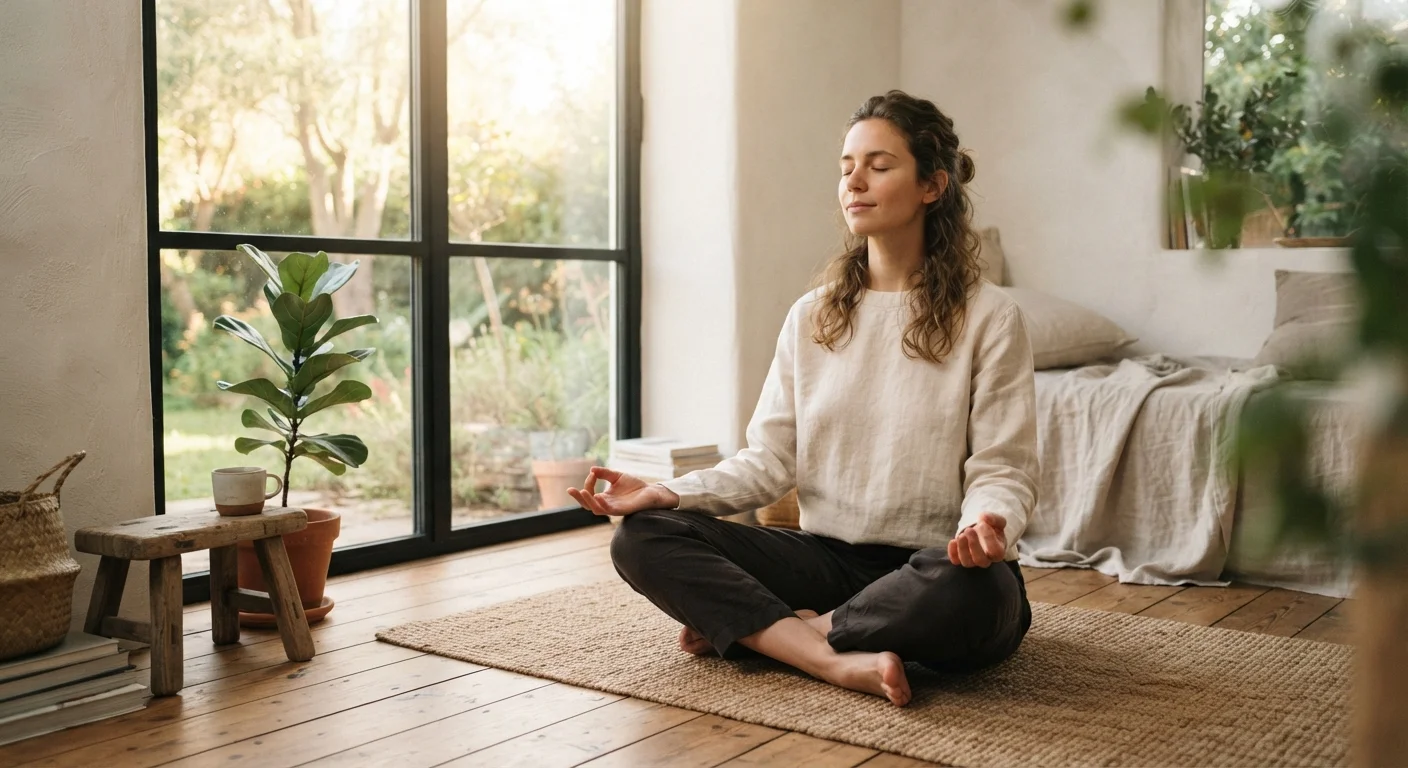
The simplest entry point is a breath-awareness exercise. Here's how to try it right now:
- Find a comfortable position. Sit in a chair, on the floor, or even stand. You don't need to adopt any particular posture.
- Set a short timer. Two to five minutes is plenty to start.
- Direct your attention to your breath. Notice the physical sensation of air entering and leaving your nostrils, or the rise and fall of your chest or belly.
- When your mind wanders — and it will — gently bring attention back. No self-criticism. The act of noticing and returning is the practice.
- When the timer ends, take a moment before moving on. Notice how you feel without trying to evaluate whether you did it correctly.
Start Shorter Than You Think You Should
Most beginners overestimate how long they can sustain focused attention and set an unrealistic bar from day one. Starting with just two minutes removes the intimidation and makes it easy to repeat tomorrow. Once two minutes feels easy and automatic, extend gradually on your own terms.
If breath-focused practice feels uncomfortable, try a simple body scan instead: mentally move your attention from your feet upward, noticing sensations without trying to change them. Our mindfulness vocabulary guide explains terms like body scan in plain language.
Building a Sustainable Habit
Habit research consistently shows that frequency beats duration for building new routines. Two minutes practiced daily will serve you better than a 30-minute session done once a week. Attach your practice to something you already do — morning coffee, a lunch break, the moment before you open your laptop — to reduce the friction of getting started.
You don't need a formal sitting practice to make progress. Mindfulness can be folded into everyday activities: eating a meal slowly and attentively, taking a deliberate pause before responding to a stressful email, or noticing five sensory details during a walk. These informal moments compound over time.
Mindfulness Terms Reference Guide
A plain-language glossary of common mindfulness vocabulary — from body scan to non-attachment — so you can follow any beginner guide with confidence.
Mindfulness Across Traditions
Traces how mindfulness evolved from Buddhist practice to modern secular settings, helping you understand the context behind the techniques you'll encounter.
Common Pitfalls and How to Avoid Them
Even well-intentioned beginners tend to stumble in predictable ways:
- Treating distraction as failure. Mind-wandering is not a sign you're doing it wrong. It's evidence the practice is working — because you noticed.
- Expecting immediate relaxation. Sometimes sitting quietly surfaces emotions or restlessness that were already there. This is normal and generally not harmful, but if distress feels significant, speak with a mental health professional.
- Practicing only when stressed. Using mindfulness solely as a crisis tool makes it harder to access when you need it most. Regular calm-state practice builds the skill more reliably.
- Comparing your experience to descriptions of bliss or insight. Most sessions are ordinary. That's fine. The value accumulates quietly.
Starting something new is rarely linear. The same honest, grounded approach that helps with building financial habits — like those outlined in our article on investing for beginners — applies here: start small, stay consistent, and don't let perfect be the enemy of started.
This article is for general informational purposes only and is not medical or psychological advice. If you are experiencing significant mental health symptoms, please consult a qualified healthcare professional.
Frequently Asked Questions
No. While sitting quietly is a common starting point, mindfulness can be practiced walking, washing dishes, or eating. The posture is less important than the quality of attention you bring to whatever you're doing.
Research suggests that consistent practice over several weeks is associated with measurable changes in stress and attention, though individual experiences vary widely. There's no guaranteed timeline. The goal is to practice regularly rather than chase a specific outcome.
Mindfulness and meditation overlap but aren't identical. Mindfulness is a mental quality — a way of paying attention. Meditation is a structured practice often used to cultivate it. You can practice mindfulness without formal meditation.
That's completely normal — and the instruction to 'clear your mind' is one of the most common misconceptions. The practice is to notice when your mind wanders and gently bring attention back. That returning is the exercise itself.
Mindfulness has roots in Buddhist contemplative traditions, but most modern secular programs have adapted it as a standalone mental skill with no religious requirement. You can learn more about this history in our guide on <a href="/health-wellness/mindfulness/mindfulness-across-traditions-from-buddhist-origins-to-modern-secular-practice">mindfulness across traditions</a>.
You can absolutely start without any app or tool — a quiet space and a few focused minutes are enough. Apps can be helpful for structure and guided cues, but they're not necessary. Beginning with a simple breath-awareness exercise costs nothing and requires nothing.
The content on this site is for informational purposes only and is not a substitute for professional advice. Always consult a qualified professional for guidance specific to your situation.