

Our Verdict
All three frameworks are proven tools for managing money — the differences lie in structure, effort, and behavioral fit. The 50/30/20 rule is the easiest entry point, zero-based budgeting offers the most granular control, and the envelope method delivers the strongest behavioral guardrails for habitual overspenders. Match the method to your lifestyle, not the other way around.
| Best for | Recommended |
|---|---|
| Beginners or those who want low-maintenance oversight | 50/30/20 Rule |
| Detail-oriented planners or those aggressively paying off debt | Zero-Based Budgeting |
| People who overspend in specific categories like dining or entertainment | Envelope Method |
| Anyone combining structure with digital tools | Zero-Based Budgeting or Envelope Method (digital) |
How Each Budgeting Method Works
Before comparing these frameworks, it helps to understand exactly what each one asks of you. If you're new to budgeting vocabulary, our plain-language glossary of budgeting terms covers the essentials.
The 50/30/20 Rule
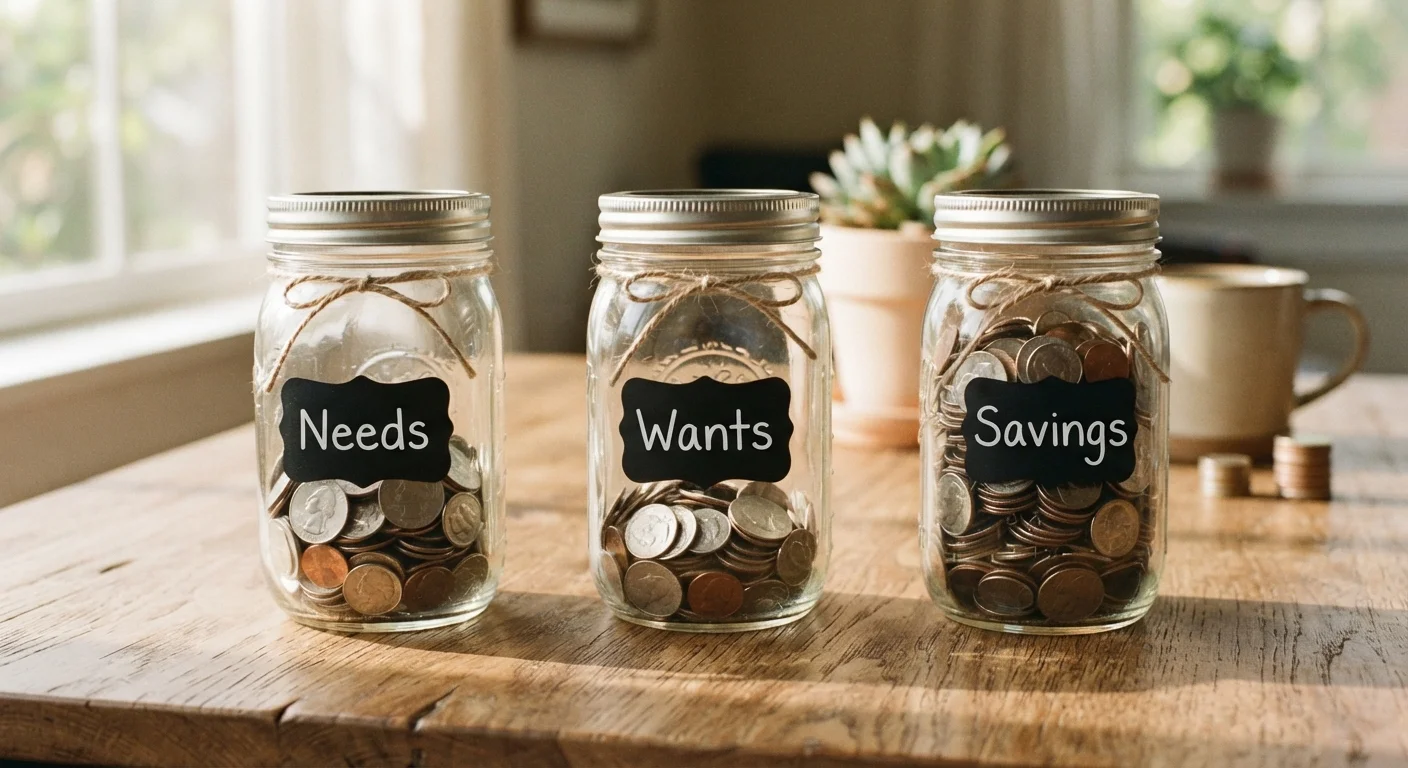
Popularized by Senator Elizabeth Warren and her daughter Amelia Warren Tyagi in their book All Your Worth, this framework divides your after-tax income into three buckets: 50% for needs (housing, groceries, utilities, minimum debt payments), 30% for wants (dining out, subscriptions, hobbies), and 20% for savings and debt repayment. No line-item tracking required — just three percentages to monitor.
Zero-Based Budgeting (ZBB)
Zero-based budgeting means assigning every dollar of income to a specific category until income minus all allocations equals zero. Nothing is left unassigned. You plan each month from scratch, justifying every expense category rather than rolling over last month's figures. Our deeper look at giving every dollar a job explores the genuine tradeoffs involved.
The Envelope Method
Originally a physical cash system, the envelope method divides spending money into labeled envelopes — one per category. When an envelope is empty, spending in that category stops for the month. Digital versions replicate this with virtual envelopes or sub-accounts. The method imposes hard stops rather than soft guidelines.
Side-by-Side Comparison
The table below compares the three methods across the factors that matter most when choosing a budgeting framework. For a more detailed look at just two of these approaches, see our head-to-head comparison of zero-based budgeting and the 50/30/20 rule.
| 50/30/20 Rule | Zero-Based Budgeting | Envelope Method | |
|---|---|---|---|
| Setup time | Under 30 minutes | 1–2 hours initially | 30–60 minutes |
| Monthly maintenance | Low — check 3 buckets | High — rebuild each month | Moderate — refill envelopes |
| Tracking detail | Broad categories only | Every dollar assigned | Category-by-category |
| Flexibility | High within each bucket | Moderate — requires reallocation | Low — hard limits per envelope |
| Best for irregular income | Less ideal | Well-suited | Moderate adaptability |
| Behavioral enforcement | Soft guidelines | Intentional assignment | Hard spending stops |
| Works well digitally | Yes | Yes | Yes — many app options |
One pattern stands out: the more control a method provides, the more time it typically demands. Neither is inherently better — the right trade-off depends on your financial situation and behavioral tendencies.
What Each Method Gets Right (and Wrong)
Every framework has structural advantages and genuine limitations worth knowing before you commit.
50/30/20: Strengths and Weaknesses
Its biggest strength is accessibility — three categories are easy to remember and require minimal tracking. The weakness is precision: grouping all "wants" together can mask problem spending within that bucket. Someone spending 28% on wants may be overspending on dining and underspending on everything else, without the method flagging it.
Zero-Based Budgeting: Strengths and Weaknesses
ZBB forces intentional decision-making on every dollar. Research on behavioral economics consistently shows that naming money increases follow-through. The downside is setup cost — building a ZBB plan for the first time can take 1–2 hours, and monthly re-budgeting takes ongoing effort. It is less forgiving for people with irregular income, though understanding standard budget categories helps speed up the process considerably.
Envelope Method: Strengths and Weaknesses
The envelope method excels at breaking specific overspending habits because the feedback is immediate and physical (or visually immediate in digital tools). Its limitation is inflexibility — if your car breaks down and the repair envelope is empty, the system requires re-shuffling from other envelopes rather than graceful reallocation.
Don't Let Perfection Stall Progress
A common mistake is spending weeks researching the "ideal" budgeting method and never actually starting. All three frameworks discussed here work — the evidence is in decades of personal finance practice. Imperfect implementation of any of them is more valuable than perfect theoretical knowledge of all of them. Pick the one that creates the least friction and begin this month.
Choosing the Right Framework for Your Situation
The method you stick with long enough to see results will always outperform the theoretically superior method you abandon after three weeks. Consider these practical fit factors:
- Income stability: Salaried earners can use any of the three. Freelancers or gig workers often find ZBB more adaptable because it is rebuilt each month around actual projected income.
- Time availability: If budgeting time is scarce, the 50/30/20 rule's low maintenance requirement is a genuine advantage.
- Specific problem areas: If you consistently overspend in two or three categories, the envelope method targets those precisely without overhauling your entire financial approach.
- Financial goals: Aggressive debt payoff or savings milestones often benefit from ZBB's specificity. General financial stability can be achieved with the 50/30/20 rule.
Whatever framework you choose, the habits that make budgets actually work are worth building in regardless of method. Once your budget is consistently working, it naturally opens the door to investing basics.
Consider Combining Methods
Many people find success blending frameworks — for example, using the 50/30/20 rule as an overall target while applying envelope-style limits to one or two problem spending categories. This hybrid approach captures the simplicity of percentage budgeting without sacrificing behavioral guardrails where they're most needed. Start with one method, get comfortable, then layer in elements of another if your situation calls for it.
This article is for general informational and educational purposes only and does not constitute personalized financial advice. Consider consulting a qualified financial professional for guidance tailored to your individual circumstances.
The content on this site is for informational purposes only and is not a substitute for professional advice. Always consult a qualified professional for guidance specific to your situation.