

Why Utilisation Carries So Much Weight
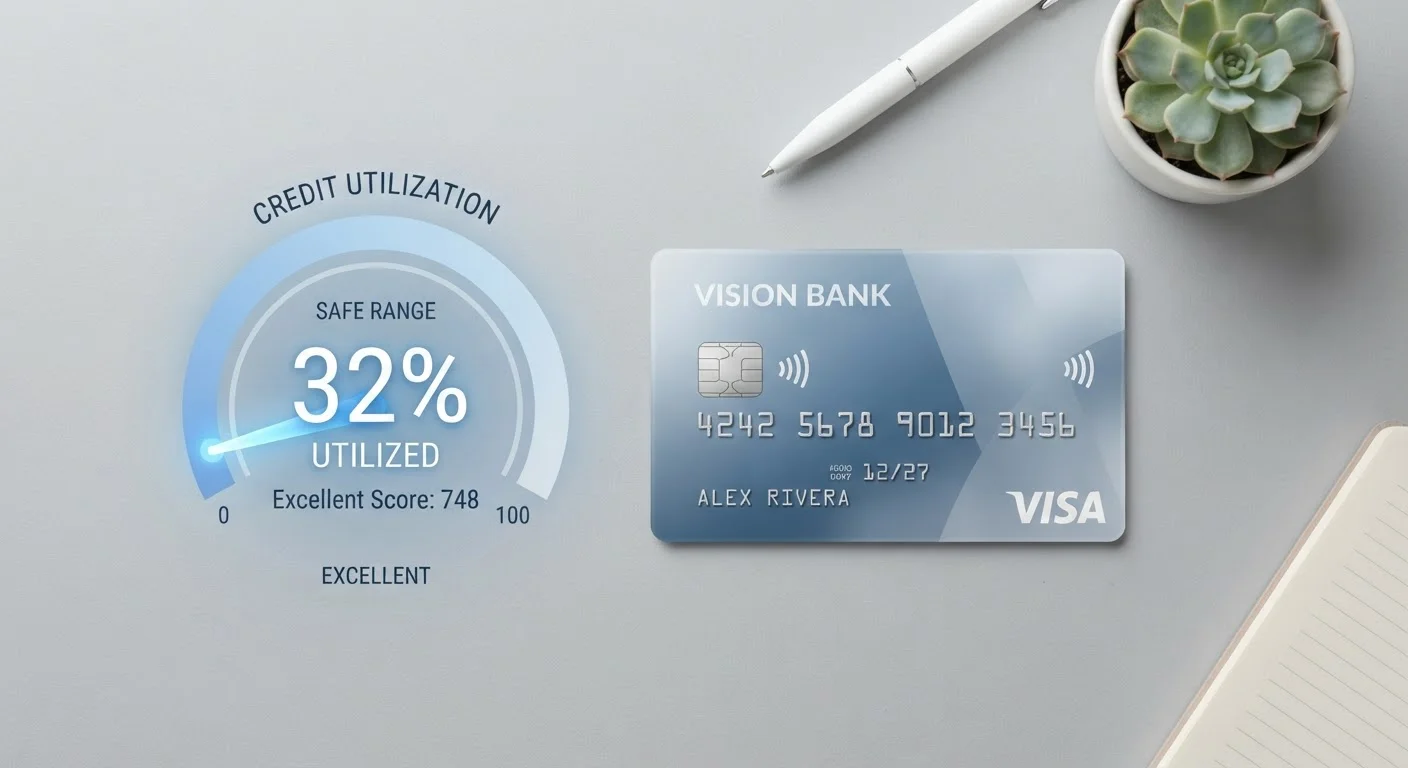
Of all the variables that go into a credit score, credit utilisation is both the most misunderstood and among the most actionable. Under the FICO scoring model — the one most widely used by U.S. lenders — your amounts owed category makes up approximately 30% of your score. Utilisation is the dominant factor within that category.
The reasoning from a lender's perspective is straightforward: someone using a large proportion of their available credit may be financially stretched, increasing the risk of missed payments. A low utilisation rate, by contrast, signals that you are borrowing selectively and are not dependent on credit to cover everyday expenses.
What catches many consumers off guard is how quickly this ratio can shift — and how sensitive scores can be to even moderate changes. Going from 25% to 60% utilisation on a single card can move your score by dozens of points, depending on the rest of your credit profile. For context on how other types of debt interact with your score, see which debt categories lenders scrutinise most.
~30%
Share of FICO score tied to amounts owed
According to FICO's published scoring model breakdown, the 'amounts owed' category — where utilisation is the primary factor — makes up roughly 30% of a base FICO score.
<10%
Utilisation rate common among top scorers
Consumers who hold FICO scores of 800 or higher typically maintain very low utilisation rates, often in the single digits, according to industry analyses of high-credit-score profiles.
1–2 cycles
Time for paydown to reflect in score
Because creditors report balances monthly, paying down a balance can show up in an updated credit score within one to two billing cycles — faster than most other credit improvements.
How the Calculation Actually Works
Your overall credit utilisation is calculated by adding up all your revolving credit balances and dividing that total by the sum of all your revolving credit limits. But that aggregate number is only part of the picture.
Scoring models also examine per-card utilisation. If you have three cards with a combined limit of $15,000 but one card alone is at 80% of its $3,000 limit, that individual account can drag your score down even if your overall utilisation looks reasonable. This is why spreading balances across cards — rather than maxing one out — can make a meaningful difference.
It is also worth understanding when your balance is reported. Creditors typically report your statement balance to the credit bureaus at the end of each billing cycle, not your real-time balance. So if you spend heavily during the month but pay in full before the statement closes, the reported balance — and therefore your utilisation — may be much lower than you expect.
Time Your Payments Strategically
If you want a specific balance reported to the bureaus, check your statement closing date — not just your payment due date. These are two different dates. Paying your balance down before the closing date lowers what gets reported, which directly reduces your utilisation for that cycle. Your payment due date (typically 21–25 days later) is the deadline to avoid late fees and interest, but it does not affect what was already reported.
Practical Ways to Manage Your Ratio
Because utilisation is recalculated each cycle, it responds faster to direct action than most other credit factors. Here are the clearest levers available to you:
- Pay down balances before the statement closing date. This is the most direct approach. Paying before the statement generates means less is reported to the bureaus.
- Make multiple payments per month. Mid-cycle payments reduce the balance that gets reported, which can lower utilisation without changing your spending habits drastically.
- Request a credit limit increase. If your income and payment history support it, a higher limit on an existing card immediately reduces your utilisation percentage — as long as your spending stays the same. Be aware that some limit increase requests trigger a hard inquiry on your credit file.
- Avoid closing old accounts unnecessarily. Closing a card reduces your total available credit, which can push utilisation higher. Before closing any account, calculate the effect on your overall ratio.
For a broader view of how credit-building tools interact with your utilisation, secured cards and credit-builder loans offer additional strategies worth understanding.
Common Misconceptions Worth Correcting
Several widely repeated beliefs about utilisation can lead consumers to manage their credit less effectively than they could.
Myth: Carrying a small balance helps your score. You do not need to pay interest to build a positive utilisation history. Paying in full each month and having a low reported balance is just as effective — and costs you nothing in interest charges. Common credit score myths like this one persist despite being well-documented as false.
Myth: Utilisation history affects your score. Unlike payment history, which looks back over time, utilisation is a snapshot. Your score reflects your current utilisation, not a multi-year average. This means a long stretch of high utilisation does not leave a permanent mark — once you pay balances down, the effect on your score reverses relatively quickly.
Myth: All credit accounts count toward utilisation. Only revolving accounts — primarily credit cards and personal lines of credit — factor into utilisation calculations. Installment loans such as auto loans and student loans are evaluated differently and do not contribute to your utilisation ratio.
This article is for general informational and educational purposes only and does not constitute personalised financial or credit advice. For guidance specific to your situation, consider consulting a qualified financial professional.
Frequently Asked Questions
Most credit scoring guidance points to staying below 30% as a reasonable threshold, but consumers with the highest scores typically use well under 10%. There is no single universal target, but lower is generally better as long as you are still actively using credit.
Yes, in most cases. If you pay your full balance before the statement closing date, the balance reported to credit bureaus will be lower — potentially zero. This can significantly reduce your reported utilisation even though you are using the card regularly.
Closing a card removes its credit limit from your total available credit, which can raise your overall utilisation ratio if you carry balances on other cards. It is worth calculating the impact before closing an account you no longer use.
Because utilisation is recalculated each billing cycle based on what creditors report, paying down balances can reflect in your score within one to two billing cycles. It is one of the faster-moving factors in credit scoring compared to payment history or account age.
Having a 0% utilisation — meaning no balances reported at all — can sometimes produce a slightly lower score than having a very small balance. Some scoring models prefer to see some active use of revolving credit rather than none at all.
No. Credit utilisation specifically measures revolving credit, such as credit cards and lines of credit. Installment loans like auto loans, student loans, and mortgages are evaluated separately and do not factor into your utilisation ratio.
The content on this site is for informational purposes only and is not a substitute for professional advice. Always consult a qualified professional for guidance specific to your situation.