

Our Verdict
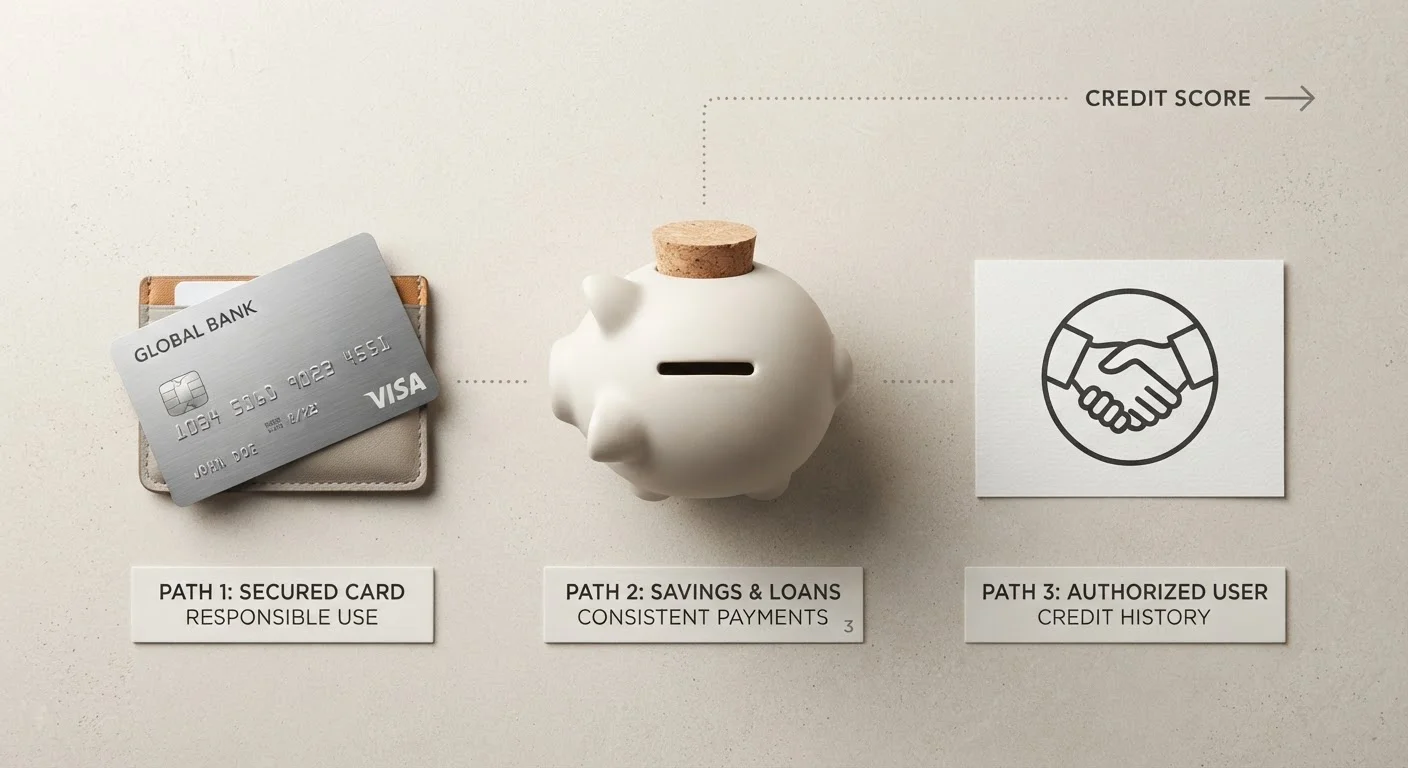
All three options can meaningfully improve a thin or damaged credit profile, but none is universally superior. Secured cards offer hands-on practice with revolving credit; credit-builder loans teach disciplined saving alongside credit-building; and authorised user status is the fastest path — but only if the primary cardholder manages their account well. For most people starting from scratch, combining two of these approaches accelerates progress faster than any single method alone.
| Best for | Recommended |
|---|---|
| Those with no credit history who want direct control | Secured Card |
| Those who also want to build emergency savings while establishing credit | Credit-Builder Loan |
| Those with a trusted family member or partner with excellent credit | Authorised User Status |
| Those rebuilding after past credit problems | Secured Card or Credit-Builder Loan |
Why These Three Tools Matter
If your credit file is thin or shows past problems, lenders treat you as a higher risk — even when your current finances are stable. The good news is that the U.S. credit system rewards demonstrated behaviour over time, and three widely available tools are specifically designed for people who need to build that track record. Understanding how each one works — and where it can go wrong — is the starting point for making a confident choice.
For broader context on navigating credit from the ground up, see our practical guide to establishing credit from zero. This article focuses on comparing the three most common structured tools side by side.
| Secured Card | Credit-Builder Loan | Authorised User | |
|---|---|---|---|
| How it works | Deposit-backed revolving credit line | Payments held until loan term ends | Added to another person's account |
| Upfront cost | Cash deposit (refundable) | No deposit; fees/interest apply | None to you |
| Credit types built | Revolving credit history | Installment loan history | Mirrors primary cardholder's account |
| Speed of impact | 1–3 months for initial reporting | 1–3 months for initial reporting | Can appear within one billing cycle |
| Control over outcome | High — you manage the card | High — fixed payments, no temptation | Low — depends on primary cardholder |
| Main risk | High utilisation or missed payments | Missing monthly payments | Primary cardholder's bad habits hurt you |
| Best starting point | No or limited credit history | No or limited credit history | Trusted relationship with strong account holder |
Secured Cards: Controlled Practice With Revolving Credit
A secured credit card works almost identically to a standard credit card, with one key difference: you provide a refundable cash deposit — typically between $200 and $500 — which usually becomes your credit limit. The issuer reports your payment activity to the major credit bureaus (Equifax, Experian, and TransUnion) each month, meaning on-time payments build a positive history and missed payments cause real damage.
Secured cards are most useful for practising the habits that drive good scores: paying on time and keeping your credit utilisation ratio (the percentage of available credit you use) low. Carrying a high balance relative to your limit can drag your score down even if payments are on time. Our article on how credit utilisation shapes your score explains exactly why this ratio carries so much weight.
Watch for Excessive Fees on Secured Cards
Some secured cards carry annual fees, monthly maintenance fees, or processing fees that can consume a significant portion of your deposit or limit. Before applying, calculate the total annual cost of fees relative to the credit limit you'll receive — a card charging $75 in annual fees on a $200 limit is expensive credit-building. Always read the card's fee disclosure (the Schumer Box) in full before submitting an application.
After 12 to 18 months of consistent use, many issuers will upgrade the account to an unsecured card and return your deposit — though policies vary, so confirm terms before applying.
Credit-Builder Loans: Saving and Scoring at the Same Time
A credit-builder loan (also called a credit-builder account) flips the typical loan model. You make fixed monthly payments, but the lender holds the funds in a locked savings account during the loan term — usually 12 to 24 months. Once you've made all payments, you receive the accumulated amount. The lender reports every payment to the bureaus throughout the term, building a payment history as you go.
This product is particularly well-suited to people who want to build an emergency fund alongside their credit profile. The forced-savings structure creates a small financial cushion by the end of the term. Credit unions and community banks are the most common sources, though some financial technology companies offer similar products. Fees and interest rates vary meaningfully between providers, so compare the total cost of the loan — not just the monthly payment — before committing.
Maximise a Credit-Builder Loan's Value
Set up automatic payments for your credit-builder loan to eliminate the risk of a missed payment — the one thing that would undermine the entire purpose of the product. Treat the monthly amount as a non-negotiable expense in your budget, similar to rent. When the funds are released at the end of the term, consider directing them toward a small emergency fund rather than discretionary spending, since having liquid savings reduces the likelihood of future credit problems.
Authorised User Status: Borrowing Someone Else's History
When a primary cardholder adds you as an authorised user on their credit card account, the account's history — its age, credit limit, and payment record — can appear on your credit report. If the primary cardholder has a long, well-managed account, this can produce a meaningful and relatively quick improvement to your score without requiring you to open any new accounts yourself.
The downside is symmetrical: if the primary cardholder carries a high balance, misses payments, or closes the account, those negative signals can affect your report too. This approach requires genuine trust in the other person's financial habits, not just their intentions. You are also not legally responsible for the debt — but that also means you have no control over how the account is managed.
If you're planning to apply for a significant loan — such as an auto loan or mortgage — after building credit this way, read our financial readiness checklist before applying for credit to make sure your profile is genuinely ready.
Choosing the Right Approach for Your Situation
No single tool fits every situation. Consider these factors when deciding:
- Starting point: If you have no credit history at all, any of the three can work. If you have negative marks, a secured card or credit-builder loan lets you build fresh positive history without depending on another person.
- Liquidity: Secured cards tie up a cash deposit; credit-builder loans require monthly payments you won't access until the term ends. If cash is tight, authorised user status may be the only realistic option initially.
- Discipline: Secured cards require you to actively manage spending and payments. If you're concerned about overspending, the passive structure of a credit-builder loan removes that temptation.
- Trust network: Authorised user status is only viable if you have a family member or close contact with strong credit habits willing to add you.
Many people combine approaches — for example, becoming an authorised user while also opening a secured card — to build both credit history length and active payment records simultaneously. For a full picture of managing credit across its lifecycle, our complete guide to credit and debt covers each stage in plain language.
This article is for general informational purposes only and does not constitute personalised financial or legal advice. Consult a qualified financial professional before making decisions based on your individual circumstances.
The content on this site is for informational purposes only and is not a substitute for professional advice. Always consult a qualified professional for guidance specific to your situation.