

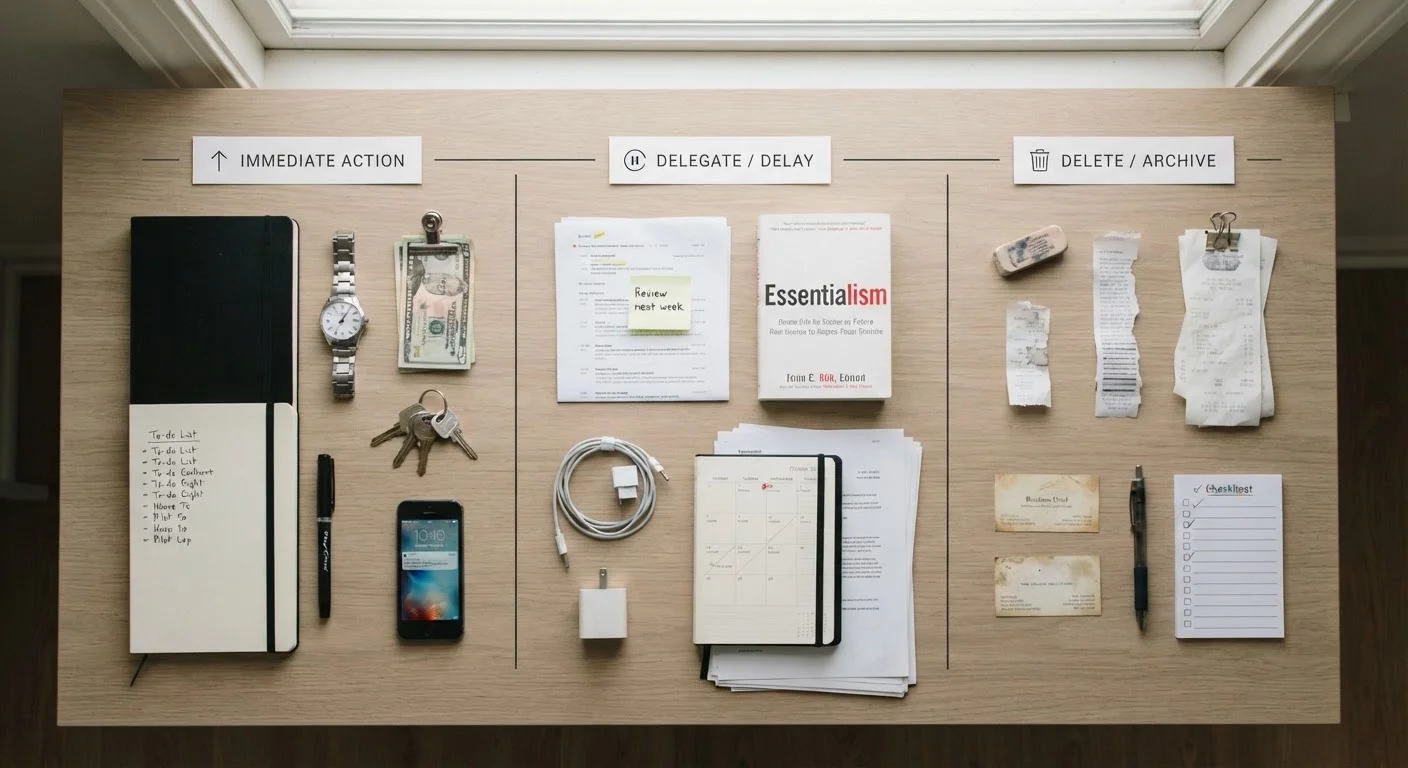
Why a Simple Framework Beats Willpower Alone
Most spending regret doesn't come from reckless decisions — it comes from unclear ones. Without a consistent way to evaluate purchases, even thoughtful people default to habit, marketing pressure, or mood. A structured framework doesn't restrict your spending; it gives you a reliable lens to apply before money leaves your account.
The Needs / Wants / Nice-to-Haves model is one of the most durable tools in consumer decision-making. It's not about deprivation. It's about making the distinctions that are easy to skip when you're in the middle of a purchase moment. Used consistently, it reduces cognitive load, cuts impulse buys, and helps you feel more settled about where your money actually goes.
For a broader look at how this fits into the full arc of a purchase decision, see this foundation guide for thoughtful consumers.
| Framework origin | Needs/Wants model traces to basic consumer economics and budgeting education |
| Primary use | Pre-purchase classification to guide spending priority and reduce regret |
| Works for | Recurring purchases, large one-time items, household spending, subscriptions |
| Key risk to avoid | Category creep — letting marketing redefine a Want or Nice-to-Have as a Need |
| Decision speed | Framework becomes faster with consistent use; aim for habit, not deliberation every time |
The Three Categories, Defined
Each category has a specific meaning. Using them loosely undermines the whole exercise.
Need
A purchase that addresses a genuine, concrete requirement — such as health, safety, or an essential work function — where the absence of the item causes real harm or prevents a core obligation from being met.
Want
A purchase that would meaningfully improve quality of life or serve a real recurring purpose, but where functional alternatives already exist. Wants are legitimate and worth budgeting for, but they involve trade-offs.
Nice-to-Have
A purchase that adds a layer of convenience, comfort, or polish on top of something that already works adequately. These items have real appeal but are the first candidates for deferral when budgets are tight.
Category Creep
The tendency for items to be mentally reclassified upward — from Nice-to-Have to Want, or Want to Need — through repeated exposure, marketing framing, or social comparison, without any change in actual circumstances.
Opportunity Cost
The value of what you give up by choosing one option over another. Spending on a Nice-to-Have item has an opportunity cost: the same money could have addressed a Want or Need, or remained saved.
Needs are non-negotiable. A purchase falls here if going without it would meaningfully harm your health, safety, livelihood, or core obligations. A working vehicle for a job that has no transit alternative is a need. A warmer coat in a genuinely cold climate is a need. The test: what concrete harm results from not buying this? If the answer is "none, really," it doesn't belong here.
Wants are purchases that would genuinely improve your quality of life or serve a real, recurring purpose — but where alternatives exist. A new laptop when your current one is slow but functional is a want. Wants aren't frivolous; they're legitimate. The category exists not to make you feel guilty but to flag that trade-offs apply here.
Nice-to-Haves are additive rather than substitutive — they layer on top of something that already works. The upgraded trim on an appliance. The premium version of software whose free tier covers everything you actually use. These are fine to buy when budget allows, but they shouldn't displace higher-priority spending.
For a complementary take on separating impulse from intention, see this breakdown of impulse versus considered purchasing.
How to Apply the Framework in Practice
The categories are only useful if you apply them honestly. A few prompts that help:
- Ask what function it serves. Is this purchase solving a specific, recurring problem or filling a gap? Or is it solving a problem you don't quite have yet?
- Check what you'd use instead. If you already own a reasonable substitute, that's a signal the purchase sits in Want or Nice-to-Have territory — not automatically a reason not to buy, but relevant context.
- Separate timing from category. Something can be a genuine Need but not an urgent one. Needs can wait for the right price or the right moment without becoming less real.
- Watch for category creep. Marketers know that framing shifts purchase perception. A feature pitched as "essential" is rarely a need in the strict sense. Apply your own definition, not the one in the ad.
~33%
Of purchases consumers later describe as regrettable
Consumer research consistently finds a substantial share of purchases are viewed in hindsight as unnecessary; exact figures vary by study and category.
3 questions
Core prompts the framework reduces to
Function served, existing substitute, and timing need — three consistent prompts cover the vast majority of purchase decisions.
Once you've categorized a purchase, the framework also tells you how much scrutiny to apply. Needs justify research even when inconvenient. Wants deserve comparison and timing consideration. Nice-to-Haves can be deferred without any real cost, which is often the clearest signal about them. For a structured approach to researching unfamiliar categories, see this guide to navigating product categories you know nothing about.
The Framework Doesn't Set Your Budget
Categorizing a purchase as a Need doesn't tell you how much to spend on it — only that spending is justified. A winter coat can be a genuine Need; whether to spend $80 or $300 is a separate question involving durability, frequency of use, and available funds. Use the framework for classification, then apply value principles to the amount. This article is for general informational purposes and does not constitute financial advice. For decisions that significantly affect your financial situation, consider consulting a qualified financial professional.
Applying the Framework Across Different Spending Types
The model scales across spending contexts:
Recurring purchases (groceries, subscriptions, utilities): categorize the category, not each individual purchase. If a streaming subscription sits firmly in Nice-to-Have for six consecutive months, that's actionable information.
Large one-time purchases (appliances, furniture, electronics): this is where the framework earns its value most directly. These decisions justify more deliberate classification and more research. See the anatomy of a smart shopping decision for a full end-to-end framework.
Household spending as a renter: the Need / Want / Nice-to-Have model applies particularly well to home furnishings and upgrades, where the temptation to over-invest in a temporary space is real. The renting hub covers how to think about home spending decisions in a rental context.
The goal isn't to make every purchase feel like a test. It's to build a consistent internal habit so that the categorization becomes fast and automatic — applied before checkout, not after regret. For principles that hold across almost any type of purchase, see evaluating value before you spend.
The content on this site is for informational purposes only and is not a substitute for professional advice. Always consult a qualified professional for guidance specific to your situation.