

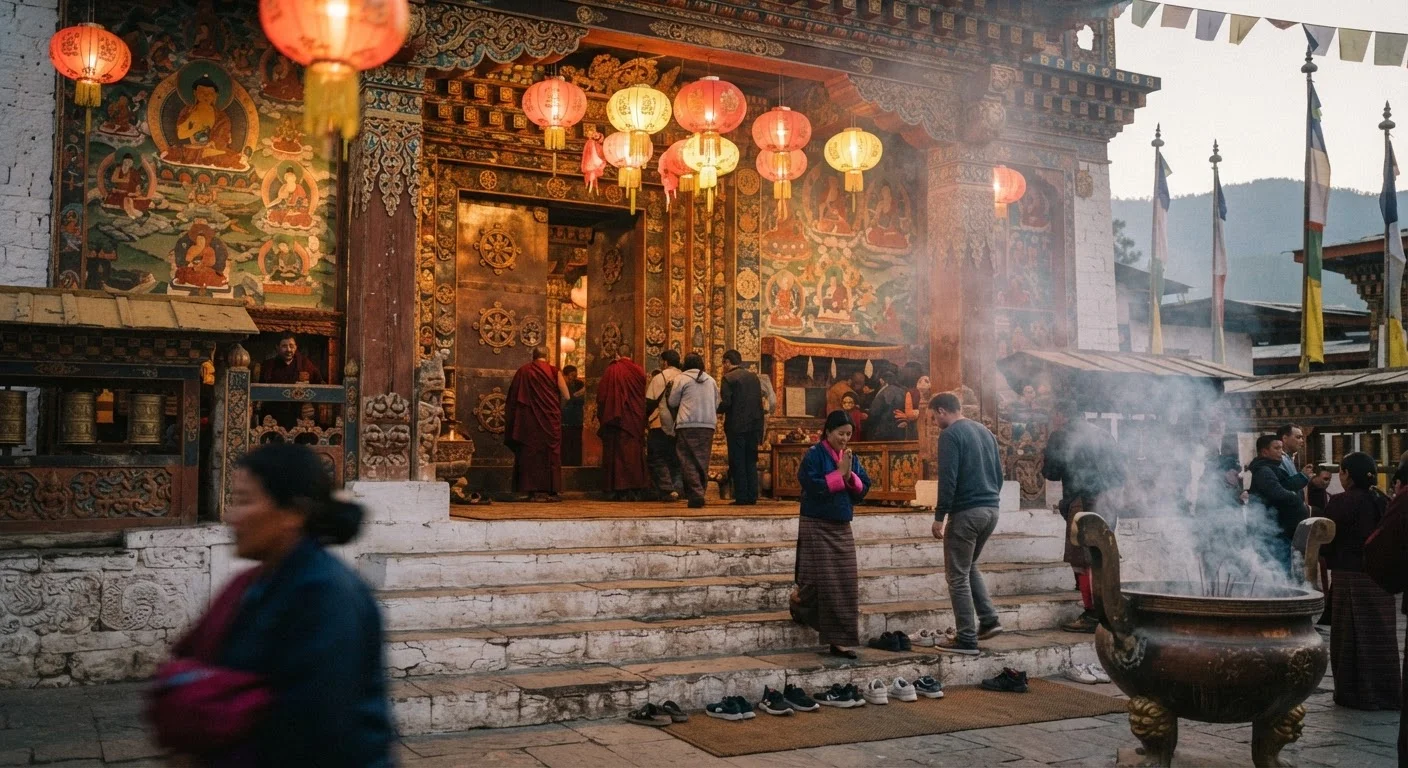
Why Etiquette Gaps Catch Travelers Off Guard
Most travelers heading to East or Southeast Asia research visa rules and transportation logistics — far fewer spend equivalent time on social customs. The result is predictable: well-meaning visitors accidentally give offense at a temple, misread a local's polite non-answer, or cause quiet awkwardness at a dinner table. None of these situations are catastrophic, but they're avoidable.
Cultural norms across the region are neither monolithic nor static. Japan, Thailand, Vietnam, Indonesia, and South Korea each carry distinct traditions shaped by different religious histories and social structures. What earns appreciation in one country may be neutral or mildly offensive in another. A working familiarity with the most commonly misunderstood customs gives you a foundation — and the humility to keep observing once you arrive.
For broader trip preparation, see how flexible versus fixed itineraries can affect how much bandwidth you have to engage with local customs rather than rushing from one landmark to the next.
Best Practices for Navigating Cultural Expectations
The practices below address the situations where travelers most reliably run into trouble. They're not an exhaustive cultural atlas — they're a practical starting kit.
Remove shoes whenever you see them piled at an entrance.
Shoe removal signals cleanliness and respect in homes, many temples, and some traditional restaurants throughout Japan, South Korea, Thailand, and Indonesia. Keeping shoes on when others have removed theirs communicates either ignorance or disregard — both of which create friction with hosts.
Never stick chopsticks upright in a bowl of rice.
In Japan, China, South Korea, and Vietnam, upright chopsticks in rice mirror incense offerings made at funerals and ancestral altars. Even where diners won't say anything, the association is uncomfortable and widely recognized.
Cover shoulders and knees before entering any temple or place of worship.
Dress codes at Buddhist temples, Hindu pura complexes, and Muslim mosques throughout the region restrict exposed skin. Many sites turn away visitors who don't comply, and even where enforcement is lax, entering underdressed is widely considered disrespectful.
Match your greeting to the local form rather than defaulting to a handshake.
Physical contact norms vary significantly: bowing is customary in Japan and South Korea (with depth reflecting the level of formality), the Thai wai is a palms-pressed gesture, and in Indonesia a handshake is common but a firm Western grip can feel abrupt. Initiating the wrong greeting — especially physical contact with someone who didn't expect it — creates awkwardness.
Avoid expressing anger or frustration publicly.
Across much of East and Southeast Asia, maintaining composure in public is a social norm with deep cultural roots. Raising your voice, expressing visible irritation, or aggressively demanding resolution to a problem causes loss of face — for both parties — and typically produces worse outcomes, not better ones.
Use both hands when giving or receiving items, business cards, and payments.
In Japan, South Korea, and parts of Southeast Asia, handing something to someone with a single hand — especially the left hand — can read as casual or dismissive depending on context. Using both hands, or placing a hand under the wrist of the hand being used, signals care and respect.
Quick Actions to Take Before You Depart
Etiquette preparation takes less time than you'd expect. A few targeted actions before departure will cover the majority of situations you'll encounter.
For a related look at entry requirements and documentation — which pair naturally with cultural preparation — understanding entry requirements is a solid companion read. If your itinerary includes island destinations in Southeast Asia, the realities described in what Southeast Asia's island paradises actually involve are equally worth reviewing before you finalize plans.
Keeping Perspective When You Get It Wrong
Even well-prepared travelers misstep. A sincere, non-defensive acknowledgment — a small bow, a quiet apology, or simply deferring to your host's lead — resolves most situations gracefully. Locals in heavily visited areas are generally accustomed to cross-cultural misunderstandings; what they notice is whether you're making an effort.
Etiquette Expectations Are Not Uniform Across the Region
East and Southeast Asia spans dozens of distinct cultures, languages, and religious traditions. The practices here reflect widely applicable patterns, but meaningful variation exists at the country and even city level. Urban centers like Tokyo or Singapore operate under somewhat different social rhythms than rural villages. Treat these practices as a starting baseline, not a complete rulebook — and keep observing once you arrive.
Travelers curious about how cultural norms compare across other regions may find value in first-timer expectations for the Middle East, which covers comparable ground for Jordan, Oman, and the UAE.
The content on this site is for informational purposes only and is not a substitute for professional advice. Always consult a qualified professional for guidance specific to your situation.