

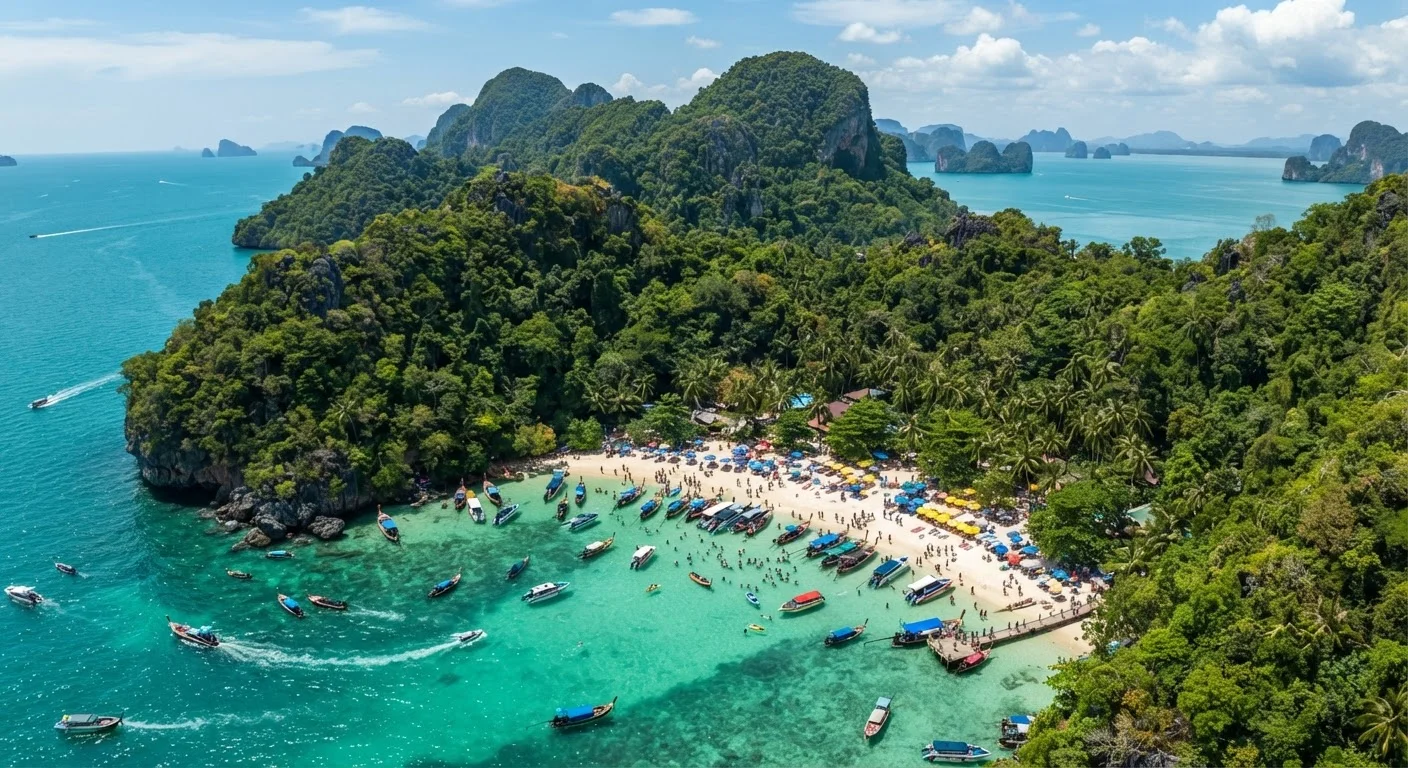
The Brochure Problem: Perfect Images, Incomplete Information
Travel marketing for Southeast Asia's islands runs on a narrow set of images: empty white sand, water so clear it looks edited, and a solitary hammock. These images aren't fabricated — they're just taken at specific times, with specific lenses, and edited to remove the longtail boats, the day-trippers, and the construction site three hundred meters to the left.
Setting accurate expectations before you land isn't pessimism. It's the difference between a trip that delivers and one that disappoints. The islands of Thailand, Indonesia, and the Philippines genuinely are remarkable destinations — understanding what they actually involve makes it possible to experience them on their own terms.
For a broader look at how timing myths distort planning decisions across destinations, see our guide to seasonal travel myths.
Myth
The dry season means clear skies every single day across all of Southeast Asia's islands.
Fact
Dry season reduces rain probability significantly but does not guarantee cloudless skies, and its timing differs sharply by island group.
Thailand's Gulf Coast islands (Koh Samui, Koh Phangan) peak in February–April, while the Andaman side (Koh Lanta, Phuket) peaks November–April. The Philippines spans 7,600 islands, and weather windows vary dramatically — Palawan's best months differ from Siargao's. Checking the specific island's micro-climate, not just the country, is the only reliable approach.
Myth
Traveling in rainy season means rain all day, every day — the trip is essentially ruined.
Fact
Most monsoon periods deliver concentrated downpours, often brief, rather than continuous rainfall — and some islands stay largely dry even during regional wet season.
As explored in depth here, rainy season trade-offs are more nuanced than most travelers expect. Mornings are frequently clear, afternoon rains can pass within an hour, and ferry routes usually continue operating. Fewer crowds and lower accommodation rates are real compensations, though marine activities like diving may be limited.
Myth
The most-photographed beaches are the best swimming beaches.
Fact
Many visually iconic beaches have strong rip currents, submerged rocks, or seasonal jellyfish blooms that make them poor or dangerous swimming spots.
Box jellyfish are present in parts of Southeast Asian waters, with higher concentrations during certain months depending on location. Rip currents are common on exposed beaches in the Philippines and Bali during swell season. Always look for posted warning flags, ask local guesthouse owners about current conditions, and check whether a beach has lifeguard coverage — most do not.
Myth
"Undiscovered" or "off-the-beaten-path" islands offer the same comfort and convenience as developed resort islands.
Fact
Remote islands typically have limited electricity, intermittent internet, infrequent ferry service, and few dining options outside of guesthouses.
This gap between expectation and reality is one of the most common sources of traveler frustration. Islands marketed as "secret" often have that status precisely because infrastructure hasn't caught up with demand. That's not inherently a problem — but arriving without cash (ATMs are rare), adequate medication, or a confirmed return ferry booking turns adventure into a logistical emergency.
Myth
Hiring a longtail boat for island-hopping is always safe and straightforward.
Fact
Unregulated boat operators vary widely in vessel maintenance, life jacket availability, and willingness to turn back in deteriorating weather.
Boat accidents are among the most common serious incidents involving tourists in Southeast Asia. Prioritize operators who provide life jackets without being asked, have clearly maintained vessels, and will cancel or shorten trips when conditions worsen. Price-shopping aggressively on boat transport is one area where the cheapest option carries disproportionate risk.
What to Actually Plan For: Crowds, Conditions, and Logistics
Peak dry season on a well-known island — Koh Phi Phi, Gili Trawangan, El Nido — means visible crowds at viewpoints, boats rafted three-deep at snorkel sites, and accommodation booked out weeks in advance. That's not a flaw in the destination; it's a predictable function of global demand meeting limited land area. Planning around it is straightforward once you accept it as baseline reality.
Remote Islands Mean Remote Medical Care
Several highly promoted island destinations in the Philippines and eastern Indonesia are hours from a hospital by boat. If you have a medical condition, are traveling with young children, or plan to dive, honestly assess whether the nearest care meets your risk tolerance. Travel insurance that covers medical evacuation is not optional in these settings — it's essential.
Ferry schedules in the Philippines and eastern Indonesia are particularly prone to disruption. Weather cancellations, mechanical delays, and seasonal route suspensions are common. Build buffer days at either end of any inter-island segment, and confirm schedules directly with operators rather than relying on third-party aggregators, which frequently display outdated timetables.
Cultural expectations matter too, and they're easy to overlook when you're focused on logistics. Temple dress codes and greeting customs are relevant even on beach-focused trips — many island communities have active religious sites and local norms that visitors frequently navigate without realizing it.
Always Verify Entry and Health Requirements
Visa rules, vaccination requirements, and ferry operating schedules change regularly across Thailand, Indonesia, and the Philippines. Do not rely on blog posts or social media for this information. Check official government sources — both your country's foreign affairs department and the destination country's immigration authority — close to your departure date.
None of this should discourage travel to the region. The goal is to arrive as an informed visitor rather than a disappointed one — and the difference in experience between those two types of traveler is substantial.
The content on this site is for informational purposes only and is not a substitute for professional advice. Always consult a qualified professional for guidance specific to your situation.