

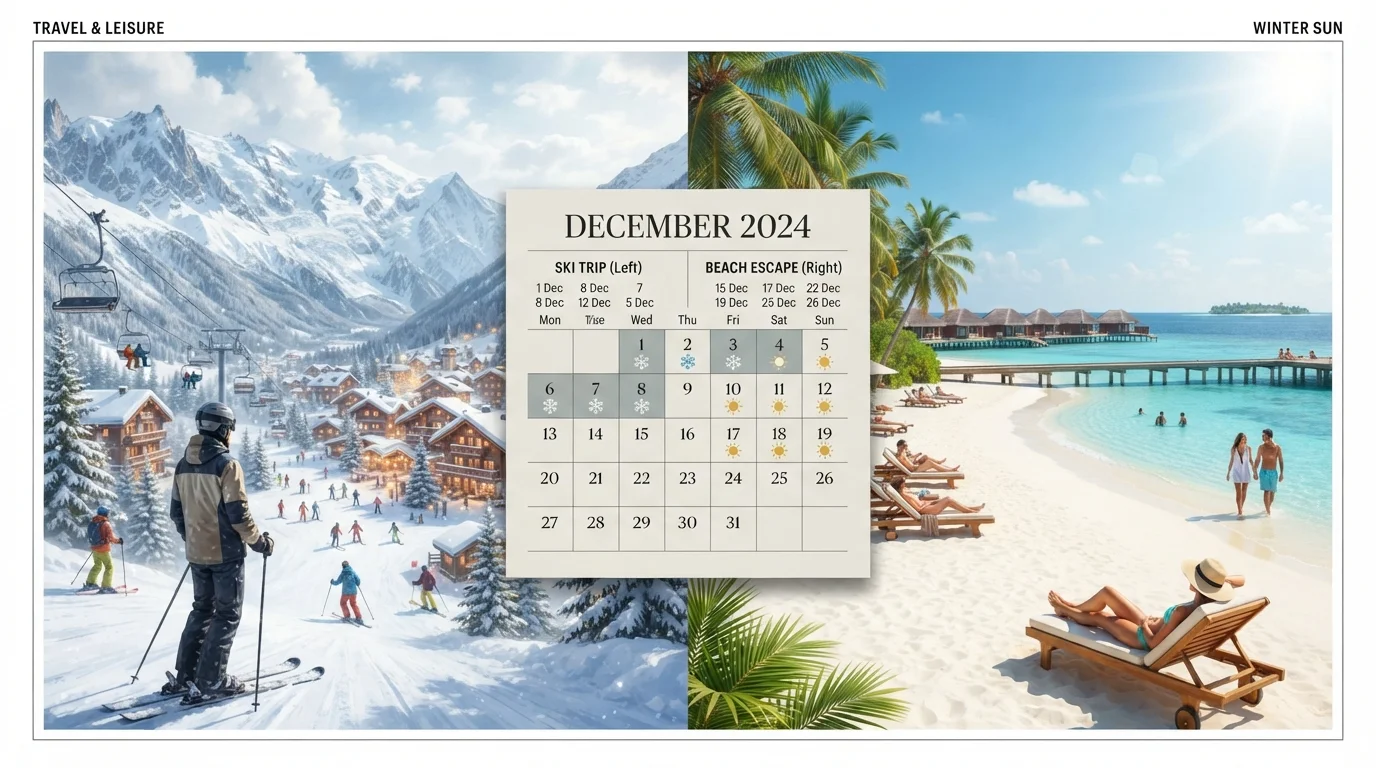
Why 'Off-Season' Means Nothing Without Context
When someone tells you to travel in the off-season to save money, they're giving you half a framework without the other half. Seasonality is destination-specific — the quiet period at a ski resort is the summer, while the quiet period at a Caribbean beach resort is often late summer through early autumn. Using the same seasonal logic across every trip type leads to poor planning and sometimes genuinely bad experiences.
The most useful shift is to stop thinking about seasonality as a universal calendar and start thinking about it as a function of why people visit a particular type of destination. Once you understand the demand driver, the seasonal pattern follows logically. See our breakdown of common seasonal travel myths for more on where generic off-season advice tends to go wrong.
2–3×
Typical accommodation price increase during peak season
Analysis of hotel pricing across popular resort destinations commonly shows rates doubling or tripling between low and peak periods at the same property.
~3 months
Duration of peak season at most beach resorts
Most sun-and-sand destinations concentrate the majority of annual visitor arrivals into a roughly 90-day window tied to school holidays and favorable weather.
50%+
Share of US national park visits in summer months
The National Park Service has reported that many popular parks receive more than half their annual visits across just June, July, and August.
Beach and Sun Destinations
For coastal resorts — whether in Mexico, Southeast Asia, or the Mediterranean — high season typically aligns with dry, warm weather and school holidays in the primary visitor markets. For Caribbean islands, that generally means December through April, when North American and European travelers are escaping winter. For Mediterranean coastlines, July and August dominate because that's when European schools are out.
Low season at these destinations is often defined by rainfall, humidity, or hurricane risk rather than cold. Traveling during low season at a beach destination doesn't just mean fewer people; it can mean closed restaurants, skeleton-crew resorts, and weather that genuinely limits what you can do outdoors. Coastal versus inland destinations in Europe also follow very different patterns — something worth factoring into a broader European itinerary.
Check Both Your Calendar and Theirs
High season at a destination is often driven by school and public holiday schedules in the origin countries that send the most visitors — not just local conditions. A beach resort popular with European travelers peaks when European schools break, regardless of your own calendar. Factor in the dominant visitor market when researching timing.
Ski Resorts and Mountain Destinations
The logic inverts entirely for ski destinations. Peak season is mid-winter — typically mid-December through March in the Northern Hemisphere — when snow conditions are most reliable and demand from winter-sport travelers is highest. This means prices spike, lift lines grow, and accommodations book out months in advance.
Summer at many ski resorts is technically low season, but it isn't necessarily quiet. Destinations like those in the Alps or the Rockies market aggressively to summer hikers, mountain bikers, and festival-goers, creating a secondary mini-peak. The true low periods are often late autumn (before snowfall is reliable) and late spring (after the snow has melted but summer programming hasn't kicked in).
Cities and Cultural Destinations
Urban and cultural destinations — think major European capitals, historic sites, or cities known for arts and architecture — follow a more complex seasonal pattern driven by a mix of weather, major events, and visitor origin markets. A city like Rome sees its busiest periods from April through June and again in September and October, when temperatures are manageable and school schedules in many countries allow travel. August can be simultaneously crowded with tourists and stripped of local life, as residents leave the city.
For cities that host major recurring events — Mardi Gras, Carnival, international trade fairs — those event windows function as micro-peak seasons, often driving accommodation prices higher than any other point in the year. If your goal is to experience daily city life rather than a festival atmosphere, those windows are worth noting and, depending on your preferences, avoiding.
Planning flexibility becomes especially valuable in cities, where itinerary adjustments are easier. Our guide on flexible versus fixed travel itineraries covers when to lock in a schedule and when to leave room.
National Parks and Nature Destinations
Parks and wilderness areas often have a hard peak tied directly to weather and daylight. In the American West, popular parks can see the bulk of their annual visitors concentrated into just two or three summer months, creating genuine capacity problems — full parking lots, reserved entry systems, and trail congestion that can undercut the experience. Low season at these destinations can mean dramatic scenery with minimal crowds, but also limited visitor services, road closures, and genuine safety considerations around weather and trail conditions.
Entry requirements and reservation systems at popular national parks change periodically. Always verify current access rules directly with the park or relevant government authority before your trip. Similarly, understanding a destination's entry requirements applies not just at international borders but also at heavily managed natural sites.
Reservation Systems Change Frequently
Popular national parks and heritage sites increasingly use timed-entry permits, advance reservation windows, and capacity limits that can shift from season to season. Always verify access requirements directly with the managing authority — a national park service website or official tourism body — before finalizing your plans. Conditions that applied one year may not hold the next.
Frequently Asked Questions
Generally yes, because higher demand pushes up prices for accommodation, flights, and tours. However, some destinations have two peak periods — such as ski resorts in winter and again in summer for hiking — so pricing patterns can be more complex than a single peak.
Shoulder season is the transitional period between high and low season. Conditions are usually acceptable, crowds are thinner, and prices often — though not always — sit below peak-season rates. The trade-off is some unpredictability in weather or service availability.
Yes. Mountain destinations frequently see two distinct peaks: winter for snow sports and summer for hiking or festivals. Coastal cities may peak in summer for beach-goers and again over holiday weekends or during major events.
Not necessarily. For some travelers, low season offers a quieter, more authentic experience. The key is knowing what closes, what weather to expect, and whether the trade-offs align with your priorities. Low season at a monsoon-affected beach is a very different proposition than low season in a European city.
Research local tourism boards, check accommodation pricing trends across different months, and look into regional climate data and school holiday calendars for both the destination country and your origin country. These three factors combined usually explain the seasonal pattern clearly.
The content on this site is for informational purposes only and is not a substitute for professional advice. Always consult a qualified professional for guidance specific to your situation.