

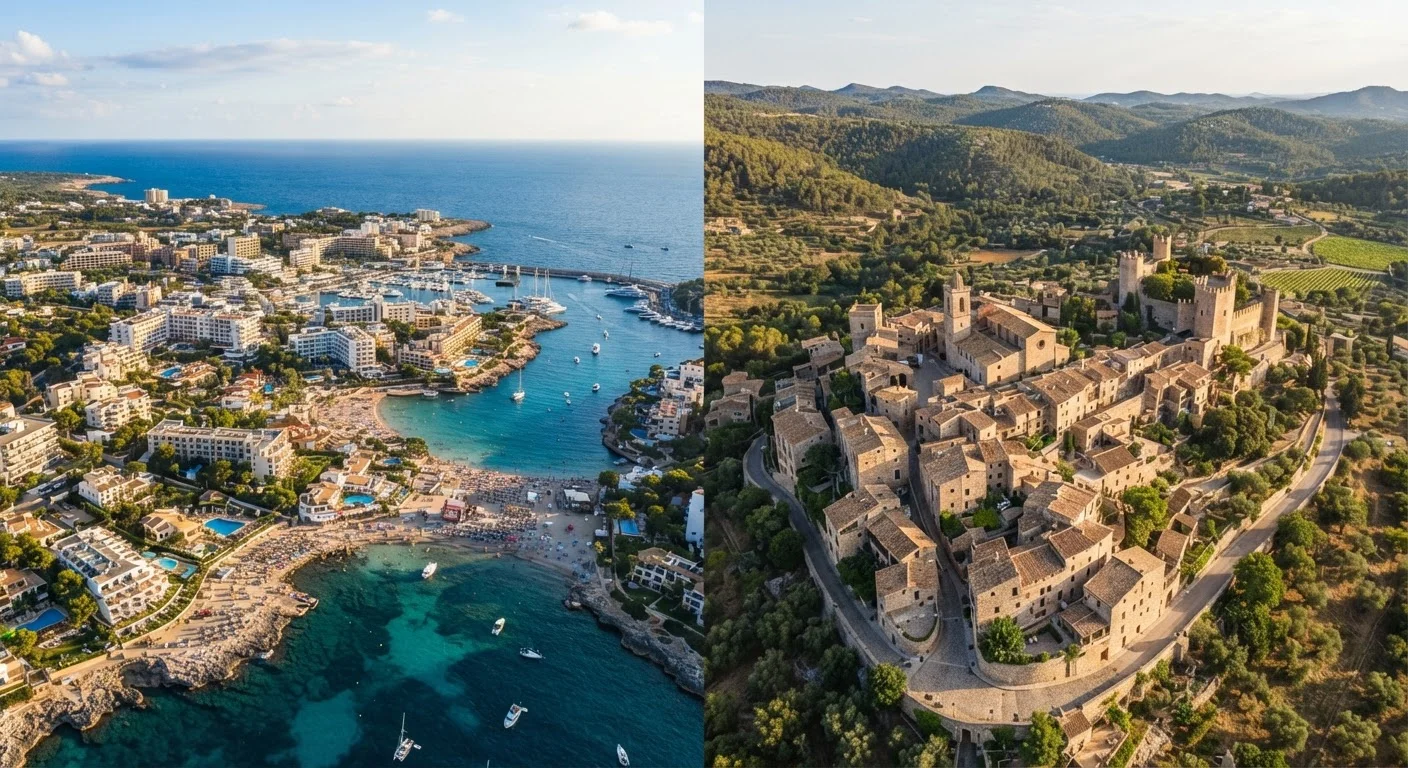
Option A
Coastal Europe
The sun-and-sea classic — familiar, festive, and effortlessly accessible.
Best for: Travelers who want warm water, reliable infrastructure, and a social, resort-style atmosphere without complex logistics.
Option B
Mediterranean Interior
The slow-travel alternative — quieter, more layered, and often more affordable.
Best for: Travelers who prioritize cultural depth, off-peak calm, and genuine local encounters over beach access.
The Core Difference Most Travelers Miss
Most people choosing a Mediterranean trip think primarily about country — Italy, Spain, Greece, Croatia. What they underestimate is how dramatically the experience changes depending on whether they stay near the water or venture just 30 to 90 minutes inland. These aren't minor variations in scenery. They're fundamentally different types of trips.
Coastal Europe — the Amalfi Coast, Costa Brava, Dubrovnik's Riviera, the Greek island circuit — is built around a well-oiled tourism machine. You get reliable ferry connections, beach umbrellas for hire, multilingual menus, and infrastructure that anticipates visitor needs at every turn. That convenience is genuinely valuable, but it comes packaged with summer density, inflated pricing, and a version of local culture that has largely adapted itself to tourist expectations.
The Mediterranean interior — rural Puglia, the Sierra Nevada foothills, inland Sicily, the Dordogne — operates on a completely different clock. Markets close midday. English is less common. Getting between villages typically requires a rental car or careful bus schedule management. In exchange, you encounter stone-built towns that feel inhabited rather than performed, regional cooking that hasn't been modified for outsider palates, and accommodation that often costs 30 to 50 percent less than equivalent coastal options. Understanding these structural differences is the starting point for smart trip planning in this part of the world.
| Criterion | Coastal Europe | Mediterranean Interior |
|---|---|---|
| Crowd levels (July–Aug) | High to very high | Low to moderate |
| Average accommodation cost | Higher, especially peak season | Noticeably lower year-round |
| Transport options | Ferries, buses, taxis widely available | Rental car usually required |
| English language accessibility | Widely spoken in tourist areas | Limited outside major towns |
| Summer temperatures | Hot, moderated by sea breezes | Very hot, minimal relief midday |
| Cultural authenticity | Often tourism-adapted | Generally more intact |
| Best for families with young children | Yes — infrastructure supports it | Requires more planning |
| Shoulder season appeal | Strong — fewer crowds, lower prices | Excellent — often peak local life |
Logistics, Climate, and What Each Trip Actually Demands
Coastal travel is logistically forgiving. International airports serve major beach regions directly, public ferries and water taxis connect islands and shoreline towns, and the tourist season has been engineered for first-time visitors. The tradeoff is that July and August bring genuine overcrowding in popular spots — something worth weighing before booking, especially at destinations already contending with overtourism pressures.
Interior travel demands more logistical investment upfront. Most inland areas have limited or infrequent public transit. A rental car isn't just convenient — in many cases it's effectively mandatory if you want to explore beyond a single village. That said, the planning overhead pays off. Roads through olive groves and limestone hills are often among the most memorable parts of the trip. The roadtripping experience in southern Europe is underrated by travelers who write off the interior as too complicated.
Climate is another genuine variable, not just a footnote. The coast moderates summer heat with sea breezes. Inland areas — particularly in Spain, southern Italy, and Greece — can reach temperatures that make sightseeing genuinely uncomfortable between 11 a.m. and 4 p.m. in peak summer. This affects activity planning substantially. Check what high and low season actually mean for the specific region you're considering — the answer varies more than most travelers expect.
30–50%
Typical accommodation cost difference
Inland Mediterranean lodging frequently runs 30 to 50 percent lower than coastal equivalents during high season, based on general market observations across southern Europe tourism regions.
30–90 min
Typical drive from coast to interior
In most Mediterranean countries, genuinely rural inland towns are within a 30-to-90-minute drive of major coastal resorts, making combination trips logistically realistic.
40°C+
Peak inland summer temperatures
Parts of inland Spain, southern Italy, and Greece regularly record temperatures above 40°C (104°F) during July and August, significantly affecting sightseeing windows.
Which One Fits Your Travel Style?
The honest answer is that neither option is superior — they suit different people and different trip goals. A structured, resort-based coastal trip is an entirely legitimate choice, especially for travelers who are recovering from a demanding work stretch, traveling with children, or simply want high predictability. There's nothing less authentic about wanting a functioning beach chair and a cold drink by noon.
Equally, the interior isn't a reward reserved for seasoned travelers. It's just a trip that requires more active planning decisions. If you tend to enjoy wandering without a fixed agenda, you'll find the open-ended rhythm of small inland towns more energizing than draining. Flexible itineraries suit interior travel particularly well — you can follow a market day or a local festival recommendation without it derailing a tightly booked schedule.
Many experienced travelers find the most satisfying solution is a deliberate combination: three or four nights in an inland base, then a move to the coast for the final stretch. That sequence lets you decompress from travel, absorb a more local pace early on, and end the trip with easier beach access and logistics for departure. Whether you plan this yourself or work with someone who knows the region, understanding your planning options upfront will save you from scrambling once you arrive.
This article is for general travel information purposes only. Conditions, prices, and accessibility at specific destinations may change — always verify current details with official tourism sources and service providers before traveling.
The content on this site is for informational purposes only and is not a substitute for professional advice. Always consult a qualified professional for guidance specific to your situation.