

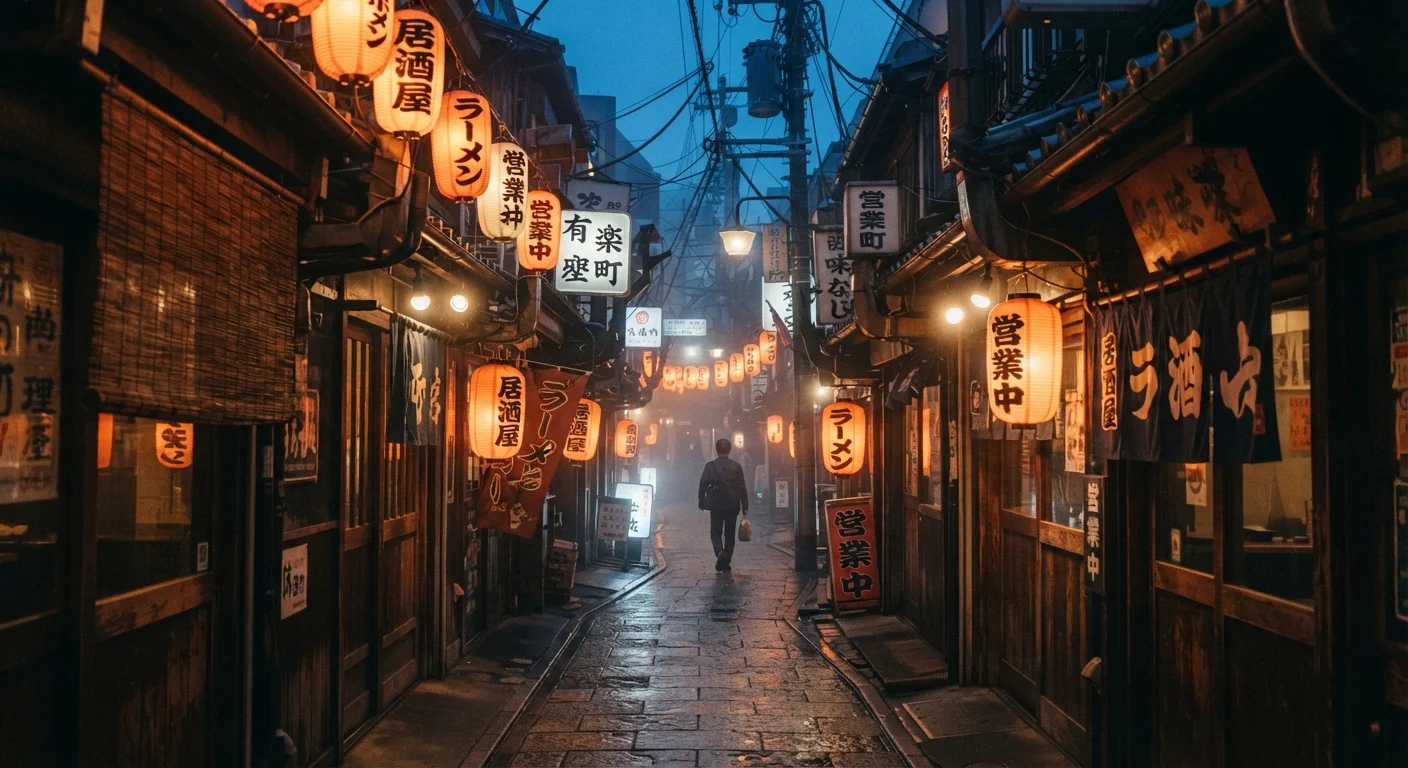
The Hidden Cost of Moving Too Fast
Tokyo is the most visited city in Asia for a reason — it layers ancient temples against futuristic transit hubs, serene gardens beside sensory-overloading electronics markets. But that density is also a trap for rushed travelers. When you're sprinting between Shibuya, Asakusa, Akihabara, Shinjuku, and Harajuku in a single day, you're spending more time on the metro than in any actual place.
The math is unforgiving. Tokyo's metro system is world-class, but a cross-city journey between major districts can easily consume 30–45 minutes each way. A traveler hitting five neighborhoods in one day might spend three hours or more underground — time that a slower visitor is spending wandering a shotengai (covered shopping street), eating at a counter ramen shop, or discovering a shrine tucked behind a convenience store.
Setting realistic expectations before you arrive is the foundation of any worthwhile trip. Building an itinerary that holds together means factoring in travel time and transition costs, not just a list of attractions.
23
Special wards in Tokyo's central city area
Tokyo's 23 special wards alone cover an area larger than many mid-sized U.S. cities, each containing multiple distinct neighborhoods with their own character.
~270
Train and metro lines serving greater Tokyo
The Tokyo metropolitan transit network is one of the world's most extensive, which enables fast movement but also tempts travelers into over-scheduling their days.
What Slow Travel Actually Unlocks in Tokyo
Tokyo operates at a neighborhood scale that rewards familiarity. Yanaka, one of Tokyo's few neighborhoods to survive wartime bombing largely intact, looks unremarkable on a 30-minute walkthrough. Return the next morning for coffee at a local kissaten (traditional coffee shop), browse the afternoon market, and you start reading the place differently — the retired couple at the same table, the cat lounging outside the ceramics shop, the way the light changes across the cemetery lane at dusk.
That kind of depth doesn't appear in a highlight reel. It builds through repeated exposure — what travel researchers call 'place attachment.' Tourists who allow themselves a full day or two per neighborhood consistently report higher satisfaction, more spontaneous positive encounters, and a stronger sense of having 'actually been there.'
The same principle that makes rest breaks essential on a long drive applies to urban travel. Rushing past interesting stops to maintain pace costs more than it saves. Rest stops deserve more credit than most travelers give them — whether on an interstate or in Shimokitazawa — tends to make the overall experience better, not longer.
How to Structure a Slower Tokyo Trip
Slow travel in Tokyo doesn't mean doing nothing — it means organizing your time geographically and thematically rather than by landmark checklist. A practical framework: anchor each day to a single neighborhood or adjoining pair, plan one anchor activity, then fill the rest with walking and improvisation.
For example, a day centered on the Yanesen area (Yanaka, Nezu, and Sendagi) might anchor on Nezu Shrine at opening time, then wander into Yanaka Ginza market for lunch, browse the artisan shops on Yanaka Cemetery's perimeter, and finish with an early dinner at a neighborhood izakaya. That's a full, rich day that covers less than two square kilometers.
Cluster Your Days Geographically
Before finalizing your daily plan, look at a map and group nearby neighborhoods together. Yanaka and Nezu, Shimokitazawa and Nakameguro, Koenji and Asagaya — each of these pairs is walkable between them and share a compatible character. This approach cuts transit time dramatically and lets you settle into a part of the city rather than just passing through it.
The question of flexible versus fixed scheduling matters here. A rigid minute-by-minute plan collapses the moment a side street catches your attention or a local vendor strikes up a conversation. Flexible itineraries versus fixed schedules is worth thinking through before you land — Tokyo in particular benefits from the kind of loose, day-by-day structure that leaves room for the unplanned.
Setting Accurate Expectations Before You Arrive
The biggest source of Tokyo disappointment is a gap between expectation and reality — specifically, the expectation that more ground covered equals a better trip. Tokyo is not a city where you can 'do it all.' It's a metropolitan area of roughly 14 million people in the city proper, containing hundreds of distinct neighborhoods, each with its own character.
Arrive knowing that you will miss things. That's not a failure of planning — it's a precondition of genuine engagement with any place. The traveler who spends a week in six Tokyo neighborhoods and knows each one a little will consistently describe a richer experience than the traveler who checked thirty attractions off a list.
“Travel is not about how many places you visit, but about how deeply you allow a place to change you.”
— Pico Iyer, Author and essayist on travel and belonging
Practical preparation matters too: get a working IC card before you start navigating, download an offline maps app with walking directions, and resist the urge to book every meal in advance. Some of Tokyo's best food comes from stepping into a small restaurant because it looked interesting, not because it was ranked online.
This article is for general travel information purposes only. Conditions, hours, transit logistics, and entry requirements can change — always verify details through official tourism and government sources before traveling.
Frequently Asked Questions
Most first-time visitors underestimate Tokyo significantly. A week to ten days allows you to explore three or four neighborhoods with real depth rather than just passing through. Even experienced travelers find new layers on repeat visits spanning years.
It can be, particularly if you try to cover too much in too little time. The city is vast, the transit system has a steep learning curve, and sensory overload is real. Anchoring yourself to one or two neighborhoods per day dramatically reduces that friction.
They spend mornings in local coffee shops, wander markets without an agenda, and eat where residents eat rather than where tour groups congregate. They repeat visits to the same spots at different times of day, which reveals how dramatically a neighborhood changes from morning to evening.
Yes, but it rewards patience. IC cards (like Suica or Pasmo) make hopping trains simple, but the real efficiency gain comes from clustering your day's activities geographically rather than crisscrossing the city. Walking between nearby neighborhoods is often faster and more rewarding than routing through major hubs.
Absolutely. Even with five days, choosing to stay rooted in two or three neighborhoods will produce richer memories than a blur of twelve. Prioritizing depth over coverage is a mindset shift, not a time requirement.
The content on this site is for informational purposes only and is not a substitute for professional advice. Always consult a qualified professional for guidance specific to your situation.