

The Logic That Gets Drivers in Trouble
Ask most drivers why they skip rest stops and you'll hear some version of the same answer: "I'm making good time." It's a completely understandable impulse — road trips feel like a race against the clock, and every stop looks like lost progress on the map.
But that logic has a flaw. The goal isn't to cover miles quickly. It's to arrive safely, in a condition to actually enjoy where you're going. Skipping breaks consistently works against both of those things. Research on driver fatigue — including findings published by the National Highway Traffic Safety Administration (NHTSA) — consistently identifies drowsy driving as a serious and underreported factor in highway crashes.
The myths below are the ones that keep well-meaning drivers from making smarter choices. Driver fatigue is worth understanding in depth, because it rarely feels as dangerous as it actually is.
Myth
Stopping adds so much time that it's not worth it — I'll just push through to the destination.
Fact
A 15–20 minute break costs very little real time but meaningfully reduces fatigue-related crash risk on long drives.
On a 600-mile drive averaging 65 mph, two 20-minute stops add roughly 40 minutes total. That's a modest trade-off against the documented dangers of fatigue, which research links to slowed reaction times comparable to legal intoxication levels after extended wakefulness. The NHTSA estimates that drowsy driving causes tens of thousands of crashes annually in the US — and those crashes often involve drivers who felt fine shortly before the incident.
Myth
I can tell when I'm too tired to drive safely — I'll stop if I feel drowsy.
Fact
Fatigue impairs self-assessment before it impairs performance, meaning drivers often feel more capable than they are.
This is one of the most dangerous misconceptions on the road. Studies on sleep deprivation consistently show that as fatigue deepens, people's ability to accurately judge their own impairment declines. Microsleep episodes — involuntary lapses of attention lasting seconds — can occur without the driver being aware of them. By the time you feel dangerously tired, your judgment and reaction time have already been compromised for some time.
Myth
Caffeine is a reliable substitute for a real break — one coffee and I'm good to go.
Fact
Caffeine can temporarily mask the feeling of fatigue but does not restore cognitive performance the way rest does.
Caffeine works by blocking adenosine receptors — the brain signals that make you feel sleepy — but the underlying sleep pressure continues to build. Once caffeine wears off, fatigue can return sharply. Safety researchers generally treat caffeine as a short-term supplement to rest, not a replacement for it. Combining a short rest stop with caffeine (often called a "coffee nap") has shown more benefit in studies than either alone, but genuine rest remains the more durable solution.
Myth
Rest stops are only necessary on overnight drives — daytime driving is safe.
Fact
Fatigue can set in during daytime hours, particularly in the early afternoon, regardless of how well-rested a driver feels at departure.
Human alertness follows circadian rhythms, and there is a well-documented dip in the early-to-mid afternoon (roughly 1–3 p.m.) even in people who slept adequately the night before. Long stretches of monotonous highway driving accelerate this effect. Planning breaks around predictable low-alertness windows — rather than waiting for obvious tiredness — is a more reliable safety strategy than relying on how you feel in the moment.
What Rest Stops Actually Provide
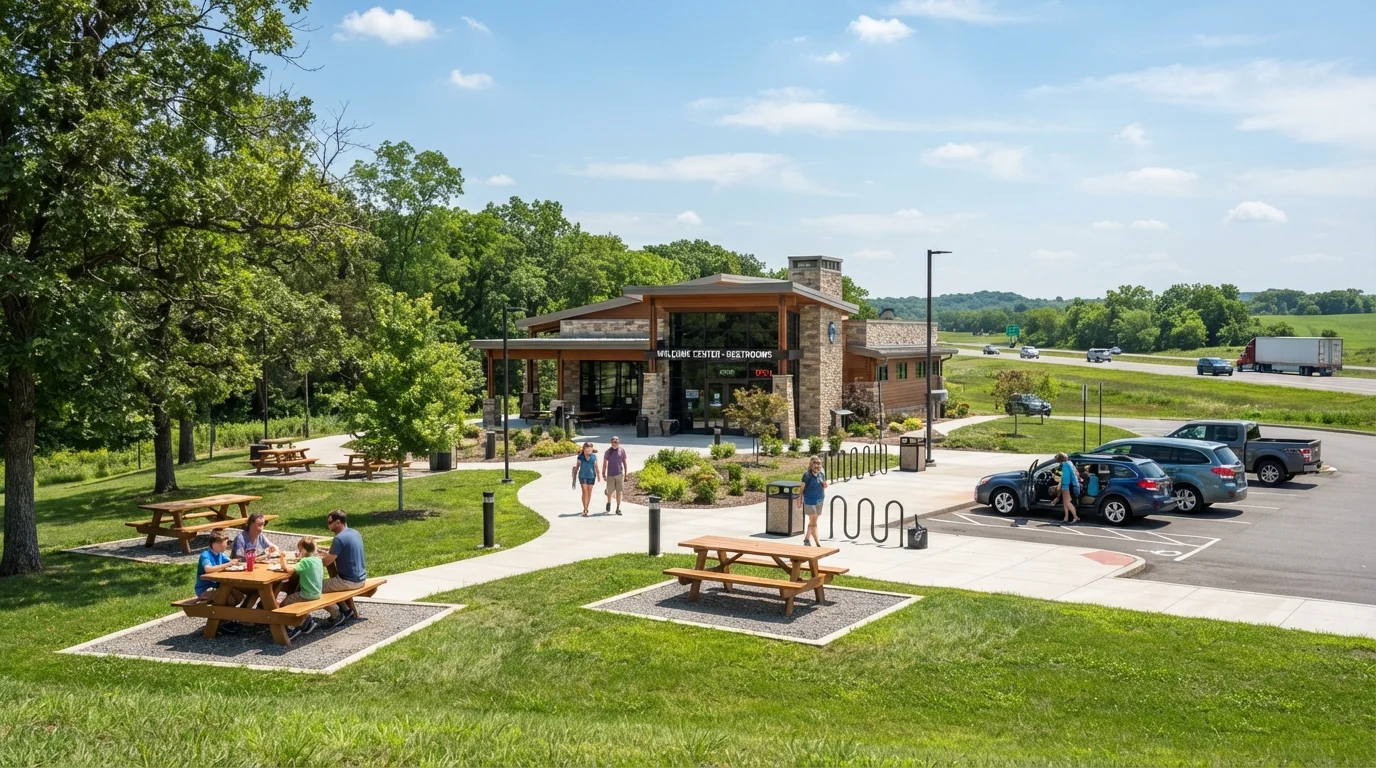
Beyond crash prevention, rest stops serve real logistical purposes that add up over a long drive. Modern interstate rest areas in the US typically offer restrooms, vending, pet areas, and route information — some states maintain traveler information centers with staffed desks. Knowing what to expect helps you plan stops rather than react to urgency.
Don't Rely on Feeling Fine as Your Guide
Fatigue impairs the ability to accurately self-assess — which means drivers often believe they're alert when they aren't. If you're more than two hours into a continuous drive, take a break regardless of how you feel. Set a timer if needed; don't wait for drowsiness to prompt you.
For families traveling with children, scheduled stops aren't optional — they're the difference between a manageable trip and a miserable one. Keeping kids comfortable across hundreds of miles covers this in practical detail, including how stop frequency affects overall mood and behavior in the car.
And if your trip involves overnight driving or multi-day mileage, it's worth thinking through your sleep options well before you need them. Overnight rest options on the road lays out the honest trade-offs between rest areas, motels, and camping.
Rest stops don't cost you a trip — poor planning and fatigue do. The hidden costs of road trips is a good companion read for anyone building a realistic travel budget, since unplanned detours and fatigue-related delays have real financial consequences too.
The content on this site is for informational purposes only and is not a substitute for professional advice. Always consult a qualified professional for guidance specific to your situation.