

Plan the Drive Around Children's Biology, Not Just the Map
Most family road trip frustrations stem from applying adult travel logic to children's bodies. Kids have shorter attention spans, less capacity to self-regulate discomfort, and no frame of reference for how much longer the drive will be. Planning with that reality in mind — rather than against it — changes the entire dynamic.
The single most effective structural choice is scheduling stops before anyone asks for them. Aim for a break every 90 to 120 minutes, even if everyone seems fine. Short stops at rest areas give kids a chance to run, reset, and re-engage — and the research on adult fatigue supports this approach equally for drivers. A family that stops strategically almost always covers more comfortable miles than one that white-knuckles through.
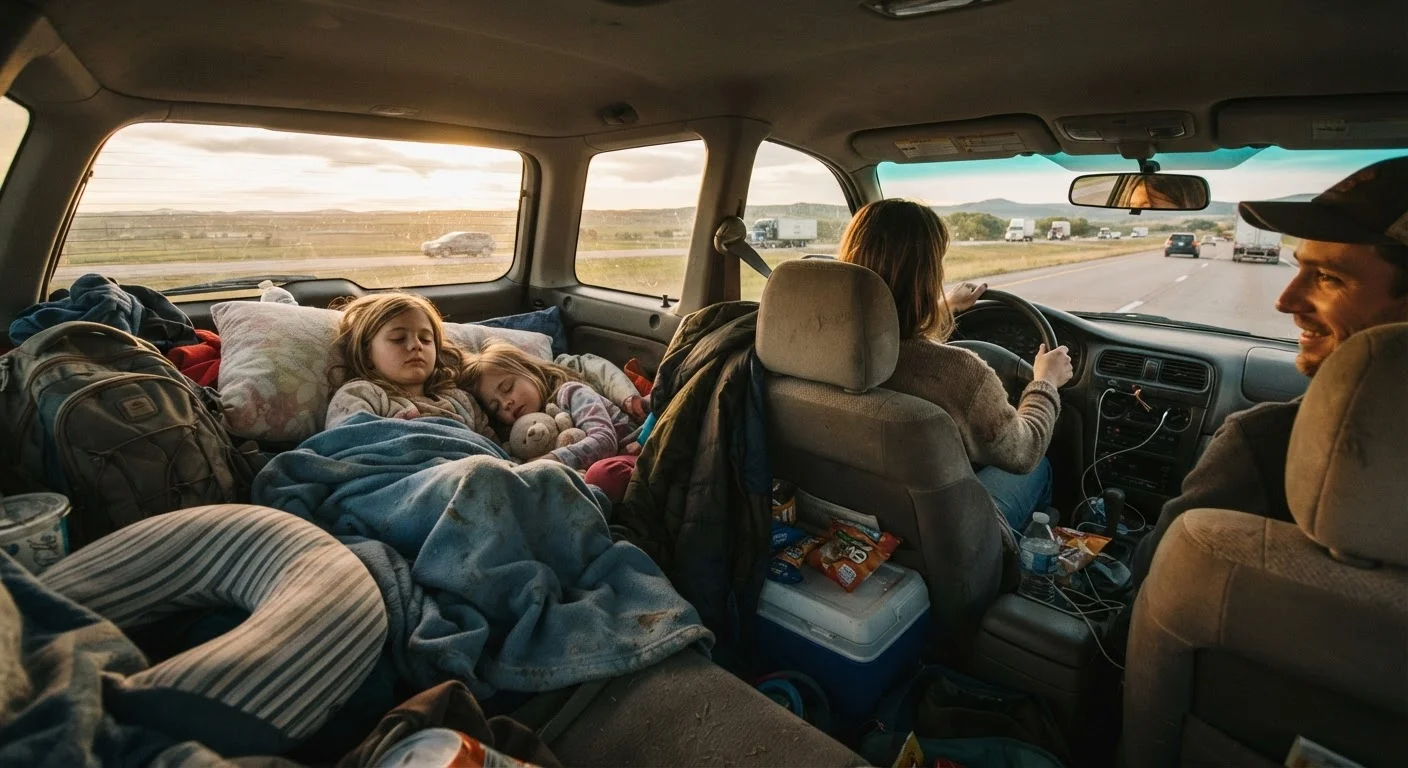
Consider departure timing carefully. For children under ten especially, starting a long drive at night or just before a regular nap time can convert hours of potential conflict into hours of sleep. That window won't work for every family or every route, but it's worth building your schedule around when it does.
Manage Entertainment Without Over-Relying on Screens
Screens work — until they don't. When a device dies, loses signal, or simply stops holding attention after three hours, you need alternatives ready. A layered entertainment strategy distributes engagement across different types of stimulation so no single failure derails the trip.
Rotate entertainment types every 45–60 minutes rather than defaulting to screens for the full drive.
Sustained screen use contributes to eye strain, reduces interaction, and often worsens motion sickness in younger children. Rotating between audio, physical activity, and visual games prevents saturation and keeps each type feeling fresh.
Brief children on the trip structure before you leave, including how many stops are planned.
Children handle waiting significantly better when they understand what to expect. A concrete sequence — "We'll drive for a while, stop for lunch, drive again, then we're there" — reduces the repeated "are we there yet" loop that drains everyone.
Pack a dedicated "surprise bag" with small new items revealed only during the drive.
Novelty is a more reliable engagement tool than familiarity. Small new items — a puzzle book, a tiny figurine, a new card game — hold attention longer than items already well-known at home.
Establish and enforce a consistent temperature in the vehicle, erring toward slightly cool.
Overheating makes children irritable and amplifies nausea. A cooler cabin is easier to adjust with a layer than a hot one is to remedy. Consistent temperature reduces one of the most common low-level discomfort triggers.
Keep a small emergency kit specifically for child-related issues within reach of an adult passenger.
Digging through a packed trunk for a clean shirt or a plastic bag at the side of a highway is exactly the kind of chaos that turns a manageable situation into a stressful one. Proximity matters during emergencies.
Audiobooks and podcasts designed for kids deserve particular attention. A well-chosen story engages the whole car, keeps eyes off screens (which helps with motion sickness), and can be paused cleanly at stops. Many public library systems offer free streaming access to large children's audio catalogs — worth checking before you leave.
Physical boredom-busters — a small activity binder, a few new sticker books held back as surprises, or simple card games — require no battery and create natural conversation. The novelty of something previously unseen buys more engagement than the tenth hour of a familiar show.
Snacks, Hydration, and Motion Sickness: The Practical Details
Hunger is the most predictable source of backseat conflict, and it's entirely preventable with preparation. Pre-portion snacks into individual bags or containers so they're accessible from the back seat without requiring the driver to reach or stop. Favor foods that are low in added sugar, filling, and unlikely to make a mess on upholstery — crackers, cheese, apple slices, nuts for older kids, and similar options.
Keep Snacks in the Rear, Not the Trunk
Store a day's worth of road snacks in a soft bag or small cooler that sits on the floor behind the front seats — not in the trunk or way back. When kids can reach snacks without asking the driver to stop or search, small hunger moments get resolved before they escalate. It also keeps the driver's attention on the road where it belongs.
Hydration matters more than most families account for. Children can become irritable and fatigued from mild dehydration well before they report feeling thirsty. Limit sugary drinks that spike and crash energy, and keep water bottles within easy reach. Accept that more fluids mean more bathroom stops — plan for it rather than discouraging drinking.
Motion sickness affects a meaningful share of children, particularly in the 5–12 age range. Practical steps that may help include seating motion-sensitive children in the middle row where vehicle movement is least pronounced, keeping the cabin cool and well-ventilated, encouraging focus on the horizon rather than books or screens, and discussing with your child's pediatrician whether any preventive options are appropriate for your trip. Always consult a healthcare provider before using any medication or supplement for a child.
See our car packing strategies for how to organize the interior so snacks and essentials stay genuinely accessible throughout the drive.
Handling the Inevitable Meltdown
Even well-prepared families hit a wall somewhere around hour five. A child who is done being in the car is communicating a real physical and emotional state, not staging a performance. The response that works is almost always de-escalation, not pressure.
Pull over when it's safe to do so. Five minutes outside the car — walking, stretching, or just standing on solid ground — resets the nervous system more effectively than any in-car distraction. Giving the child a small genuine choice at that moment ("Do you want the apple or the crackers? Do you want to listen to the story or play the alphabet game?") returns some sense of control and usually reduces resistance.
For multi-day trips, don't underestimate the value of a real overnight stop. As explored in our guide to overnight options on the road, a full night of sleep in a bed — rather than pushing through to arrive faster — often means the second day goes significantly smoother for the entire family. Exhausted children and exhausted drivers are a difficult combination that rest genuinely fixes.
If you're new to long-distance family driving, the practical road trip primer covers the broader logistics that support everything discussed here — from route planning to handling the unexpected mid-drive.
The content on this site is for informational purposes only and is not a substitute for professional advice. Always consult a qualified professional for guidance specific to your situation.