

Our Verdict
No single overnight option dominates for every road tripper. Motels suit travelers prioritizing consistent rest and security; rest areas work for short overnight breaks when safety and legality are confirmed; camping fits those with gear and flexible routes. Match the option to your actual situation rather than defaulting to habit or cost alone.
| Best for | Recommended |
|---|---|
| Travelers prioritizing sleep quality and safety without compromise | Motels |
| Solo drivers needing a short, unplanned stop on a tight budget | Rest Areas |
| Prepared travelers with flexible schedules and camping gear | Dispersed Camping |
| Families with young children needing real beds and bathroom access | Motels |
Why Your Overnight Choice Matters More Than You Think
Deciding where to sleep mid-journey isn't just a budget call — it directly affects how alert you are behind the wheel the next morning. Fatigued driving is a documented safety risk, and a poor overnight stop can leave you worse off than if you'd planned ahead. This is especially relevant for anyone on a multi-day haul, as covered in route logistics planning.
The three most common mid-trip overnight options — roadside motels, interstate rest areas, and roadside or dispersed camping — each come with genuine trade-offs. Understanding those trade-offs concretely helps you plan rather than scramble.
| Motels | Rest Areas | Camping | |
|---|---|---|---|
| Typical cost per night | $80–$150+ | Free | Free–$45 |
| Sleep quality | High (bed, climate control) | Low (vehicle, noise) | Moderate (gear-dependent) |
| Advance planning needed | Recommended | Minimal | High |
| Bathroom access | Yes, private | Yes, shared facilities | None at dispersed sites |
| Suitability for families | High | Low | Moderate |
| Weather dependence | None | Low | High |
| Security and safety | Generally reliable | Variable | Variable by location |
Motels: Reliable but Not Cheap
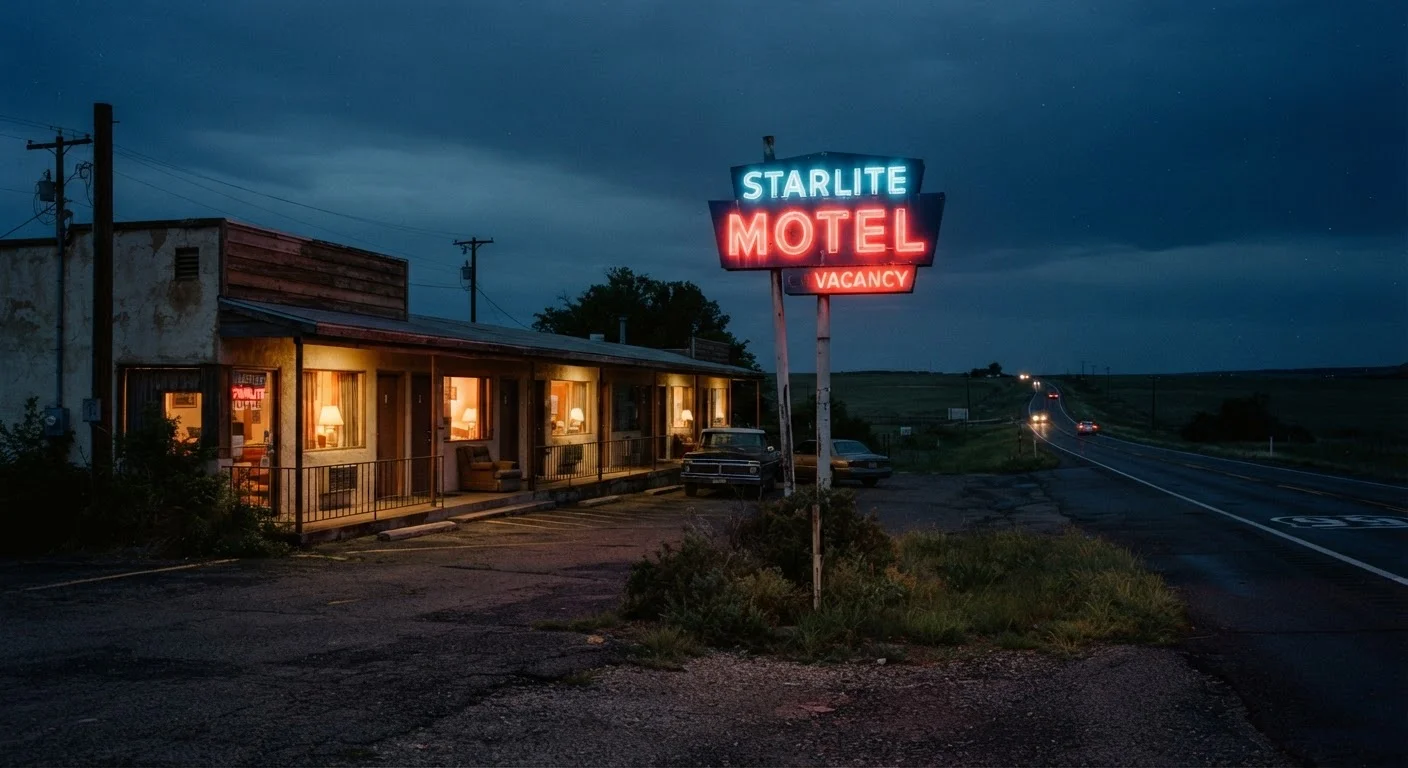
Roadside motels remain the default for a reason: a bed, a lock on the door, a bathroom, and climate control. For families traveling with children, this baseline matters considerably. As our guide on keeping kids comfortable on long drives notes, predictable amenities reduce friction significantly when traveling with young children.
The downsides are real: nightly rates vary widely by region and season, and budget properties in high-traffic corridors can run $80–$150 or more. Booking last-minute in popular stretches (national park corridors, holiday weekends) often means limited availability or inflated prices. Hidden road trip costs like motel stays can derail a budget when not planned in advance.
Book Motels Early on Popular Corridors
On high-traffic routes — national park approaches, coastal highways, holiday weekends — available rooms at reasonable prices often disappear by early afternoon. If you know you'll need a motel stop, identify your likely stopping point in the morning and confirm availability before you're exhausted and out of options. Having a backup town in mind also reduces pressure if your first choice is sold out.
If you're on a shared-driving trip, motels also offer a neutral space for both drivers to fully decompress — something harder to achieve at a rest area or campsite.
Rest Areas: Free, Legal in Many States, and Underestimated
Interstate rest areas allow overnight parking in a majority of U.S. states, though rules vary — some cap stays at 8–10 hours, others prohibit overnight use entirely. Always check the rules for the specific states on your route before relying on this option.
The appeal is obvious: no cost, no setup, and you stay in your vehicle. For a solo driver who hits an unexpected fatigue wall, pulling into a well-lit rest area is far safer than pushing through. Our article on why rest stops deserve more credit goes deeper on the fatigue research here.
Always Verify State Rules Before Sleeping at a Rest Area
Rest area overnight policies are set at the state level and are not uniform. Some states explicitly permit stays up to 10 hours; others prohibit sleeping in vehicles entirely. Signage is not always clear. Before counting on a rest area as your overnight plan, check the state DOT or highway patrol website for current rules along your specific route.
Sleep quality at rest areas is generally poor — engine noise, truck idling, lighting, and foot traffic all disrupt rest. Treat rest area overnights as a fatigue-management tool, not a substitute for real sleep on longer trips.
Camping: Affordable but Requires Preparation
Dispersed camping on Bureau of Land Management (BLM) or U.S. Forest Service land is free in most cases and offers genuine quiet and privacy — but it assumes you have appropriate gear, know where permitted areas are along your route, and have some flexibility in your timeline. Developed campgrounds with hookups cost money (typically $20–$45 per night) but provide more structure.
For road trippers whose routes pass through the American West in particular, camping can be both practical and rewarding. The trade-off: setup time, no indoor bathroom access at dispersed sites, and weather dependence. If you're driving solo, camping in isolated areas adds a layer of consideration around personal safety that's worth factoring in honestly.
Camping also requires advance research — not all public land allows overnight camping, and fire restrictions change seasonally. Confirm current rules through official land management agency websites before your trip.
How to Choose Based on Your Actual Situation
The right overnight option depends on several concrete variables: your budget, travel party, gear situation, route geography, and how tired you actually are. There's no single correct answer, but a few practical frameworks help:
- Tight budget, light gear, flexible route: Research dispersed camping zones along your corridor in advance. Add one developed campground night as a fallback.
- Family with children or anyone needing reliable sleep: Build motel nights into the budget from the start. Spontaneous comfort is expensive; planned comfort is manageable.
- Unexpected fatigue, no reservation: Use a rest area to get a few hours of sleep if the state allows it — this is a safety decision, not a luxury one.
- Solo traveler, moderate budget: A mix of motel nights and rest area breaks can balance cost with adequate rest.
For a fuller look at how overnight stops fit into route planning overall, see our guide on trip planning fundamentals.
The content on this site is for informational purposes only and is not a substitute for professional advice. Always consult a qualified professional for guidance specific to your situation.