

Think Before You Load
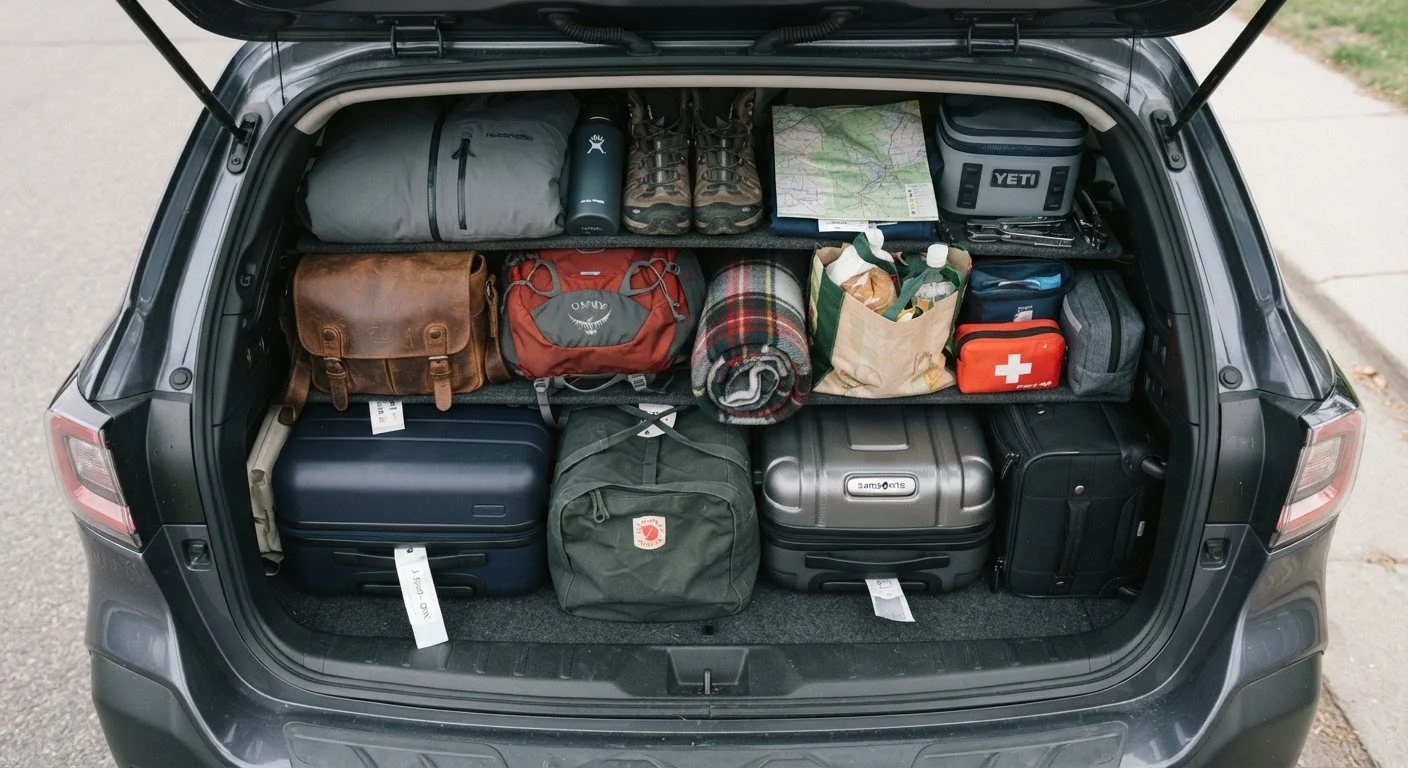
The biggest mistake road trippers make is treating packing like a puzzle — jamming pieces together until the lid closes. A more reliable approach is to mentally unpack the trip first. Ask yourself: what will you need at the first stop, at check-in, and on the road itself? That sequence determines where things should go, not the other way around.
Lay everything out the night before. Seeing your gear spread across the floor reveals overlap, forgotten items, and opportunities to consolidate. This step alone tends to cut cargo volume by 15–20% before a single bag is zipped.
For trips with multiple passengers, designate one person as the load coordinator. Collaborative packing without a single decision-maker leads to duplicated effort and poorly weighted loads. See our guide to building flexibility into your itinerary for how this same pre-planning mindset applies to the broader trip.
The Night-Before Layout Rule
Spreading everything on the floor the evening before you leave is one of the most reliable ways to avoid overpacking. You'll spot duplicates, re-evaluate 'just in case' items, and arrive at the car with a clear loading plan rather than an improvised one. Aim to leave at least 10% of your cargo space unused — you'll almost certainly pick things up during the trip.
Weight Distribution and Vehicle Safety
Where weight sits in the vehicle matters as much as how much you're carrying. Heavy items — coolers, toolkits, large suitcases — belong on the floor of the cargo area, centered between the axles when possible. High and rear-heavy loads shift the vehicle's center of gravity in ways that affect braking and cornering, especially at highway speeds.
~25%
Fuel efficiency drop with loaded roof cargo
Research from the U.S. Department of Energy has indicated that a large, loaded rooftop cargo box can reduce fuel economy by roughly 25% at highway speeds compared to no carrier.
1 in 3
Road trips where cargo shifts during transit
AAA consumer travel surveys have consistently found that a significant share of road trippers report items shifting or becoming inaccessible during a trip due to unplanned packing.
If you're using a roof rack or cargo carrier, load it sparingly. Roof-mounted cargo increases aerodynamic drag and raises the center of gravity. Check your vehicle's roof load rating in the owner's manual before strapping anything up top — most passenger cars cap out well below what a full cargo box can hold.
Roof loads also affect fuel economy noticeably. An empty roof rack can reduce efficiency by a few percent; a loaded one can reduce it significantly more depending on the carrier's profile and speed driven.
Securing Cargo — Not Optional
Unsecured items in the cargo area become projectiles during hard braking or a collision. This is not a hypothetical concern — it's a documented cause of interior injuries in road accidents. Use cargo nets, trunk organizers, or bungee systems rated for the weight you're carrying.
Soft bags are more forgiving than hard-sided luggage in tight spaces, but they still shift during cornering unless wedged or netted. Hard cases with handles can tip and slide. Fill soft bags fully so they hold their shape and stack predictably.
Keep your roadside emergency toolkit in a spot you can reach without unpacking the entire trunk — ideally a dedicated bag at the side or rear edge of the cargo area. Similarly, important documents belong in the glove box, not buried with luggage.
Cargo Weight and Vehicle Payload Limits
Every vehicle has a Gross Vehicle Weight Rating (GVWR) — the maximum weight it can safely carry including passengers, fuel, and cargo. This figure is listed on a sticker inside the driver's door jamb. Consistently exceeding it accelerates wear on suspension and brakes, and may affect your vehicle insurance coverage in the event of an accident. When in doubt, consult your owner's manual or a qualified mechanic.
What Stays Within Reach
Designate a grab zone: the area accessible to the driver or front passenger without stopping. This should hold snacks, a water bottle per person, charging cables, sunglasses, and a small first-aid pouch. Reaching into the back seat while driving is a distraction risk; reaching into the trunk at 65 mph isn't an option at all.
If you're traveling with children, the in-cabin organization becomes even more deliberate. Each child should have their own small bag or seatback organizer with what they need for the drive. For more on managing the in-cabin environment over long hauls, see keeping kids comfortable on long drives.
Child safety seats must remain properly installed regardless of how packed the vehicle becomes. Never shift or reposition a car seat to accommodate luggage — the integrity of the installation takes priority. Child seat regulations and correct installation principles are worth reviewing before any long trip.
The content on this site is for informational purposes only and is not a substitute for professional advice. Always consult a qualified professional for guidance specific to your situation.