

Summary
18 items · 20–40 minutes
Why the Glove Box Still Matters
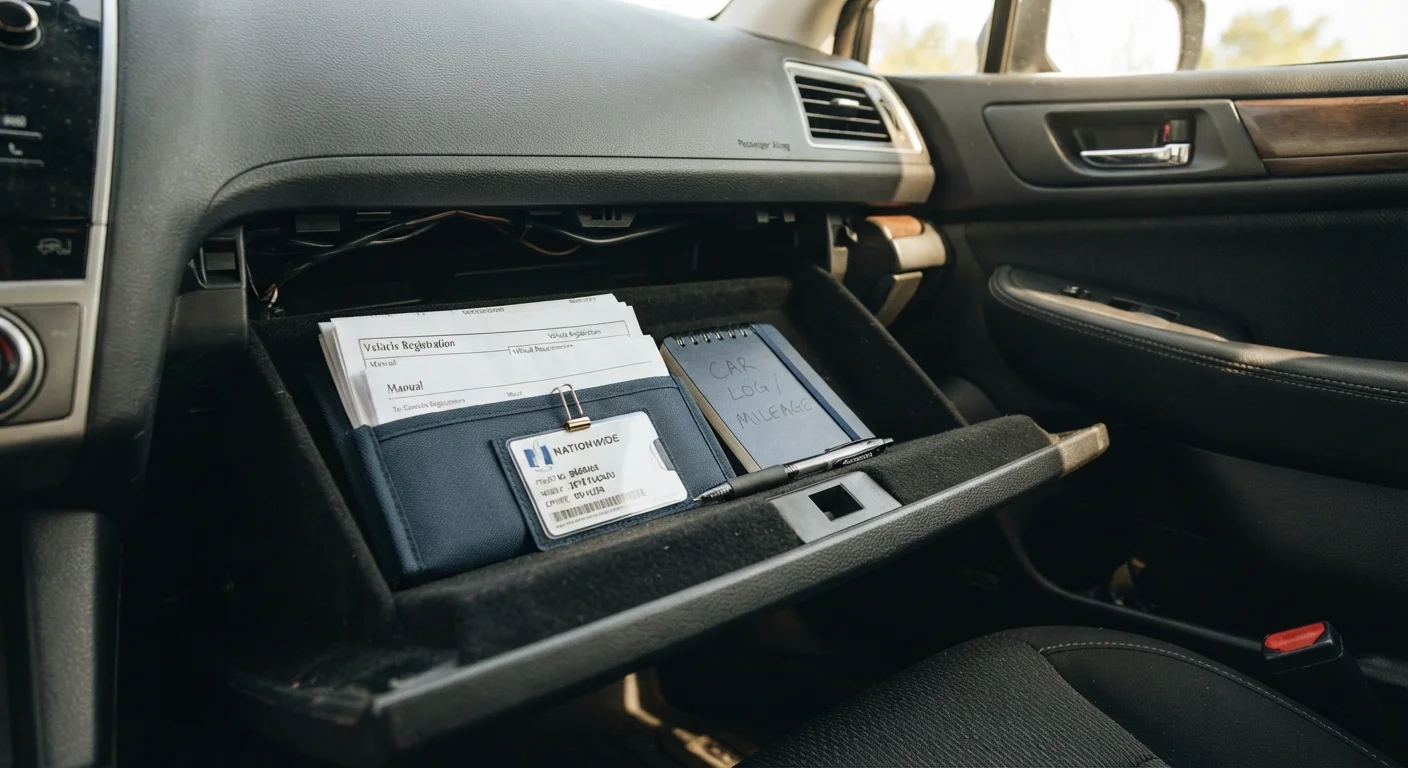
In the age of digital wallets and cloud storage, it's tempting to assume your phone has everything covered. But ask anyone who's been pulled over with a dead battery, or stranded on a dark highway waiting for a tow, and they'll tell you the same thing: physical documents in the car aren't optional — they're a safety net.
This checklist is designed to help you audit what's actually in your glove box before you leave the driveway. It pairs well with the broader Pre-Departure Planning Checklist if you're working through a full trip prep routine. For everything that goes alongside these papers — the jumper cables, first-aid kit, and emergency gear — see the Road Trip Toolkit guide.
Legal Requirements
Roadside and Emergency Assistance
Personal and Medical Information
Trip-Specific and Rental Documents
What You're Carrying and Why It Matters
Each document category below serves a specific purpose in a specific scenario. Understanding the why makes it easier to keep everything current — not just stashed and forgotten.
Legal and Ownership Documents
Law enforcement in every US state can request your driver's license, vehicle registration, and proof of insurance during a traffic stop. Registration confirms the vehicle is legally yours (or that you're authorized to drive it). Insurance proof verifies you carry at least the state minimum liability coverage. If you're driving a vehicle registered to someone else — a spouse, employer, or rental company — make sure you understand what documentation you need to carry.
Don't Store Your Title in the Car
Your vehicle title proves ownership and is difficult to replace. Keeping it in the glove box makes it vulnerable to theft — if someone steals your car, they'd have your title too. Store the original title securely at home and carry only your registration.
Verify Rental Coverage Before You Drive
Credit card rental coverage varies significantly by card and rental type. Some plans exclude trucks, luxury vehicles, or rentals over a certain number of days. Call your card issuer before the trip to get the specifics in writing — don't rely on assumptions made at the rental counter.
Emergency and Assistance Information
Roadside assistance membership cards, whether through your auto insurer, an automobile club, or a credit card benefit, only help if you can actually access the phone number when you need it. A laminated card or printed sheet stored in the glove box bypasses the dead-phone problem entirely. Include the policy number and any PIN required to access benefits.
Health and Personal Emergency Information
This is the category most road trippers overlook. If you're incapacitated in a crash, first responders will look through your vehicle for identification and medical information. A simple card listing blood type, known allergies, current medications, and a primary emergency contact can meaningfully affect the care you receive. Keep one for every regular occupant if possible.
Emergency Medical Info Can Save Your Life
First responders are trained to look for medical information in a vehicle after an accident. A clearly labeled card — or even a note in a visible location — listing critical allergies or medications can directly affect treatment decisions. This applies to every occupant, not just the driver. Consult your healthcare provider about what information is most relevant to include for your situation.
Rental Car Considerations
If you're road-tripping in a rental, your document requirements shift. The rental agreement itself functions as your registration equivalent. Check whether your personal auto insurance or credit card coverage extends to the rental — and carry written confirmation of that coverage, not just a vague memory of what the card representative said. The Planning Tools Travelers Actually Use includes guidance on offline document storage that's worth reviewing before you pick up the keys.
For drivers who own their vehicle, keeping tabs on its condition is just as important as the paperwork. The Seasonal Car Maintenance Checklist is a practical complement to this guide — because the best documents can't substitute for a car that's actually road-ready.
Physical document folder or accordion file
Keeps all glove box papers organized, protected from spills, and easy to hand over in one motion during a traffic stop.
Laminator or laminating pouches
Protects frequently handled documents like roadside assistance cards from wear and moisture.
Offline document storage app
Provides a digital backup of scanned documents accessible without a cell signal.
Portable phone charger (power bank)
Ensures your phone is available when you need to call a roadside assistance number or access a digital document.
The content on this site is for informational purposes only and is not a substitute for professional advice. Always consult a qualified professional for guidance specific to your situation.