

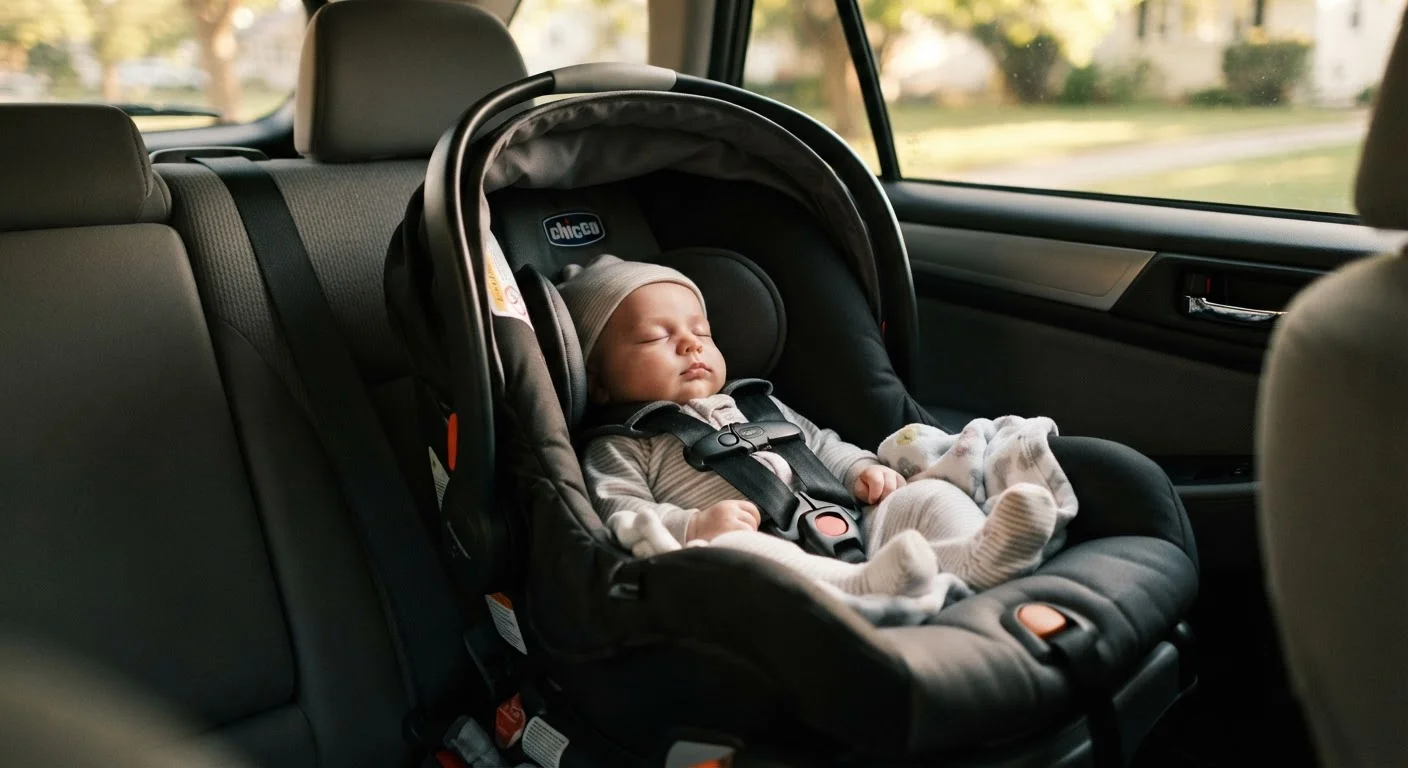
The Legal Framework: What U.S. Regulations Actually Require
Every U.S. state mandates child restraint use, but the specific thresholds — age, weight, height, and seat type — vary by jurisdiction. At the federal level, the National Highway Traffic Safety Administration (NHTSA) sets the manufacturing standards that all child restraint systems sold in the U.S. must meet, known as Federal Motor Vehicle Safety Standard (FMVSS) No. 213. State laws then govern how and until when those seats must be used.
| Federal manufacturing standard | FMVSS No. 213 (National Highway Traffic Safety Administration (NHTSA)) |
| Typical seat expiration window | 6–10 years from manufacture date (Varies by manufacturer; check label) |
| Booster seat height guideline | Generally until child reaches 4 ft 9 in (NHTSA general guidance) |
| Maximum harness slack (shoulder) | Cannot pinch any slack at shoulder (NHTSA installation guidelines) |
| Seat movement tolerance at belt path | No more than 1 inch in any direction (NHTSA installation check standard) |
| LATCH system standardized in vehicles from | Model year 2003 onward (NHTSA LATCH regulation) |
Most states follow a broadly consistent progression: rear-facing seats for infants and younger toddlers, forward-facing seats with a harness for older toddlers, belt-positioning booster seats for school-age children, and finally the vehicle seat belt alone. However, minimum ages, weights, and transition points differ. Drivers should verify the exact thresholds for every state they regularly drive through, not just their home state.
Penalties for non-compliance are real. Violations typically result in fines and, in some states, points on a driver's license. More importantly, non-compliance removes the primary protection a child has in a crash.
Seat Types, Stages, and Why Sequence Matters
Child restraint systems are designed around developmental stages, and moving a child through them too quickly is one of the most common errors parents make.
FMVSS No. 213
Federal Motor Vehicle Safety Standard No. 213 is the federal regulation that sets minimum performance requirements for child restraint systems manufactured and sold in the United States. All compliant seats carry a label confirming they meet this standard.
LATCH System
Lower Anchors and Tethers for Children is a standardized attachment system built into most vehicles and child seats manufactured after 2002. It connects the seat directly to the vehicle structure, reducing the chance of installation error.
Child Passenger Safety Technician (CPST)
A CPST is a professional certified through Safe Kids Worldwide or a similar nationally recognized body to inspect and assist with child seat selection, installation, and harness fit.
Belt-Positioning Booster
A booster seat that raises the child to allow the vehicle's own lap-and-shoulder belt to cross the body at the correct positions — chest and hips — rather than the neck and abdomen.
Five-Point Harness
A restraint system with five attachment points — two shoulder straps, two hip straps, and one crotch strap — that distributes crash forces across multiple strong body areas and limits forward movement.
Expiration Date (Child Seat)
The date, typically six to ten years from manufacture, after which a child seat should no longer be used. Heat, cold, and UV exposure degrade plastics over time, reducing the seat's ability to perform as designed.
Rear-Facing Seats
Rear-facing seats cradle and move with the child in a frontal crash, distributing crash forces across the back, shoulders, and buttocks — the strongest parts of a young child's body. NHTSA and the American Academy of Pediatrics both advise keeping children rear-facing until they reach the maximum height or weight limit allowed by the seat manufacturer, regardless of age.
Forward-Facing Seats with Harness
Once a child outgrows a rear-facing seat, a forward-facing seat with a five-point harness continues to provide structured, distributed crash protection. Children should remain harnessed until they exceed the seat's weight or height limit — typically somewhere between 40 and 65 pounds depending on the seat model.
Belt-Positioning Booster Seats
Boosters position the vehicle's own seat belt correctly across a child's body. A belt that crosses the neck or abdomen rather than the chest and hips provides little protection and can itself cause injury. Children generally need a booster until they are at least 4 feet 9 inches tall and can sit with their back flat against the seat, knees bent at the seat edge, and the belt fitting correctly without the booster.
Installation Errors That Undermine Protection
A correctly chosen seat that is incorrectly installed can perform significantly worse in a crash. NHTSA has estimated that a large proportion of child restraints on U.S. roads are misused in some way. The most consequential errors include:
- Loose installation: The seat should not move more than one inch side-to-side or front-to-back at the belt path when tested by hand. Use either the vehicle seat belt or the LATCH (Lower Anchors and Tethers for Children) system — not both simultaneously unless the seat manufacturer explicitly permits it.
- Incorrect harness tension: The harness should be snug enough that you cannot pinch any slack at the child's shoulder. Puffy coats under the harness prevent proper fit; dress the child in thinner layers and place blankets on top.
- Wrong recline angle: Rear-facing seats require a specific recline angle to support a young infant's head and airway. Most seats include an angle indicator; check it at every installation.
- Chest clip position: The chest clip must sit at armpit level, not on the abdomen, where it could cause internal injury during a crash.
- Expired or damaged seats: Child seats have expiration dates, typically six to ten years from manufacture, because plastics degrade over time. Seats involved in moderate or severe crashes should be replaced.
Get a Free Professional Seat Check
Certified Child Passenger Safety Technicians (CPSTs) can inspect your child seat installation at no cost through community events hosted by fire departments, hospitals, and organizations such as Safe Kids Worldwide. Even if you are confident in your installation, a professional check can catch subtle errors. Use NHTSA's online inspection station locator to find an event near you.
Many fire stations, police departments, and community health organizations offer free child seat inspection events staffed by certified Child Passenger Safety Technicians (CPSTs). Taking advantage of this resource is strongly encouraged — even experienced parents benefit from a professional check.
Broader Vehicle Safety Context
Child seat safety doesn't exist in isolation. The overall condition of your vehicle directly affects how well any safety system performs. Maintaining correct tyre pressure and adequate tread depth affects braking distances and vehicle stability — both critical factors in how a crash unfolds in the first place. Keeping the vehicle's basic safety systems in good order is a natural complement to correct child restraint use.
When driving with children on longer trips, thoughtful vehicle loading also matters. How cargo is loaded and secured affects the rear seat environment — unsecured luggage becomes a hazard in any sudden stop or collision, regardless of how well the child seat is installed.
~46%
Child seats estimated to be misused in some way
NHTSA research has consistently found that a significant proportion of child restraints on U.S. roads involve some form of misuse, most commonly loose installation or incorrect harness fit.
71%
Reduction in crash fatality risk for infants in rear-facing seats vs. seat belts alone
According to NHTSA data comparing properly restrained children to unrestrained or belt-only scenarios.
The core principle is straightforward: regulations establish a minimum standard, correct installation and consistent use push outcomes significantly better than that minimum. Every step in the process — choosing the right stage seat, installing it correctly, fitting the harness properly on every trip — matters independently.
The content on this site is for informational purposes only and is not a substitute for professional advice. Always consult a qualified professional for guidance specific to your situation.