

Why Resale Value Is So Misunderstood
Few topics in vehicle ownership generate more confident misinformation than resale value. Drivers spend hundreds personalising interiors or chasing brand names based on assumptions that rarely survive contact with actual market data. Meanwhile, genuinely high-impact factors — like service documentation or trim selection at the point of purchase — get underweighted entirely.
The list below draws a clearer line. Some factors move resale value significantly and consistently; others are myths or marginal at best. Understanding the difference helps you make smarter decisions, whether you're buying a vehicle today or preparing one for sale. For a broader look at how purchase type affects long-term cost, see our guide on new, used, and certified pre-owned vehicles.
Mileage — and the rate it accumulated
Odometer reading remains one of the most heavily weighted variables in used vehicle pricing. Lower mileage, all else equal, commands a higher price. But the rate of accumulation matters too. A vehicle with 80,000 highway miles is generally in better mechanical shape than one with 50,000 stop-start city miles — and informed buyers know this. Appraisers factor in average annual mileage (roughly 12,000–15,000 miles per year is considered typical in the US), and deviations in either direction affect offers accordingly.
Mileage rate matters as much as the total — highway miles typically cause less wear than city driving.
Service history and documented maintenance
A complete, verifiable service record is one of the most underrated assets a seller can present. It signals that the vehicle was maintained on schedule, reduces a buyer's perceived risk, and can meaningfully increase what private buyers will offer. Missing records create doubt — and doubt gets priced in as a discount. Dealers routinely use undocumented service history as a negotiating lever to lower trade-in offers. Keeping receipts, dealer records, or digital service logs from day one costs nothing and pays out at resale.
A complete service history reduces buyer risk and often commands a measurable premium at private sale.
Trim level and factory options
The trim you buy at the dealership has a lasting effect on what you recover later. Higher trims — those with desirable factory features like advanced safety packages, sunroofs, or upgraded audio — tend to hold value better than base models, particularly in segments where buyers expect those features. However, this isn't universal: in some segments, mid-tier trims offer the best value retention because they hit the sweet spot of demand without pricing out used-car buyers. Researching which configurations sell quickly in the used market for a given model is worth doing before you configure a new purchase. See the right questions to ask before any test drive for how to probe a vehicle's spec fit before committing.
Factory trim and options set at purchase can follow a vehicle's value curve for its entire lifespan.
Colour — especially on SUVs and trucks
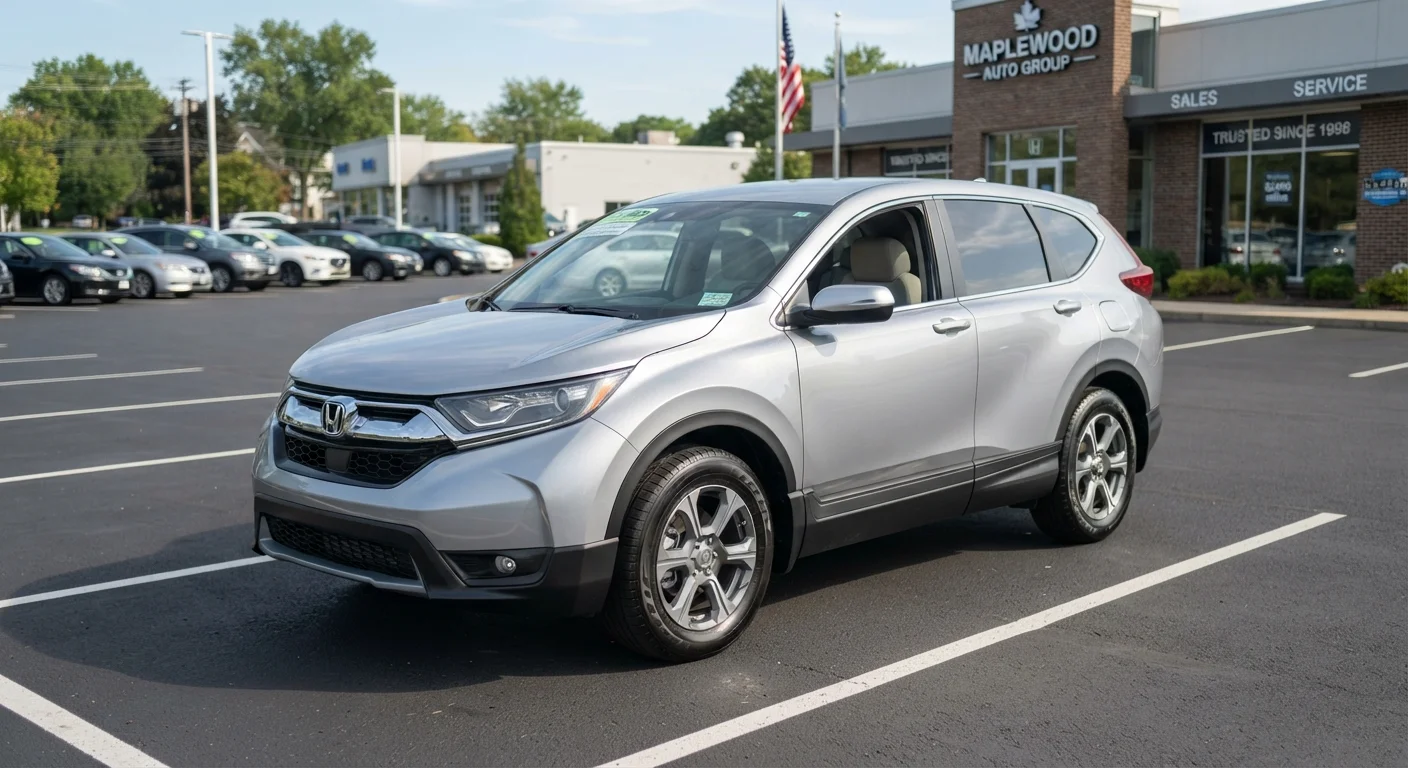
Colour affects resale more than most owners realise, particularly for SUVs, trucks, and crossovers. Neutral tones — white, silver, grey, and black — consistently command stronger demand in the used market because they appeal to the widest pool of buyers. Unusual or polarising colours (some yellows, bright greens, certain oranges) restrict your buyer pool at sale time, which tends to suppress offers. Data from automotive research firms in the US has consistently shown that colour-driven depreciation differentials can range into the thousands of dollars on popular segments. That said, on sports cars and performance vehicles, bold or signature colours can actually support value — demand dynamics differ by segment.
Neutral exterior colours consistently outperform polarising ones in resale demand across most vehicle segments.
Aftermarket modifications — almost always a negative
Most aftermarket modifications reduce resale value rather than adding to it, even when they cost thousands to install. Lowered suspensions, non-OEM wheels, engine tune modifications, and custom audio installations all raise questions for buyers: Was it done professionally? Does it void warranty coverage? Is it reversible? For the majority of buyers in the used market, stock vehicles are preferable — they're less risky and easier to insure. There are narrow exceptions (certain towing packages or bed liners on trucks, for example, can be net positives), but as a rule, modifications recover a fraction of their installation cost at resale, if anything.
Most aftermarket modifications cost more to install than they ever add back at resale — stock is safer.
Minor cosmetic wear — largely irrelevant to mechanically sound vehicles
Owners often over-invest emotionally in minor cosmetic imperfections — light door dings, small stone chips, worn interior plastics — believing they'll devastate resale offers. In practice, these are priced very modestly by appraisers on mechanically sound vehicles with average mileage. A buyer paying $18,000 for a clean used vehicle is not walking away over a small door scuff that costs $150 to correct. Spending thousands detailing or repainting a vehicle you're about to sell rarely returns proportional value. A clean, functional interior and a vehicle that presents well mechanically matters far more than cosmetic perfection.
Minor cosmetic wear has far less impact on resale offers than most sellers assume — mechanics take priority.
Making Sense of It All
The clearest takeaway across all these factors: resale value is shaped far more by mechanical integrity, documented care, and market demand than by personalisation or cosmetic choices. Buyers pay for confidence — proof the vehicle was well looked after and that it fits what the market actually wants.
Protect your investment from day one
If resale value matters to you, the best decisions happen at purchase — choosing a popular colour, selecting a well-specified trim, and committing to documented maintenance from the start. These habits compound over a vehicle's life and cost very little relative to what they recover. Think of service records as a financial document, not just a maintenance log.
If you're still in the purchasing phase, factoring in projected resale value at the point of sale is part of evaluating true cost. Our article on price vs. long-term value breaks down how to weigh those variables without getting misled by sticker price alone. And if timing your purchase around market cycles is on your mind, when you buy can also affect what you eventually recover.
This article is for general informational purposes only. Resale values vary by market, region, and vehicle condition. Consult a qualified automotive professional or appraiser for guidance specific to your vehicle.
The content on this site is for informational purposes only and is not a substitute for professional advice. Always consult a qualified professional for guidance specific to your situation.