

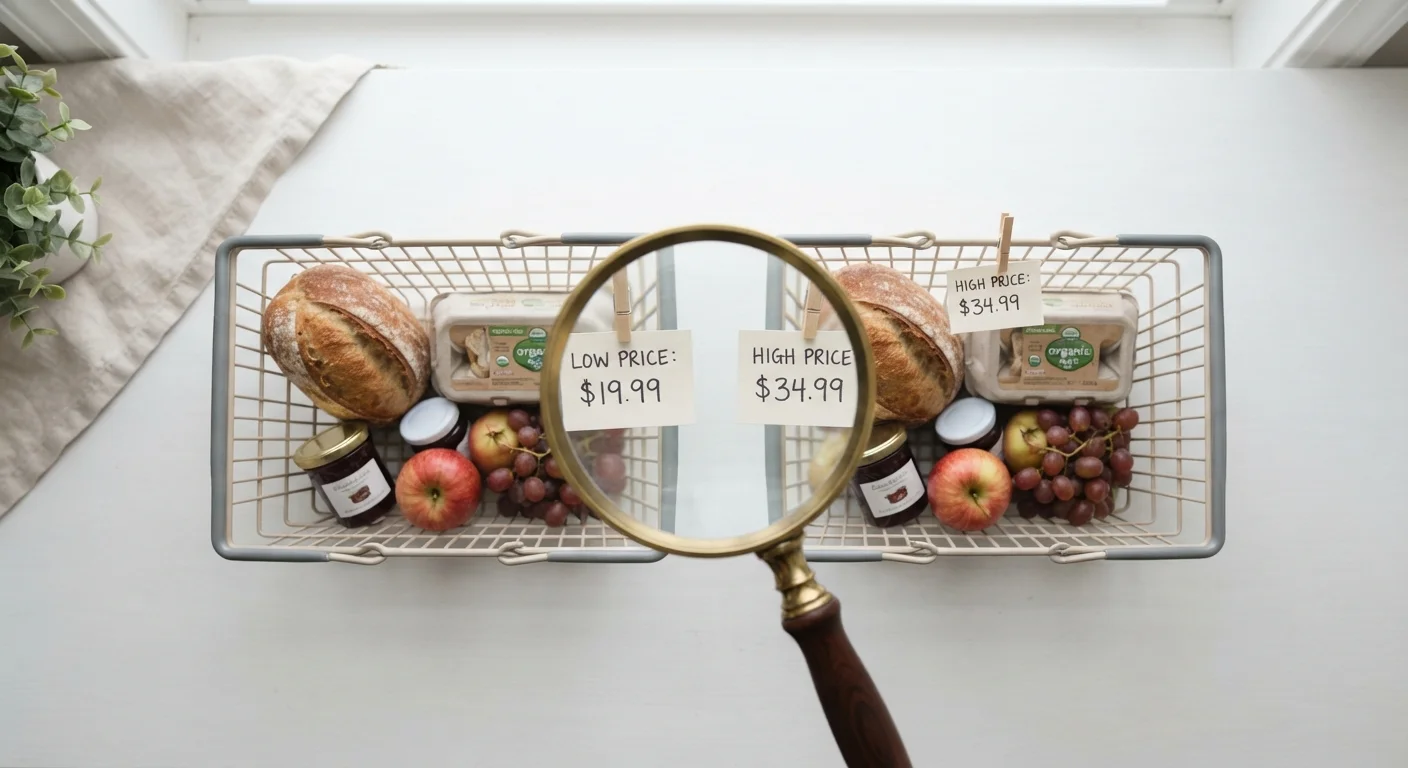
Why Sticker Price Is an Incomplete Signal
When two products sit side by side on a shelf — or in adjacent browser tabs — the natural instinct is to compare their prices. That's not irrational; price is immediate, concrete, and easy to compare. The problem is that it's only one number in a much longer equation.
A $40 item you replace every year costs $200 over five years. A $120 item that lasts the same period costs $120. The cheaper option turned out to be nearly twice as expensive. This dynamic plays out across dozens of product categories: appliances, footwear, tools, mattresses, cookware, and beyond.
The sticker price tells you what you'll spend today. It says nothing about what you'll spend next year, or the year after. For any purchase you expect to use repeatedly or over a long period, that gap matters.
~$1,500
Average annual US household appliance spending
U.S. Bureau of Labor Statistics Consumer Expenditure Survey data consistently shows appliances and housewares represent a significant recurring household expense, making durability decisions financially material over time.
2–3×
Lifespan difference between product tiers
Studies in consumer durability research suggest products at mid-to-upper price tiers in categories like power tools and appliances often last two to three times longer than entry-level alternatives under equivalent use conditions.
The Variables That Determine Real Value
Once you look past the purchase price, several factors shape whether a product delivers genuine value:
- Durability and lifespan: How long will it function at an acceptable level? Products made with lower-grade materials or tighter tolerances often degrade faster under regular use.
- Running and maintenance costs: Some products are cheap to buy but expensive to operate. Printers with low upfront prices sometimes require costly proprietary ink cartridges. Appliances with poor energy ratings quietly add to your electricity bill every month.
- Replacement frequency: Items that wear out faster need replacing sooner, compounding cost over time. This is especially relevant for consumable-adjacent products like water filters, vacuum bags, or razor cartridges.
- Fit for purpose: A product that almost meets your needs but not quite — requiring workarounds or supplements — introduces hidden cost and friction.
Understanding total cost of ownership (TCO) is the more reliable framework here. Our guide on lifetime cost vs. purchase price walks through how to estimate this without a spreadsheet.
A Simple Cost-Per-Year Check
Before dismissing a higher-priced option, divide the purchase price of each product by its realistic lifespan in years. Then add any meaningful annual running costs (energy, consumables, maintenance). Compare those totals — not the sticker prices. This takes about two minutes and often changes the picture significantly.
Value Is Relative to Your Actual Usage
There's a counterpoint worth making clearly: paying more for durability only makes sense if you'll use the product long enough to recoup that investment. If you need a drill for a single weekend project, buying a heavy-duty model built to last decades is poor value — regardless of its objective quality.
The same logic applies to feature sets. Manufacturers routinely add capabilities that look compelling in marketing but go largely unused in practice. Our piece on features that rarely get used examines which additions consistently fail to justify their cost. Paying for features you won't use doesn't improve value — it reduces it.
The honest question to ask before any significant purchase: how often will I actually use this, and for how long? That usage horizon, matched against a product's lifespan and running costs, gives you the clearest picture of what something is truly worth to you.
When Cheap Is Smart and When It Isn't
Not every purchase warrants deep cost analysis. For low-stakes, one-time, or highly disposable items, the cheapest option is frequently the right one. A pair of sandals for a single beach trip, a basic binder for a short-term project, or a single-use item you'll discard after use — these don't require lifetime cost modeling.
The calculation shifts when:
- You'll use the item regularly over months or years.
- Running costs (energy, consumables, maintenance) are significant.
- Failure or early replacement carries real inconvenience or additional cost.
- The product interacts with other systems where compatibility or quality has downstream effects.
For bigger commitments — a vehicle, a major appliance, or a home — the price-vs-value gap becomes even more consequential. Our overview of total cost of ownership for vehicles illustrates how fuel, insurance, and depreciation stack up alongside the purchase price. Similarly, the case for paying more upfront explores when a higher initial cost genuinely pays off — and when it doesn't.
The goal isn't to always spend more or always spend less. It's to spend with a clearer understanding of what you're actually getting for your money — and what you'll continue paying long after the transaction is done. For a structured way to apply these comparisons, see our three lenses for smarter spending.
“Price is what you pay. Value is what you get. Whether we're talking about socks or stocks, I like buying quality merchandise when it is marked down.”
— Warren Buffett, Investor and Chairman, Berkshire Hathaway
Frequently Asked Questions
Price is the upfront cost you pay. Value reflects the total benefit you receive relative to that cost over the product's life. A cheaper item that needs replacing every year may deliver far less value than a pricier one that lasts a decade.
Estimate the cost per use or per year by dividing the purchase price by the expected lifespan or number of uses. Then factor in running costs like energy, maintenance, and consumables. This gives you a more honest basis for comparison than the sticker price alone.
No. A higher price can reflect genuine quality, but it can also reflect branding, packaging, or features you won't use. Price and quality correlate inconsistently across product categories, so it's worth researching what actually drives durability in each case.
When you have a short-term need, a low-use scenario, or when products in a category are genuinely similar in quality regardless of price. Paying more for durability only makes sense if you'll actually use the product long enough to benefit.
Watch for proprietary consumables (filters, cartridges, batteries), poor energy efficiency, limited warranties, and fragile materials that lead to early replacement. These ongoing costs can easily exceed the money saved at purchase.
The content on this site is for informational purposes only and is not a substitute for professional advice. Always consult a qualified professional for guidance specific to your situation.