

Why Purchase Price Misleads More Than It Informs
Sticker price is the most visible number in any purchase decision, which is why it carries more weight in most people's thinking than it deserves. It reflects what you pay once, at one moment — nothing more. For many product categories, operating and maintenance costs over a typical ownership period dwarf the original purchase price. A refrigerator running for 15 years accumulates thousands of dollars in electricity costs regardless of what it sold for. A cheap cordless drill that fails in 18 months costs far more per use than a durable one purchased for double the price.
This isn't a new insight, but it's one that's easy to forget at the point of purchase when one number is in front of you and all the future costs are invisible. The framework here makes those future costs visible before you commit. For more on how upfront price relates to long-term value, see our guide to price versus value.
What you will need
What You'll Need Before You Start
Pen and paper (or notes app)
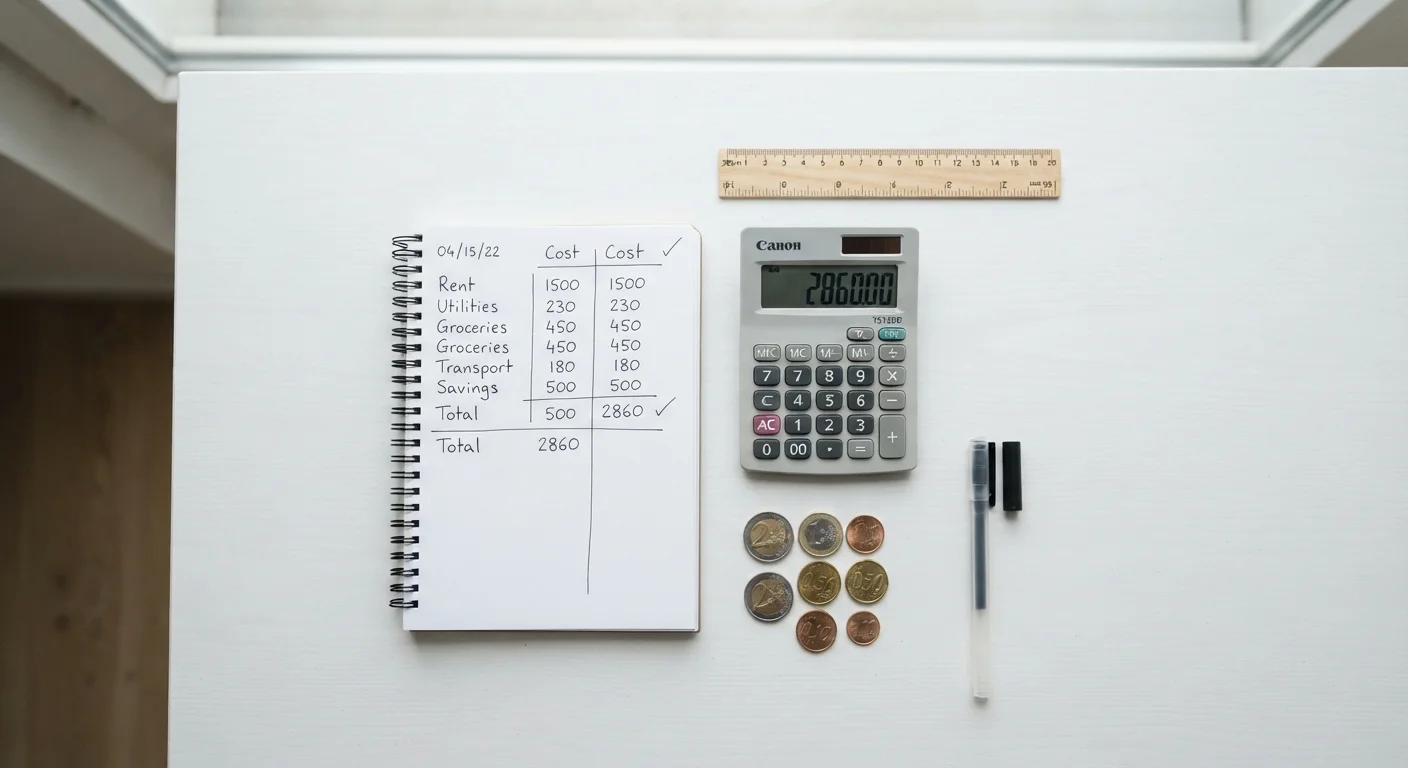
Record cost estimates in each category so nothing gets lost in mental arithmetic.
Local utility rate information
Needed to estimate annual energy costs for appliances and electronics.
Product manual or specification sheet
Provides wattage, rated lifespan, and maintenance schedule data.
Basic calculator
Handles multiplication and addition across cost categories without error.
You don't need specialized software or financial training. The method is deliberately designed to work with rough estimates — because a reasonable approximation calculated quickly is almost always more decision-useful than perfect precision that never gets done. If you've compared products using unit price or value-per-use metrics, this framework builds naturally on that thinking by extending the time horizon.
Step-by-Step: Building a Lifetime Cost Comparison
Identify the four cost categories for your product
Every product fits into the same four buckets: acquisition cost (purchase price, delivery, installation, taxes), operating cost (energy, consumables, subscriptions), maintenance cost (repairs, parts, servicing), and end-of-life cost (disposal fees, recycling, or any residual value you recover). Write these four headings on paper before filling in any numbers. The act of naming each category forces you to notice costs you would otherwise overlook — like a required filter replacement or an installation fee.
Estimate the realistic lifespan
This is the most consequential number in your calculation. A product that costs twice as much but lasts three times as long is usually the better financial choice — but only if your lifespan estimate is accurate. Look for independent repair and reliability data rather than relying solely on marketing claims. Consider your usage intensity: a washing machine in a household of five will wear out faster than the same machine in a one-person apartment. Settle on a conservative, realistic number of years rather than the best-case scenario.
Calculate annual operating cost
For energy-consuming products, multiply the device's wattage by average daily hours of use, then by 365 to get annual kilowatt-hours (kWh). Multiply that by your local electricity rate. For a 500-watt appliance running 2 hours daily at $0.15/kWh: (0.5 kW × 2 hrs × 365 days) × $0.15 = $54.75/year. Non-energy operating costs — ink cartridges, filters, blades, streaming fees tied to the device — get estimated annually and added to this figure. Multiply your total annual operating cost by the expected lifespan to get the operating cost component of your lifetime total.
Estimate total maintenance cost over the lifespan
Some products have manufacturer-specified service intervals with known costs (HVAC filters, vehicle oil changes). Others are unpredictable. For unpredictable categories, a reasonable rule of thumb used in consumer economics is to budget 1–2% of purchase price per year for maintenance on durable goods — though this varies considerably by product type. Factor in whether repairs are DIY-feasible or require professional service, which significantly affects cost. If a product is known to have expensive proprietary parts or limited service availability, weight your estimate higher.
Add all components and compute cost per year
Sum your four categories: acquisition + (annual operating cost × lifespan) + (annual maintenance estimate × lifespan) + end-of-life cost. This is your total lifetime cost. Then divide by the number of years to get an annual cost figure. Repeat this calculation for each option you're comparing. The annual cost number strips away the distortion of different price points and different lifespans, giving you a single comparable figure. A product priced 40% higher upfront may cost 20% less per year — or vice versa.
Use Annual Cost to Make Comparisons Intuitive
Divide total lifetime cost by expected years of use to get an annual cost figure. This makes wildly different-priced products directly comparable and easier to reason about — especially when one option lasts significantly longer than another.
This Is a Framework, Not Financial Advice
The method described here is a general consumer decision-making tool, not personalized financial guidance. Individual circumstances — income, financing terms, local utility rates, usage patterns — vary significantly. For major financial commitments, consult a qualified financial professional.
Applying This to Specific Purchase Categories
The framework scales across product categories, though the dominant cost driver shifts. For major appliances, operating energy cost typically dominates — run the wattage calculation carefully. For vehicles, fuel, insurance, and maintenance together often exceed the purchase price over a typical ownership period; our total cost of ownership overview for cars covers the vehicle-specific variables in detail. For tools and electronics, lifespan estimation is usually the critical variable since operating costs are modest.
Renters making decisions about appliances or furnishings face a distinct version of this question — particularly when a landlord controls major systems. Our renting hub addresses some of those trade-offs in a housing context. And if you're weighing vehicle ownership paths, understanding the differences between new, used, and certified pre-owned vehicles is a logical next step before running any cost calculation.
Manufacturer Lifespan Claims Are Optimistic
Rated lifespans on product packaging reflect ideal lab conditions, not typical household use. Build in a 10–20% discount on any manufacturer longevity figure unless independent testing data backs it up. Industry repair and reliability surveys tend to give a more grounded picture.
One important nuance: lifetime cost analysis favors the long-term owner. If you're likely to sell, move, or upgrade in a few years, adjust your lifespan estimate downward accordingly — and factor in any resale or trade-in value as a credit against end-of-life cost. The framework still applies; you just need accurate inputs for your actual situation.
The content on this site is for informational purposes only and is not a substitute for professional advice. Always consult a qualified professional for guidance specific to your situation.