

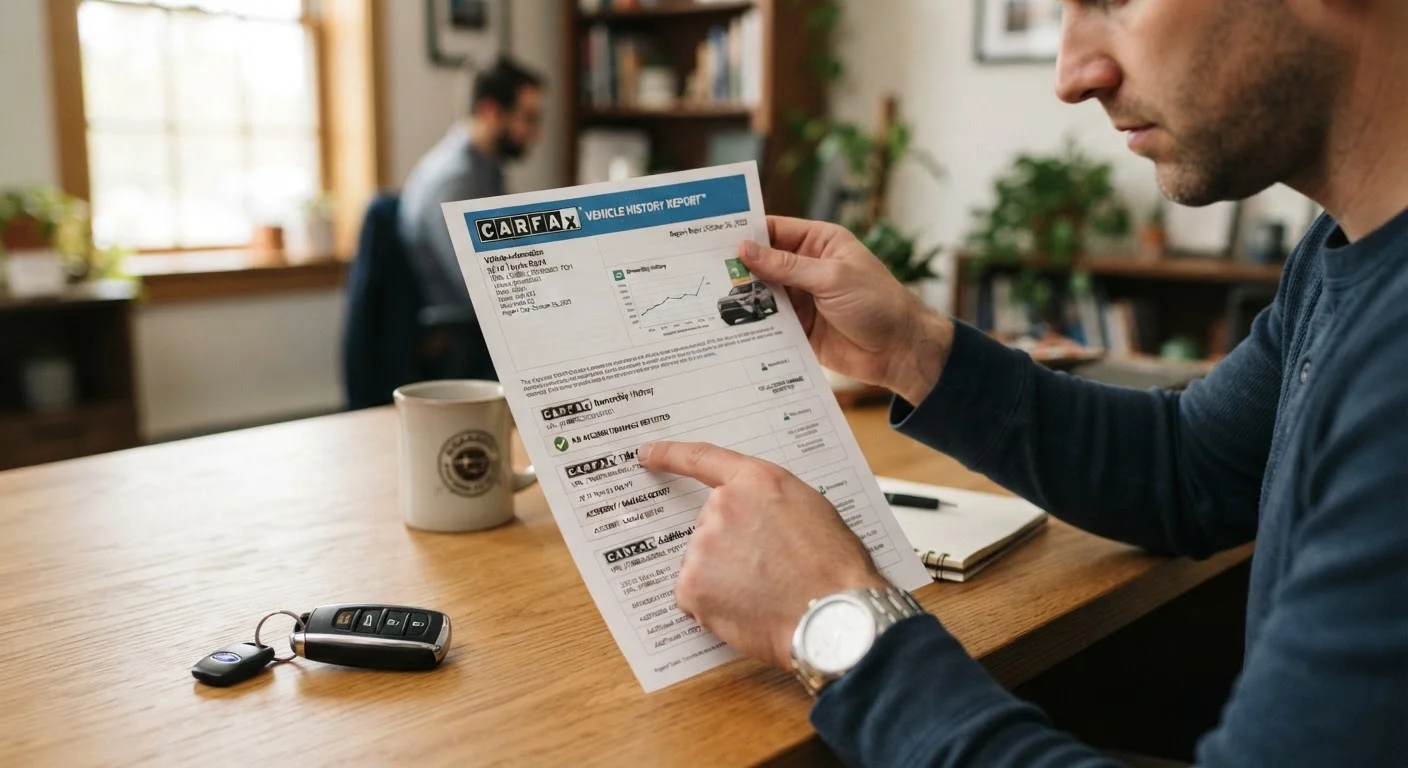
What a Vehicle History Report Actually Contains
When shopping for a used vehicle, a history report is often the first document a seller or dealer will share. Understanding what's actually inside it — and why each entry matters — is the foundation of a smarter purchase.
Most reports are organized around several core data categories:
- Title records: This is where critical designations appear. A salvage title means the vehicle was totaled by an insurer. A rebuilt or reconstructed title means it was subsequently repaired and re-registered. A lemon law buyback designation indicates the manufacturer repurchased it due to unresolved defects. These brands follow the vehicle for life.
- Accident and damage reports: Insurance claims, police-reported collisions, and airbag deployments reported through official channels will appear here.
- Odometer history: Sequential odometer readings over time help identify potential rollback fraud — a situation where mileage has been illegally altered downward.
- Ownership and registration history: How many owners, in which states, and over what time period. Frequent ownership changes in a short window can suggest recurring problems.
- Use history: Whether the vehicle was used as a rental, fleet, lease, or taxi, each of which carries different wear implications.
For context on how to interpret the technical language you may encounter, our guide to reading a mechanic's service report covers terminology that overlaps with vehicle documentation.
~1 in 4
Used vehicles with a hidden problem history
Analyses of large used-vehicle databases have estimated that roughly one in four used cars carries an undisclosed problem not visible in self-reported listings.
17 digits
Characters in a standard VIN
The VIN (Vehicle Identification Number) is a standardized 17-character code required on all vehicles sold in the US since 1981, serving as the unique key for all history lookups.
45+ states
States reporting title data to national databases
Most US states contribute title and registration data to national reporting systems, though reporting completeness and timeliness varies by jurisdiction.
The Gaps You Need to Account For
This is the section most sellers won't volunteer, and it's arguably the most important. A vehicle history report is only as complete as the data that was reported to it — and significant gaps are common.
Unreported Accidents
If two drivers exchange information at the scene of a minor fender-bender and agree to settle without involving insurance or police, that collision will not appear on any report. Cosmetic repairs done at independent body shops, or by the owner at home, leave no data trail. A car can sustain meaningful structural damage and still carry a spotless history report.
Maintenance Performed Outside Reporting Networks
Many independent mechanics, small garages, and owner-performed maintenance sessions generate no reportable data. A vehicle with 100,000 miles and a perfectly maintained engine may show minimal service history simply because the records were never digitally logged.
State-Level Reporting Variations
Different states have different requirements for reporting title events, accidents, and inspections to central databases. A vehicle that spent years in a state with looser reporting requirements may have a thinner paper trail than its actual history warrants.
Always Verify the VIN in Person
Before running or accepting a history report, physically confirm the VIN on the dashboard, door jamb, and title document all match. A mismatched VIN can indicate a title-washed vehicle — one where a clean title has been fraudulently paired with a problem car. This check takes under a minute and is one of the highest-value steps in the process.
Because of these blind spots, a history report should never be your only due diligence step. Our article on how to approach a vehicle inspection before buying used explains what a qualified mechanic looks for that no report can capture.
How to Use a History Report as One Layer of Research
The right mental model is to treat a vehicle history report the way you might treat a background check — informative, worth having, but not a substitute for direct investigation.
When reviewing a report, pay specific attention to:
- Title brand consistency: Does the VIN on the report exactly match the VIN on the vehicle and its title document? Any mismatch is a serious concern.
- Odometer logic: Do mileage readings increase in a plausible pattern? A reading that drops between entries is a red flag.
- Accident severity and repair documentation: An accident notation is more meaningful when accompanied by repair records. An accident with no corresponding repair record warrants a follow-up question.
- Geography: Has the vehicle lived in a region known for road salt or flooding? Both accelerate corrosion and electrical problems in ways that don't always appear in reports.
Before committing to any purchase, review the questions worth asking before you test drive to build a complete picture alongside what the report tells you. For any major purchase, verifying the documentation is just one part of a broader checklist — see things to verify before making any major purchase for a wider framework.
Frequently Asked Questions
A salvage title indicates the vehicle was previously declared a total loss by an insurance company, typically after a serious accident, flood, or theft recovery. This designation stays with the vehicle permanently. It can affect insurance eligibility, resale value, and roadworthiness, so it warrants careful scrutiny.
Yes. If an accident was settled privately between parties without involving insurance, it will almost certainly not appear in the report. Minor collisions that didn't trigger a police report or insurance claim are also typically absent. This is why a physical inspection remains essential.
No. A clean report means no negative events were reported to the data sources the provider uses. It does not confirm mechanical condition, undisclosed repairs, or unreported damage. Treat it as useful background research, not a certification of quality.
The VIN is a 17-character code found on the driver's side dashboard (visible through the windshield), on the driver's door jamb sticker, and on the vehicle's title and registration documents. Always verify the VIN on the report matches the number physically on the car.
Only partially. Some dealership and chain service center records are reported, but independent shop work and owner-performed maintenance typically do not appear. Ask the seller for physical service receipts to fill in those gaps.
The content on this site is for informational purposes only and is not a substitute for professional advice. Always consult a qualified professional for guidance specific to your situation.