

Why Your Space Is Already Shaping Your Choices
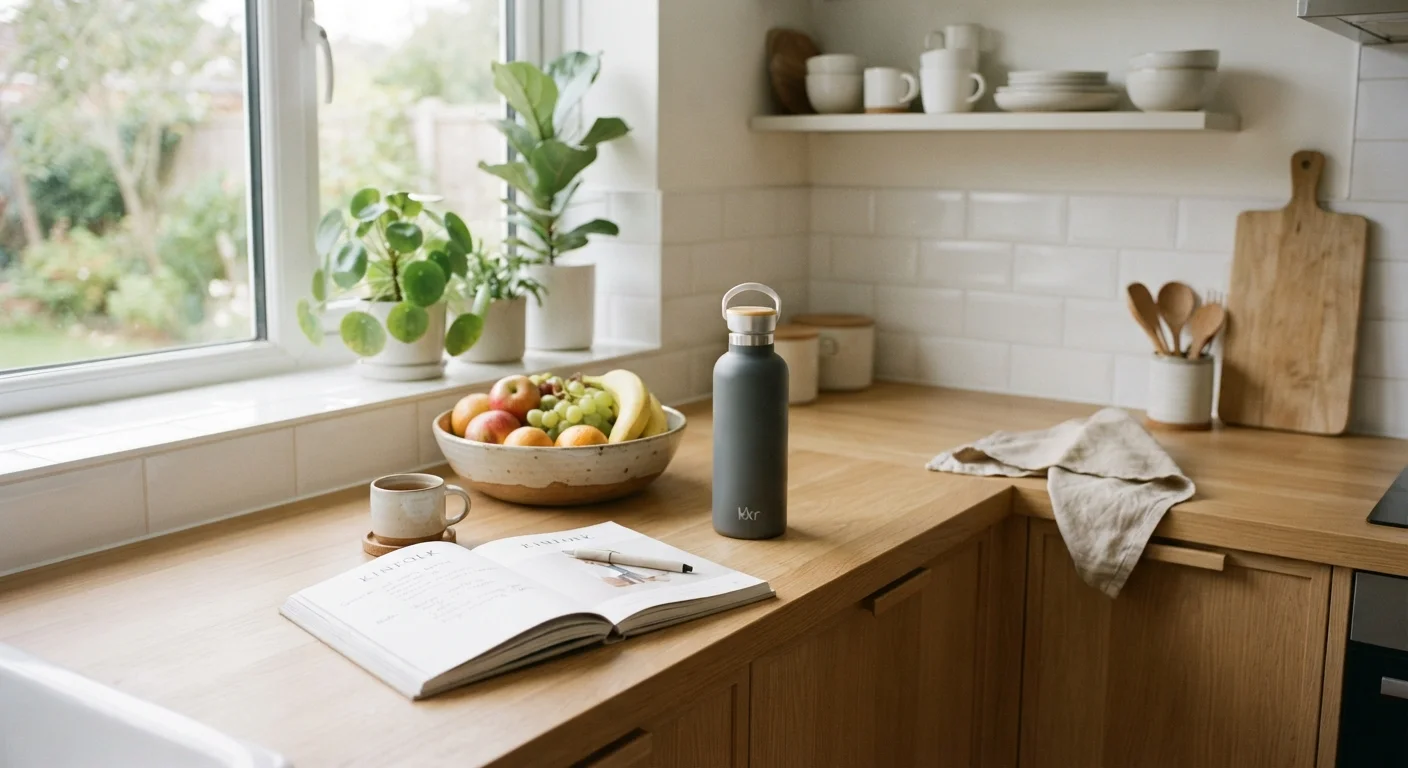
Every room you occupy sends quiet instructions. The bowl of fruit on the counter, the TV remote left on the couch, the gym bag buried in the closet — each nudges you toward or away from a behaviour before you've made a conscious decision. Behaviour scientists call this choice architecture: the idea that the arrangement of our environment is itself a form of design, whether we planned it or not.
Research from Cornell University's Food and Brand Lab has repeatedly shown that people eat what they see first. When healthier foods are placed at eye level in the fridge, consumption goes up — with no extra effort or motivation required. The environment did the work.
Understanding this principle is the foundation of environment design. Rather than relying on daily bursts of willpower, you engineer your surroundings so that the behaviour you want becomes the easiest option available. To ground yourself in the vocabulary behind these ideas, the habit formation glossary explains key concepts like cues, friction, and implementation intentions in plain language.
Best Practices for Designing a Habit-Supportive Environment
These evidence-informed practices are drawn from behavioural science and can be adapted to almost any living situation — apartment, house, or shared space.
Make the healthy default visible and within arm's reach
Visibility is one of the strongest predictors of choice. When a healthier option is in your line of sight, you're far more likely to reach for it without deliberating. This exploits the brain's tendency to choose the most available option rather than the most considered one.
Add friction to habits you want to reduce
Inconvenience is a surprisingly effective deterrent. Adding even small obstacles — an extra step, a hidden location, an unplugged device — interrupts automatic behaviour and creates a pause for reflection. Many people find the habit simply dissolves without the easy trigger.
Design a dedicated space for each important routine
Context cues are powerful. When the brain associates a specific location with a specific behaviour, that location itself becomes a trigger. Mixing contexts (eating at your desk, working from the couch) weakens cue-based recall and muddies both activities.
Use visual cues to prompt action before it's needed
Implementation intentions — the habit science term for 'when X happens, I will do Y' — work best when an environmental cue does the reminding. Pre-placing objects reduces reliance on memory and keeps routines on track even on busy or disrupted days.
Reduce decision fatigue by pre-organising your environment
The more decisions a space demands, the more mental energy it drains — leaving less capacity for the choices that actually matter. Organising your environment in advance converts repeated micro-decisions into background infrastructure.
Audit your space regularly and adjust for current goals
A space designed for last year's habits may actively resist this year's goals. Periodic walkthroughs help you notice mismatches — items that tempt you away from intentions, or missing cues for behaviours you're trying to build.
Start Here: Quick Wins You Can Implement Today
Environment design doesn't require a renovation budget or a weekend project. Most impactful changes take under ten minutes. The goal is to lower the activation cost of the behaviours you want and raise it for the ones you're trying to reduce.
If you want to take these changes further, pairing environment design with habit stacking — linking new behaviours to ones you already do — can make routines feel nearly automatic. And for ideas on how your home layout itself supports or undermines daily life, the guide on storage and layout principles offers a practical spatial lens.
The Bigger Picture: Environment as an Ongoing Practice
Environment design isn't a one-time fix. Spaces drift — clutter accumulates, routines change, seasons shift. Treating your surroundings as something to revisit periodically, rather than set and forget, keeps the design working for your current goals.
Environment Design Works for Renters Too
You don't need to own your home or undertake renovations to apply these principles. Repositioning objects, changing storage habits, and using visual cues are all renter-friendly strategies. Even in a shared living space, you can design your personal zone — a desk corner, a nightstand, a section of the fridge — to support your habits without disrupting others.
It's also worth noting that environment is one layer of a larger habit system. Some habits, called keystone habits, trigger positive ripple effects across multiple areas of life — and designing your space around those anchor behaviours can amplify results. For a comprehensive view of how habits form and stick, the complete guide to habit formation covers the neuroscience and daily practice in full.
This article is for general informational and educational purposes only and does not constitute medical or professional advice. Consult a qualified healthcare professional for guidance specific to your health needs.
The content on this site is for informational purposes only and is not a substitute for professional advice. Always consult a qualified professional for guidance specific to your situation.