

The Fibre Gap: A Near-Universal Shortfall
Data from national dietary surveys consistently show that the overwhelming majority of American adults fall well short of recommended fibre targets. The average intake hovers around 15 grams per day — roughly half what most guidelines suggest. This isn't a marginal miss; it's a sustained, population-wide shortfall with measurable health consequences.
The underlying reason is structural. Highly processed foods — which make up a significant portion of the modern American diet — have had most of their fibre removed during manufacturing. White bread, packaged snacks, and fast food deliver calories and macronutrients but little of the fibrous material found in whole plant foods.
~15g
Average daily fibre intake for US adults
National dietary surveys consistently find American adults average around 15 grams of fibre daily — well below the 25–38g recommendations from the Dietary Guidelines for Americans.
95%
Americans falling short of fibre targets
Research published in nutrition journals estimates that approximately 95% of Americans do not meet recommended daily fibre intakes, making it one of the most widespread nutritional gaps in the country.
7–9g
Fibre per half-cup serving of cooked lentils
Legumes like lentils and black beans are among the most fibre-dense common foods, offering more fibre per calorie than most other plant foods.
Understanding what fibre actually does in the body makes the stakes considerably clearer — and the fix more motivating than any generic "eat more vegetables" instruction.
What Fibre Actually Does Inside Your Body
Fibre's reputation as a digestive aid is accurate but incomplete. The two main types — soluble and insoluble — each contribute in distinct ways.
Soluble fibre dissolves in water to form a viscous gel in your gut. This gel slows the digestion and absorption of carbohydrates, which moderates the rise in blood glucose after a meal. It also binds to bile acids (which are made from cholesterol), helping carry them out of the body and prompting the liver to draw cholesterol from the bloodstream to make more. Over time, this mechanism is linked to lower LDL cholesterol levels. Good sources include oats, barley, psyllium, apples, and legumes.
Insoluble fibre does not dissolve; instead, it absorbs water, adds bulk to stool, and accelerates transit through the colon. This reduces the time that potentially harmful compounds spend in contact with the colon wall — one reason higher fibre diets are associated in observational research with lower rates of colorectal disease. Whole wheat, vegetables, and most grain bran are rich sources.
“Dietary fibre is not a single nutrient — it's a category of compounds that interact with the gut in multiple distinct ways. The diversity of fibre sources in the diet matters as much as the total amount.”
— David Katz, Physician and founding director of the Yale-Griffin Prevention Research Center
Beyond these mechanisms, dietary fibre serves as the primary fuel for beneficial gut bacteria. When these microorganisms ferment fibre in the large intestine, they produce short-chain fatty acids — compounds that support colon cell health, modulate immune response, and may influence inflammation throughout the body. For a closer look at reading fibre content on packaging, see how to decode a nutrition label.
Practical Ways to Close the Gap
Reaching adequate fibre intake doesn't require exotic ingredients or dramatic dietary overhauls. A few consistent swaps and additions accomplish most of the work.
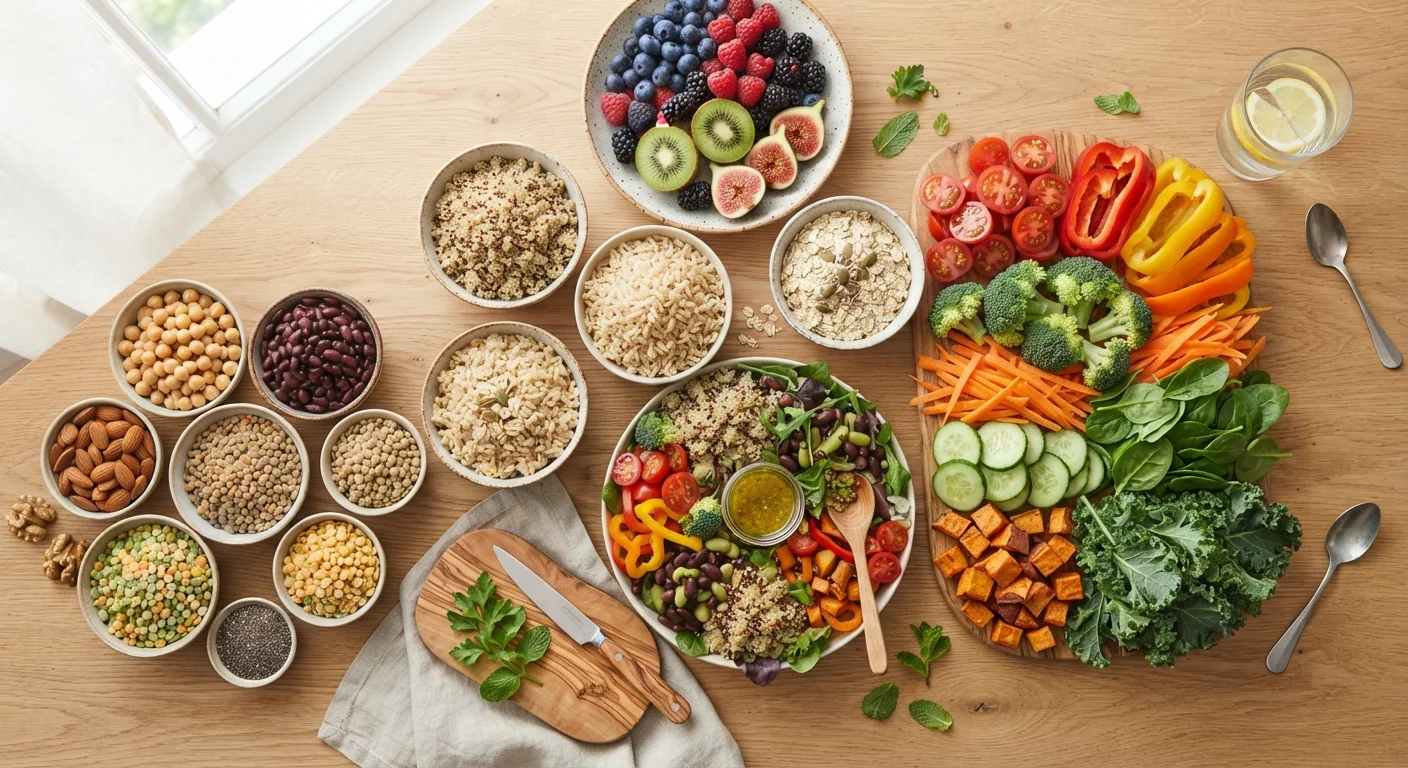
- Anchor meals with legumes. A half-cup serving of cooked lentils or black beans delivers 7–9 grams of fibre. Adding them to soups, salads, or grain bowls is one of the highest-impact changes most people can make.
- Choose whole grains deliberately. Swapping refined grains for whole-grain versions — oats at breakfast, whole-wheat bread, brown rice or barley — captures fibre that processing removes.
- Leave the skin on. Fruit and vegetable skins are often where fibre concentrates. Apples, pears, potatoes, and cucumbers eaten with skin intact provide meaningfully more fibre than peeled versions.
- Add seeds. A tablespoon of chia or ground flaxseed stirred into yogurt or oatmeal contributes 3–5 grams of fibre with minimal effort.
- Front-load produce. Making vegetables and fruit a primary component of meals — not a side thought — naturally increases fibre without requiring calculation.
Increase Fibre Gradually for Comfort
Adding large amounts of fibre too quickly is the most common reason people give up — the bloating and gas feel like a sign something's wrong, but it's usually just the gut microbiome adjusting. Aim to add roughly 3–5 grams of additional fibre per week until you reach your target, and drink enough water throughout the day to keep things moving comfortably.
One important caution: increasing fibre intake rapidly can cause temporary bloating and discomfort. Gradual increases over several weeks, alongside adequate water intake, allow the gut microbiome and digestive system to adapt. For guidance on how food choices and hydration interact, see the connection between hydration and food.
For a broader framework on building balanced daily meals, building nutritious meals without a dietitian offers practical, evidence-informed principles worth bookmarking.
This article is for general informational and educational purposes only and is not a substitute for professional medical or dietary advice. Consult a qualified healthcare provider before making significant changes to your diet, particularly if you have a gastrointestinal condition or chronic health concern.
Frequently Asked Questions
General dietary guidance in the US suggests around 25 grams per day for adult women and 38 grams per day for adult men, though needs can vary by age and health status. Most Americans average closer to 15 grams daily. A qualified healthcare provider can help determine the right target for your individual situation.
Chronically low fibre intake is associated with constipation, less favourable gut microbiome diversity, higher post-meal blood sugar spikes, and elevated LDL cholesterol over time. Long-term epidemiological research also links low fibre consumption to higher risk of colorectal disease and cardiovascular conditions, though diet is one factor among many.
Whole food sources are generally preferred because they deliver fibre alongside vitamins, minerals, and phytonutrients that work together. Supplements can be a useful addition for some people but are not a like-for-like replacement. Speak with a healthcare provider before adding fibre supplements, especially if you have a gastrointestinal condition.
Very high fibre intake — particularly when increased rapidly — can cause bloating, gas, and abdominal discomfort. In rare cases, extremely excessive intake may interfere with absorption of certain minerals. Gradual increases paired with adequate fluid intake help the digestive system adapt comfortably.
Legumes (lentils, black beans, chickpeas), whole grains (oats, barley, whole wheat), seeds (chia, flaxseed), and many vegetables and fruits (peas, artichokes, avocados, pears, raspberries) rank among the highest in fibre per serving. Eating a variety of these foods across the day is the most practical strategy.
The content on this site is for informational purposes only and is not a substitute for professional advice. Always consult a qualified professional for guidance specific to your situation.