

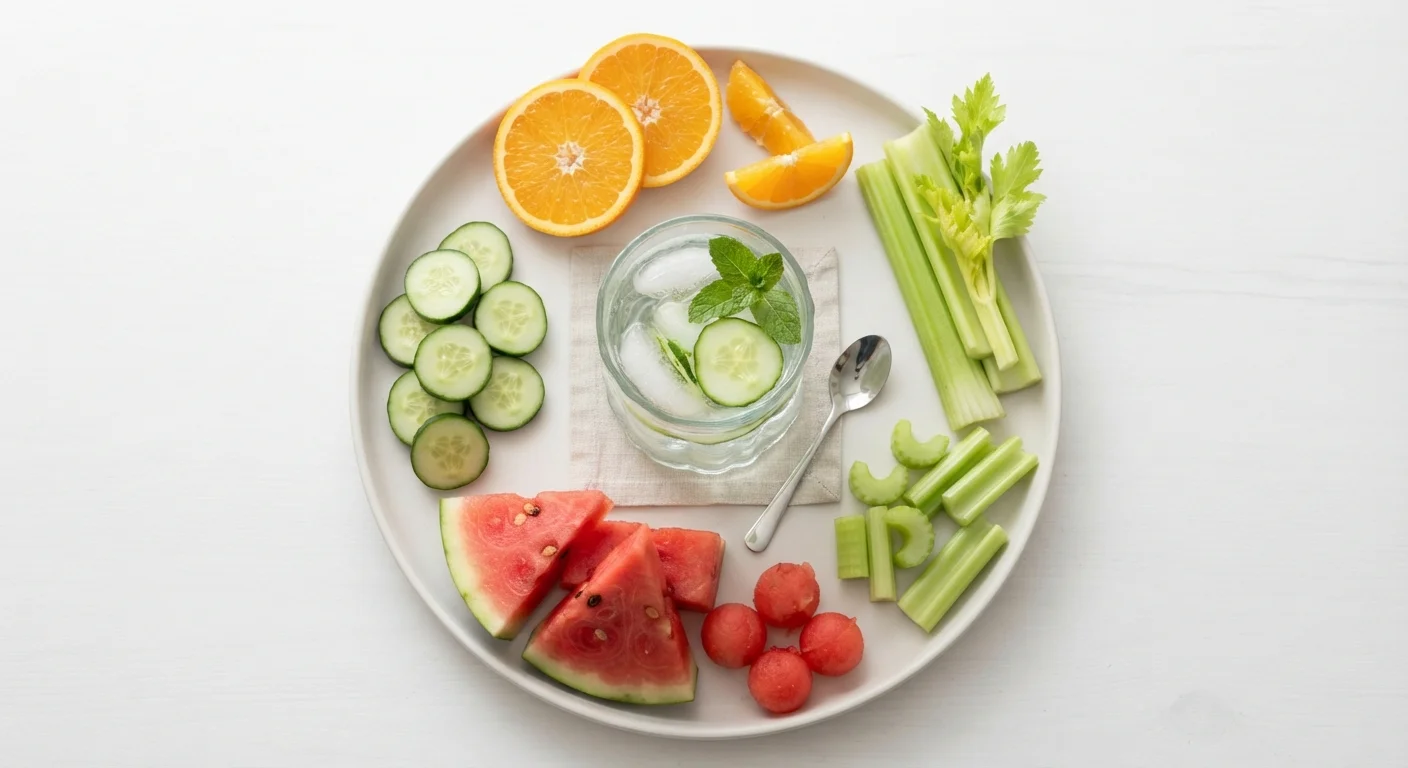
Food as a Source of Water
Most people think about hydration as a drinking problem — not enough glasses of water throughout the day. But the food on your plate is silently doing some of that work. According to nutrition research, roughly 20% of total daily fluid intake for adults comes from food rather than beverages. That figure climbs considerably if your diet is rich in produce.
Fruits and vegetables are the most obvious contributors. Cucumbers, lettuce, celery, tomatoes, strawberries, and watermelon all exceed 90% water by weight. Cooked foods like oatmeal, soups, and stews also carry significant moisture. Even foods that seem dry — like yogurt or eggs — contain meaningful amounts of water within their structure.
This matters because people who eat more whole, minimally processed foods tend to have a built-in hydration advantage over those whose diets rely heavily on dry, ultra-processed options. The principles behind balanced meal building often align naturally with better dietary hydration.
~20%
Daily water intake sourced from food
Nutrition research consistently estimates that food accounts for roughly one-fifth of most adults' total fluid intake.
>90%
Water content in cucumbers and lettuce
Many common fruits and vegetables exceed 90% water by weight, making them significant contributors to dietary hydration.
75%
Estimated water content of the human body
Water makes up approximately 60–75% of total body weight in adults, underlining how central fluid balance is to every physiological process.
How Food Choices Affect Your Water Needs
The nutritional composition of what you eat directly changes how much water your body needs to function — a connection that often goes unexamined.
Sodium is the clearest example. When sodium intake is high, the kidneys need more water to filter it out. High-sodium diets — common when processed or fast foods make up a large share of meals — create a consistently elevated demand for fluids. This is one reason salty meals trigger thirst almost immediately.
Protein also increases water requirements. Metabolising protein generates nitrogen waste (in the form of urea), which the kidneys excrete in urine. Higher protein intakes mean more urea to clear, and more water needed to do it. People exploring different protein sources should factor this into their overall fluid habits.
Dietary fibre has a different relationship with water. Soluble fibre absorbs water in the gut, which supports its role in slowing digestion and forming a gel-like substance that benefits the gut microbiome. But this means adequate water intake is important when fibre intake is high — without it, high-fibre diets can sometimes cause digestive discomfort. The full picture on dietary fibre illustrates just how central this nutrient-water interaction is.
Pair High-Fibre Days With Extra Fluids
If you're actively trying to eat more vegetables, legumes, or whole grains, increase your fluid intake alongside. Fibre needs water to move through the digestive system effectively. A simple habit: drink a glass of water with every fibre-rich meal or snack.
Hydration's Role in Nutrient Absorption
Water isn't just a thirst-quencher — it's a working part of your digestive system. Saliva, stomach acid, intestinal secretions, and the mucus lining of the gut all depend on adequate hydration to function properly. When you're even mildly dehydrated, these processes can become less efficient.
Water-soluble vitamins — including vitamin C and the entire B-vitamin group — are absorbed and transported through the body's aqueous (water-based) environment. A persistently under-hydrated state may compromise how effectively these nutrients move from the gut into the bloodstream and reach the tissues that need them. For a deeper look at what these micronutrients do, see the guide to essential vitamins and minerals.
This is also worth considering when reading nutrition labels: a food's nutrient content on paper is only part of the story. How well your body actually absorbs those nutrients depends partly on your hydration status at the time.
“Water is not just a beverage — it's a nutrient in its own right, and its adequacy shapes how every other nutrient functions in the body.”
— Institute of Medicine, Food and Nutrition Board, U.S. advisory body on dietary reference intakes
Practical Signals and Sensible Habits
Thirst is a useful but imperfect guide. By the time you feel thirsty, mild dehydration may already have set in — and interestingly, hunger signals and thirst signals can sometimes be confused. Some people interpret early dehydration as appetite, reaching for food when a glass of water might be more appropriate.
Rather than obsessing over exact fluid targets — which vary significantly by body size, activity level, climate, and health status — a more sustainable approach is developing contextual awareness. Notice whether your meals are moisture-rich or dry. Pay attention to how your body feels after high-sodium or high-protein days. Observe urine colour as a rough indicator (pale yellow generally signals adequate hydration).
Building consistent hydration habits alongside nutritious eating is part of the broader healthy routines framework that supports overall wellbeing. And periodically pausing to notice your patterns — as prompted by a structured nutrition check-in — can surface habits worth adjusting.
Hydration needs also shift across life stages, something worth bearing in mind if you care for children, aging parents, or have your own changing health circumstances. The nutritional changes across life stages piece explores this in more detail.
This article is for general informational purposes only and is not a substitute for personalised medical or nutritional advice. Consult a qualified healthcare professional for guidance specific to your health needs.
Frequently Asked Questions
Research suggests roughly 20% of daily water intake comes from food for most adults, though this varies by diet. People who eat a lot of fruits, vegetables, and soups get a higher share from food than those who eat mostly dry, processed items.
Cucumbers, lettuce, celery, tomatoes, watermelon, and strawberries are among the highest, all exceeding 90% water by weight. Soups and broths also count significantly toward fluid intake.
High sodium intake increases the body's demand for water to maintain fluid balance. It doesn't directly remove water from your cells, but it does trigger thirst and raises the volume of fluid your kidneys need to process sodium out of the body.
For most people, food alone is insufficient to meet full hydration needs. It's a meaningful contributor, but drinking adequate fluids — primarily water — remains essential, especially during physical activity or hot weather.
Caffeinated drinks do have a mild diuretic effect, but research indicates that moderate caffeine consumption (a few cups daily) does not cause net fluid loss for habitual drinkers. They still contribute to overall hydration.
Water is essential for digesting food and transporting water-soluble vitamins like vitamin C and the B vitamins through the bloodstream. Inadequate hydration can impair these processes, reducing how effectively your body uses the nutrients you consume.
The content on this site is for informational purposes only and is not a substitute for professional advice. Always consult a qualified professional for guidance specific to your situation.