

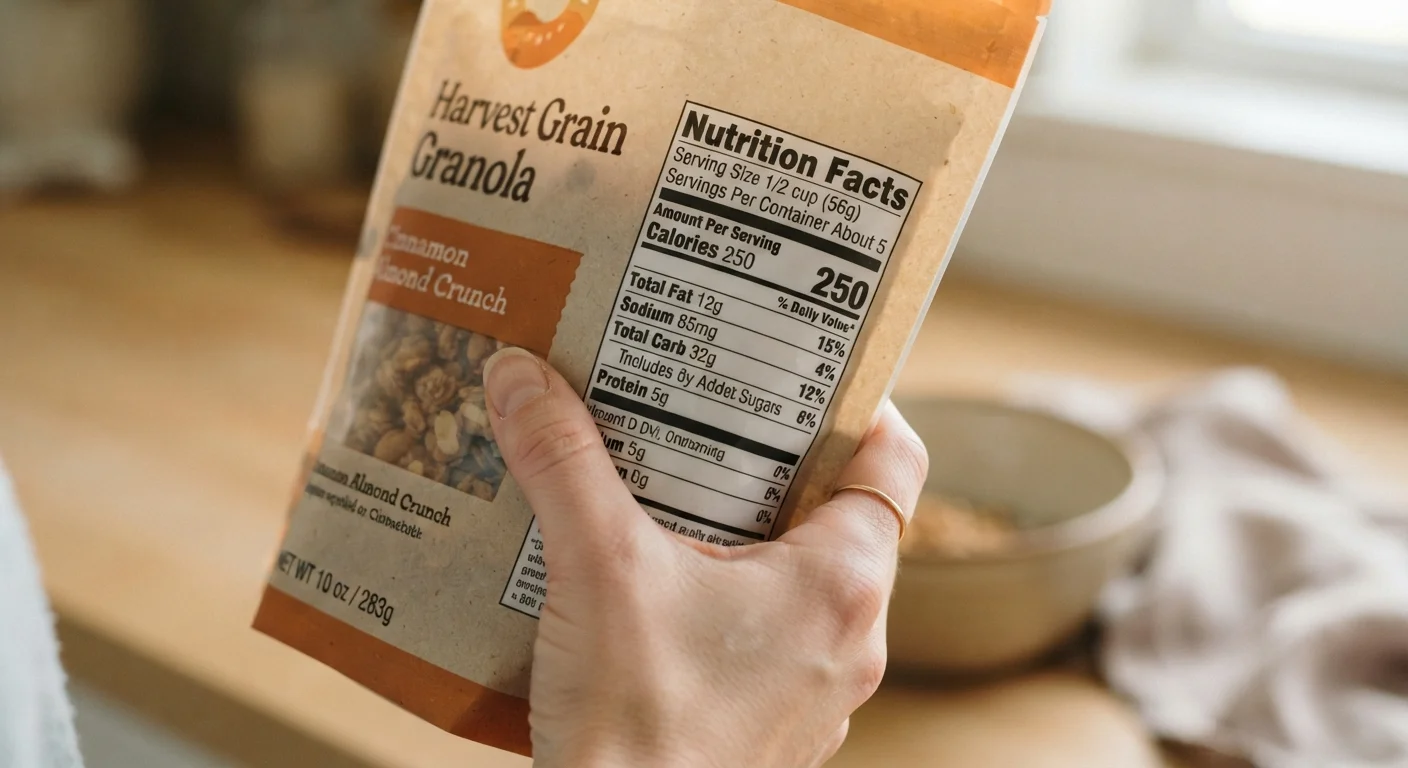
Why the Label Exists — and What It's Designed to Tell You
The Nutrition Facts panel is a federally standardized label regulated by the U.S. Food and Drug Administration (FDA). Its purpose is straightforward: give consumers consistent, comparable information about what they're eating. The format was updated most recently in 2020, with changes that included a more prominent calorie display, a dedicated line for added sugars, and an updated serving size that better reflects how people actually eat.
Understanding the label doesn't require a nutrition background. It does require knowing which numbers matter for which decisions — and which ones are easy to misread. This guide walks through the panel section by section so you can move through the grocery store with more confidence.
For context on how these nutrients function in the body, see our explainer on macronutrients and our guide to vitamins and minerals.
Labels Reflect One Serving — Not the Whole Package
This is the most frequently misread element on any Nutrition Facts panel. Always verify the serving size and number of servings per container before interpreting any other figure. A product that appears low in sodium may contain three servings, tripling your actual intake if you consume the whole package in one sitting.
Step-by-Step: Reading the Panel
Follow these steps in order — each one builds on the last. Skipping to calories before checking serving size is one of the most common label-reading mistakes.
Start with Serving Size
Every number on the label — calories, fat, sodium, vitamins — refers to one serving, not the whole package. Serving sizes are set by the FDA based on amounts people typically consume, expressed in both household measures (e.g., 1 cup) and grams.
If you eat two servings, every number doubles. A bag of chips labeled 150 calories with 3 servings per container contains 450 calories total. This single step resolves most label confusion.
Check Total Calories
Calories measure the energy a food provides. The FDA updated the font size for calories in 2020 to make it more prominent — it's now the largest number on the panel. This makes sense: for most people, total energy intake is the first practical anchor when comparing foods.
Calories alone don't determine whether a food is nutritious — a handful of almonds and a handful of chips can have similar calories but very different nutritional profiles. Use calories as context, not a verdict.
Read the % Daily Value Column
The % Daily Value (%DV) column on the right side of the panel shows how much of a nutrient one serving contributes toward the daily reference amount for a 2,000-calorie diet. It's a quick benchmark:
- 5% DV or less is considered low for that nutrient
- 20% DV or more is considered high
This column is especially useful for comparison shopping. If two cereals have identical calories but one has 15% DV of sodium and the other has 4% DV, the difference is immediately clear.
Identify Nutrients to Limit
Public health guidance generally recommends limiting three nutrients for most adults:
- Saturated fat: Associated with cardiovascular risk at high intakes; current U.S. dietary guidelines recommend keeping it below 10% of daily calories.
- Sodium: Most Americans consume well above the recommended limit of 2,300 mg per day; packaged foods are a major source.
- Added sugars: The label now distinguishes between naturally occurring sugars (in fruit or dairy) and added sugars. The American Heart Association recommends most adults limit added sugars significantly — though specific numeric targets should be discussed with a healthcare professional.
For a deeper look at how sweeteners are named on labels, see our guide to sugar on ingredient lists.
Look for Nutrients to Prioritize
The lower section of the panel lists nutrients many Americans fall short on. These include:
- Dietary fiber: Supports digestive health and has broader benefits; most US adults consume well below recommended amounts. See more in our article on dietary fibre.
- Vitamin D, calcium, iron, and potassium: The FDA requires these four to appear because deficiency in each is a documented public health concern.
A higher %DV for these nutrients is generally a positive signal when comparing products of similar calorie levels.
Glance at the Ingredient List
The ingredient list appears below the Nutrition Facts panel and is ordered by weight, from most to least. The first three to five ingredients give you the clearest picture of what a product is primarily made of.
A few practical cues: whole foods listed early (e.g., oats, tomatoes, chicken) signal a less processed product. Multiple forms of sugar listed separately (cane sugar, high-fructose corn syrup, dextrose) can obscure total sugar content, since splitting them pushes each one further down the list.
For a fuller breakdown of ingredient list conventions, including how manufacturers can reframe additives, see our guide to ingredient lists.
Use Labels for Comparison, Not Perfection
Nutrition labels are most useful when you're comparing two similar products side by side, not when trying to hit exact nutrient targets. A food doesn't need a perfect label to have a place in a balanced diet. Think of the panel as one input among many, not a pass/fail grade.
Once you're comfortable reading individual labels, the next step is using that information to construct balanced meals. Our guide to building nutritious meals puts these numbers into practical context. You may also find it helpful to read about how ingredient lists are structured alongside the Nutrition Facts panel.
This article provides general nutrition education and is not a substitute for personalized advice from a registered dietitian or qualified healthcare professional. Nutritional needs vary by individual. If you have a medical condition or specific dietary requirements, consult a qualified professional before making significant changes to your diet.
The content on this site is for informational purposes only and is not a substitute for professional advice. Always consult a qualified professional for guidance specific to your situation.