

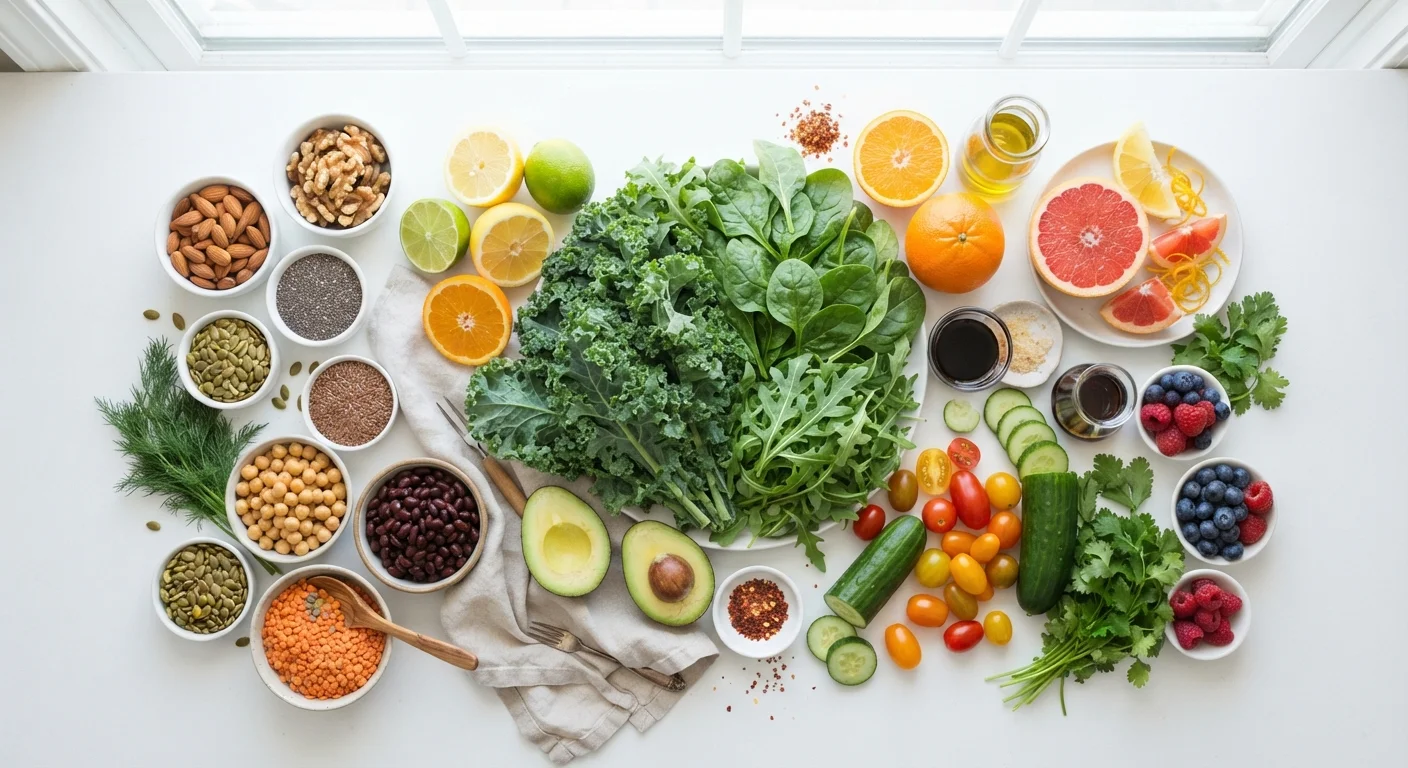
What Micronutrients Are — and Why They're Called Essential
Your body performs thousands of biochemical reactions every minute — and most of them depend on vitamins and minerals to work. Unlike macronutrients like carbohydrates, proteins, and fats, micronutrients don't supply calories. Instead, they act as catalysts: enabling energy production, immune defense, bone development, blood clotting, and hormone synthesis.
The word essential has a precise meaning in nutrition science. An essential nutrient is one the body cannot synthesize in sufficient quantities on its own — so it must come from food (or, in some cases, supplements under clinical guidance). There are 13 essential vitamins and at least 15 essential minerals recognized by nutrition authorities.
Deficiencies may not announce themselves immediately, but over time they create measurable health consequences. Inadequate iron impairs oxygen transport. Low vitamin D undermines bone density. Insufficient iodine disrupts thyroid function. The good news: eating a varied, whole-food diet covers most bases for most people.
| Essential vitamins recognized | 13 (Dietary Reference Intakes, National Academies of Sciences) |
| Essential minerals recognized | 15+ (National Academies of Sciences, Engineering, and Medicine) |
| Fat-soluble vitamins | A, D, E, K |
| Water-soluble vitamins | C and 8 B vitamins |
| Most common global deficiency | Iron deficiency anemia (World Health Organization) |
| Vitamin D synthesis source | Sunlight (UVB radiation) on skin |
Fat-Soluble vs. Water-Soluble Vitamins: The Key Difference
Vitamins fall into two categories based on how the body stores and handles them, and the distinction matters practically.
Fat-Soluble Vitamins (A, D, E, K)
These dissolve in fat and are stored in the liver and fatty tissues. Because they accumulate, it is possible to build up excessive amounts — particularly from high-dose supplements rather than food. The body draws on these reserves when dietary intake dips.
- Vitamin A: Supports vision (especially in low light), immune function, and skin integrity. Found in liver, dairy, eggs, and as beta-carotene in orange and leafy green vegetables.
- Vitamin D: Regulates calcium absorption and bone metabolism; also plays a role in immune signaling. The skin synthesizes it from sunlight, though dietary sources (fatty fish, fortified milk) and geography make deficiency common.
- Vitamin E: Acts as an antioxidant protecting cell membranes. Found in nuts, seeds, and vegetable oils.
- Vitamin K: Necessary for blood clotting and bone mineralization. Leafy greens are the richest source.
Water-Soluble Vitamins (C and the B Vitamins)
These dissolve in water and are not stored in significant quantities — excess is excreted in urine. Regular dietary intake is therefore more important. They include vitamin C and eight B vitamins (B1 through B12, plus folate and biotin).
- Vitamin C: Supports collagen synthesis, immune response, and iron absorption. Citrus fruits, bell peppers, and broccoli are excellent sources.
- B12: Critical for nerve function and red blood cell production; found almost exclusively in animal products, making it a key nutrient to monitor on plant-based diets.
- Folate (B9): Essential for DNA synthesis and cell division, and especially important before and during pregnancy.
Essential Nutrient
A substance the body cannot produce in sufficient quantities on its own and must obtain through diet. Deficiency leads to measurable health consequences.
Fat-Soluble Vitamin
Vitamins (A, D, E, K) that dissolve in fat and are stored in body tissues. They can accumulate to excess if consumed in very high doses, particularly from supplements.
Water-Soluble Vitamin
Vitamins (C and the B group) that dissolve in water and are not stored in large amounts. Excess is generally excreted, so regular dietary intake matters.
Trace Mineral
A mineral required by the body in very small amounts — typically less than 100 mg per day — but still essential for normal physiological function.
Bioavailability
The proportion of a nutrient that is actually absorbed and used by the body. Bioavailability varies with food source, preparation method, and other nutrients consumed alongside it.
Antioxidant
A compound that neutralizes free radicals — unstable molecules that can damage cells. Vitamins C and E and the mineral selenium function as dietary antioxidants.
Essential Minerals: Macro and Trace
Minerals come from the earth and enter the food supply through soil and water. They're broadly divided into macrominerals (needed in larger amounts) and trace minerals (needed in tiny but precise quantities).
Key Macrominerals
- Calcium: The most abundant mineral in the body; builds and maintains bones and teeth, and supports muscle contraction and nerve signaling. Dairy, fortified plant milks, and leafy greens are leading sources.
- Magnesium: Involved in more than 300 enzymatic reactions, including energy production and blood pressure regulation. Found in nuts, seeds, legumes, and whole grains.
- Potassium: Maintains fluid balance, supports heart rhythm, and counteracts some effects of sodium. Bananas, potatoes, beans, and leafy greens provide it readily.
Key Trace Minerals
- Iron: Essential for hemoglobin — the protein that carries oxygen in red blood cells. Red meat, beans, lentils, and fortified cereals are top sources. Pairing plant-based iron with vitamin C improves absorption.
- Zinc: Supports immune function, wound healing, and sense of taste and smell. Meat, shellfish, legumes, and seeds are good sources.
- Iodine: Necessary for thyroid hormone production. Seafood, dairy, and iodized salt are primary dietary sources.
- Selenium: Works as an antioxidant and supports thyroid function. Brazil nuts are exceptionally rich; a single nut can meet a day's need.
If you're exploring plant-based eating, several of these nutrients deserve extra attention. See our introduction to plant-based diets for a closer look at the tradeoffs.
More Isn't Always Better With Supplements
Fat-soluble vitamins accumulate in the body, which means high-dose supplementation — particularly of vitamins A and D — can reach toxic levels over time. This risk is far lower with whole food sources. Water-soluble vitamins are excreted more readily, but very high supplemental doses of some B vitamins have been associated with adverse effects. Supplementation decisions are best made in consultation with a healthcare provider who can assess your actual needs.
Putting It Into Practice
No single food contains every micronutrient. Dietary variety is the operating principle. A plate that cycles through different proteins, vegetables, whole grains, and healthy fats across the week naturally covers most of the spectrum without counting every milligram.
For practical help translating these principles into meals, our guide on building nutritious meals day-to-day offers evidence-informed frameworks. And when shopping, understanding how to read a food label helps you gauge whether packaged foods contribute meaningfully to your intake — the nutrition label guide walks through the percentages clearly.
Supplements can address genuine gaps — particularly vitamin D, B12 for those avoiding animal products, and folate before and during pregnancy — but they are not a substitute for dietary diversity and should be discussed with a healthcare provider. People with chronic conditions, absorption disorders, or restricted diets may have specific needs that general guidance can't address.
~42%
U.S. adults with vitamin D deficiency
According to analysis published in the journal Nutrients, approximately 42% of U.S. adults have insufficient vitamin D levels.
2 billion
People affected by micronutrient deficiencies globally
The World Health Organization estimates that deficiencies in iron, vitamin A, and iodine affect roughly 2 billion people worldwide.
~10–15%
Iron absorption from plant sources vs. ~25% from meat
Non-heme iron from plant foods is absorbed at a lower rate than heme iron from animal foods; pairing with vitamin C improves uptake.
This article is for general informational and educational purposes only and does not constitute medical or nutritional advice. Always consult a qualified healthcare professional for guidance tailored to your individual health circumstances.
The content on this site is for informational purposes only and is not a substitute for professional advice. Always consult a qualified professional for guidance specific to your situation.