

Start here
What "Plant-Based" Actually Means
Core knowledge
Nutrients to Watch Closely
Dig deeper
What the Evidence Says About Health Outcomes
Think critically
Real Tradeoffs and Honest Limitations
Put it into practice
How to Get Started Without Overhauling Everything
What "Plant-Based" Actually Means
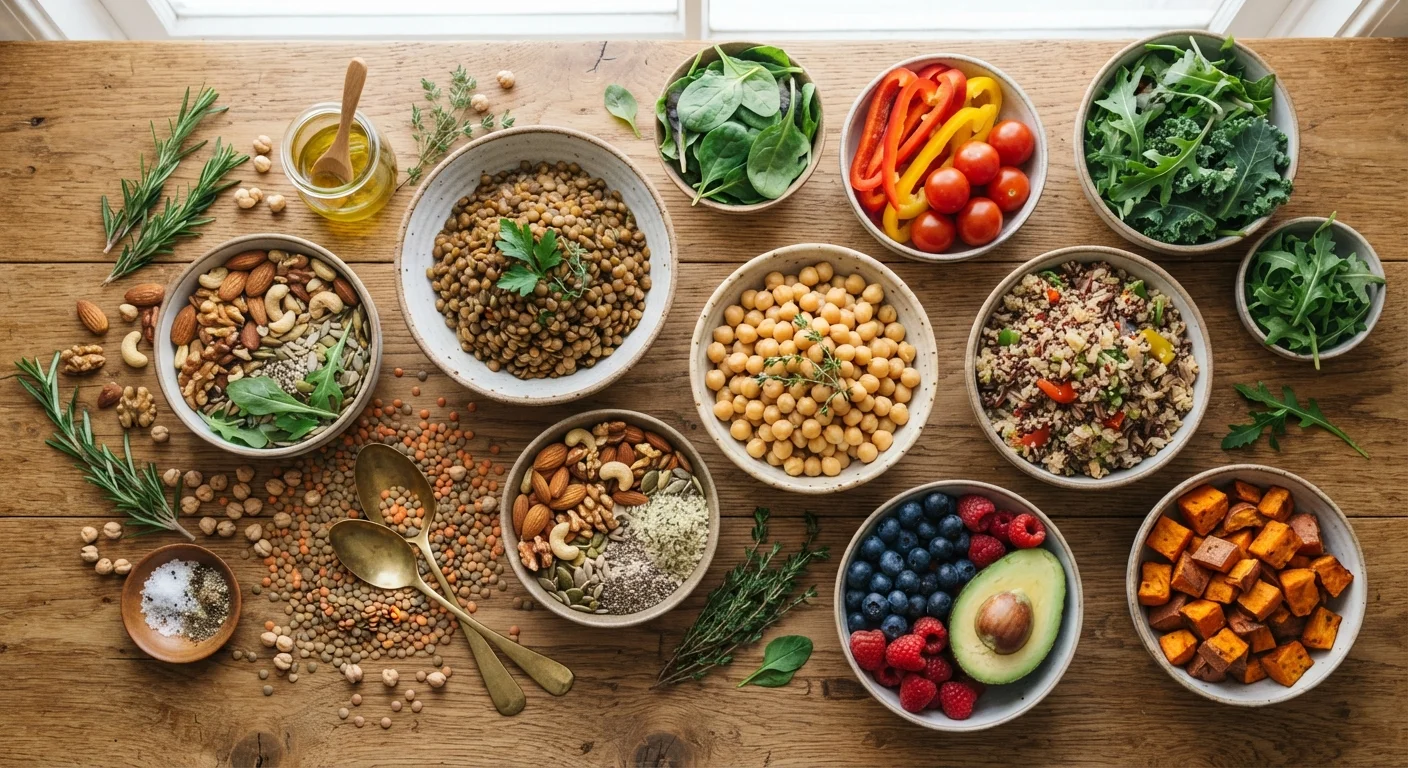
"Plant-based" has become one of nutrition's most widely used — and loosely used — terms. At its core, a plant-based diet prioritizes foods that come from plants: vegetables, fruits, legumes, whole grains, nuts, and seeds. What it does not automatically mean is that animal products are forbidden.
Think of it as a spectrum rather than a rulebook. On one end sits a fully vegan approach with zero animal products. In the middle are diets like lacto-ovo vegetarian (which includes dairy and eggs) and pescatarian (which adds fish). Many people simply describe themselves as "plant-forward" — meaning plants anchor every meal but occasional animal foods still appear.
The umbrella also includes the well-studied Mediterranean diet and DASH diet, both of which are predominantly plant-based while including modest amounts of seafood, poultry, or dairy. Understanding where you want to land on this spectrum is a useful first step before making any changes.
Whole food
A food that is minimally processed and close to its natural state — such as a lentil, an apple, or a handful of walnuts. Whole foods retain more fiber, vitamins, and minerals than their processed counterparts.
Non-heme iron
The form of iron found in plant foods. It is absorbed less efficiently by the body than heme iron (found in meat), but absorption can be improved by eating it alongside vitamin C.
Essential amino acids
Building blocks of protein that the body cannot produce on its own and must obtain from food. All nine are found together in animal proteins; eating a varied mix of plant proteins throughout the day can meet these needs.
Fortified food
A food that has had nutrients added to it during manufacturing — for example, plant milks fortified with calcium and vitamin D, or breakfast cereals fortified with B12.
Dietary fiber
A type of carbohydrate found only in plant foods that the body cannot digest. It supports digestive health, helps regulate blood sugar, and feeds beneficial gut bacteria.
Observational study
A type of research that tracks what people eat and what health outcomes occur, without directly controlling participants' diets. These studies identify associations but cannot prove cause and effect on their own.
Nutrients to Watch Closely
A plant-forward diet can be nutritionally complete — but only with deliberate attention to a handful of nutrients that are harder to obtain from plants alone.
- Vitamin B12: Found almost exclusively in animal products. Those eating fully plant-based are generally advised to supplement or rely on fortified foods. Deficiency develops slowly but can cause serious neurological effects.
- Iron: Plants contain non-heme iron, which the body absorbs less efficiently than the heme iron in meat. Pairing iron-rich plants (lentils, spinach, tofu) with vitamin C sources can improve absorption meaningfully.
- Calcium: Beyond dairy, good sources include fortified plant milks, tofu made with calcium sulfate, bok choy, and white beans.
- Omega-3 fatty acids: Flaxseeds, chia seeds, and walnuts provide ALA, a plant-form omega-3. Converting ALA to the DHA and EPA forms the body uses most is inefficient; algae-based omega-3 supplements offer a direct plant-sourced alternative.
- Zinc and iodine: Whole grains and legumes contain zinc but also phytates that reduce absorption. Iodine, abundant in dairy and seafood, may require attention if you rely heavily on non-iodized salt.
Learning to read nutrition labels carefully becomes especially useful here — fortified foods and supplement decisions are easier to navigate when you can interpret the numbers confidently.
Pair Iron-Rich Plants with Vitamin C
Absorption of plant-based iron improves significantly when consumed alongside vitamin C-rich foods. Try squeezing lemon juice over a spinach salad, adding bell peppers to a lentil dish, or finishing a bean bowl with fresh tomato. This simple pairing habit can make a meaningful difference in how much iron your body actually uses.
What the Evidence Says About Health Outcomes
The research on plant-based diets is substantial, though it carries the usual caveats of nutrition science: most large studies are observational, meaning they track associations rather than proving direct cause and effect.
That said, several well-established findings are worth knowing:
- Cardiovascular health: Multiple large cohort studies — including data from the Adventist Health Studies — associate plant-heavy diets with lower rates of heart disease. High fiber intake, lower saturated fat, and abundant antioxidants are among the proposed mechanisms.
- Type 2 diabetes risk: Diets rich in whole plant foods are linked to improved insulin sensitivity and lower rates of type 2 diabetes in observational research.
- Weight management: Plant-based diets tend to be lower in caloric density, which may support healthier body weight — though this depends heavily on food quality and overall eating patterns.
- Gut health: Dietary fiber from plants feeds beneficial gut bacteria, supporting a more diverse microbiome. This remains an active area of research with promising but still-developing evidence.
For context on how eating patterns interact with age and physiology, the nutritional needs across the life stages article offers useful background.
Real Tradeoffs and Honest Limitations
Balanced information means acknowledging what a plant-based diet doesn't automatically solve.
First, food quality matters enormously. A diet built on white bread, french fries, and heavily processed plant-based burgers is technically plant-based but nutritionally mediocre. The evidence supporting plant diets largely comes from studies emphasizing whole foods — not ultra-processed plant alternatives. Our whole foods vs. processed foods explainer breaks this distinction down clearly.
Second, individual variation is real. Genetics, gut microbiome composition, and existing health conditions all influence how a person responds to any dietary change. What works well for one person may not suit another.
Third, access and cost are genuine barriers. Fresh produce, nuts, and specialty plant foods can be expensive and less available in some communities. Budget-friendly staples — dried beans, lentils, frozen vegetables, oats — partially offset this, but the barrier is real and worth acknowledging.
Finally, the social and practical dimensions of eating matter. Navigating restaurants, family meals, and travel on a restricted diet takes effort. Flexibility tends to make long-term adherence more realistic than rigid rules.
"Plant-Based" Doesn't Automatically Mean Healthy
Many packaged foods marketed as plant-based are highly processed and high in sodium, refined starch, or added sugar. The health benefits associated with plant-forward diets come primarily from whole or minimally processed foods — not from swapping one processed product for another. Read labels and prioritize the produce aisle and dried goods section over novelty convenience items.
How to Get Started Without Overhauling Everything
Sustainable dietary change rarely happens overnight. A gradual approach reduces overwhelm and allows your palate, habits, and kitchen skills to adapt together.
A few evidence-informed starting points:
- Add before you subtract. Rather than immediately cutting out animal products, focus first on adding more vegetables, legumes, and whole grains to meals you already enjoy.
- Pick two or three anchor meals. Identify two or three fully plant-based meals you genuinely like and build from there. Familiarity reduces the friction of change.
- Explore protein variety. Lentils, chickpeas, black beans, edamame, and tofu are versatile, affordable, and satisfying. Getting comfortable with a few preparation methods opens up the menu considerably.
- Read labels when buying packaged foods. Sodium, added sugars, and refined grains can accumulate quickly in convenience plant foods.
- Talk to a professional if your needs are complex. Pregnant individuals, children, older adults, and anyone managing a chronic condition should work with a registered dietitian before making significant dietary shifts.
For practical help constructing balanced daily meals, building nutritious meals without a dietitian is a natural next step from here.
This article is for general informational and educational purposes only and is not a substitute for personalized medical or nutritional advice. Consult a qualified healthcare provider or registered dietitian before making significant changes to your diet, particularly if you have a medical condition or specific nutritional needs.
Frequently Asked Questions
Not necessarily. Veganism excludes all animal products for ethical, environmental, or health reasons. A plant-based diet simply emphasizes whole plant foods as the foundation of meals. Many people who eat plant-based still include small amounts of fish, dairy, or eggs.
Yes, but it takes some planning. Legumes, tofu, tempeh, edamame, seitan, and certain grains are good protein sources. Combining a variety of plant proteins throughout the day typically covers your essential amino acid needs. For a closer comparison of protein sources, see our <a href="/health-wellness/nutrition/protein-sources-compared-animal-plant-and-blended-approaches">protein sources guide</a>.
Vitamin B12 is found almost exclusively in animal products, so supplementation is widely recommended for those eating fully plant-based. Depending on your food choices, you may also benefit from discussing vitamin D, iodine, and omega-3 needs with a healthcare provider.
Processed plant-based foods vary widely in nutritional quality. Many meat alternatives are high in sodium and additives. They can be useful for transitioning, but whole plant foods — beans, lentils, whole grains — should form the dietary foundation.
A well-planned plant-based diet can be adequate for most life stages, but nutritional needs shift significantly during pregnancy and childhood. Anyone in these groups should consult a registered dietitian or physician before making major dietary changes.
Individual responses vary considerably and depend on your starting diet, overall lifestyle, and genetics. No responsible source should promise specific timelines or outcomes. Any notable health concerns should be discussed with a qualified healthcare provider.
The content on this site is for informational purposes only and is not a substitute for professional advice. Always consult a qualified professional for guidance specific to your situation.