

Why the Phrase Gets So Misused
"Balanced diet" is one of the most repeated phrases in health communication — and one of the least explained. It appears on food packaging, in public health campaigns, and in casual conversation, almost always without definition. The result is that many people understand vaguely that balance is good, without knowing what it actually looks like on a plate.
Part of the confusion stems from how nutrition science gets translated into public messaging. Researchers study dietary patterns across populations; marketers apply terms like "balanced" to individual products. These are very different things. Understanding the distinction helps cut through the noise.
Balance Isn't One-Size-Fits-All
Nutritional needs vary meaningfully by age, sex, activity level, pregnancy status, and health conditions. What constitutes a balanced diet for an active young adult differs from what's appropriate for an older adult managing a chronic condition. General frameworks are useful starting points, but a registered dietitian can provide guidance matched to your specific circumstances.
The Core Idea: Variety, Proportion, and Adequacy
At its foundation, a balanced diet rests on three principles: variety (eating a wide range of foods), proportion (eating food groups in appropriate relative amounts), and adequacy (consuming enough of each nutrient to meet the body's needs).
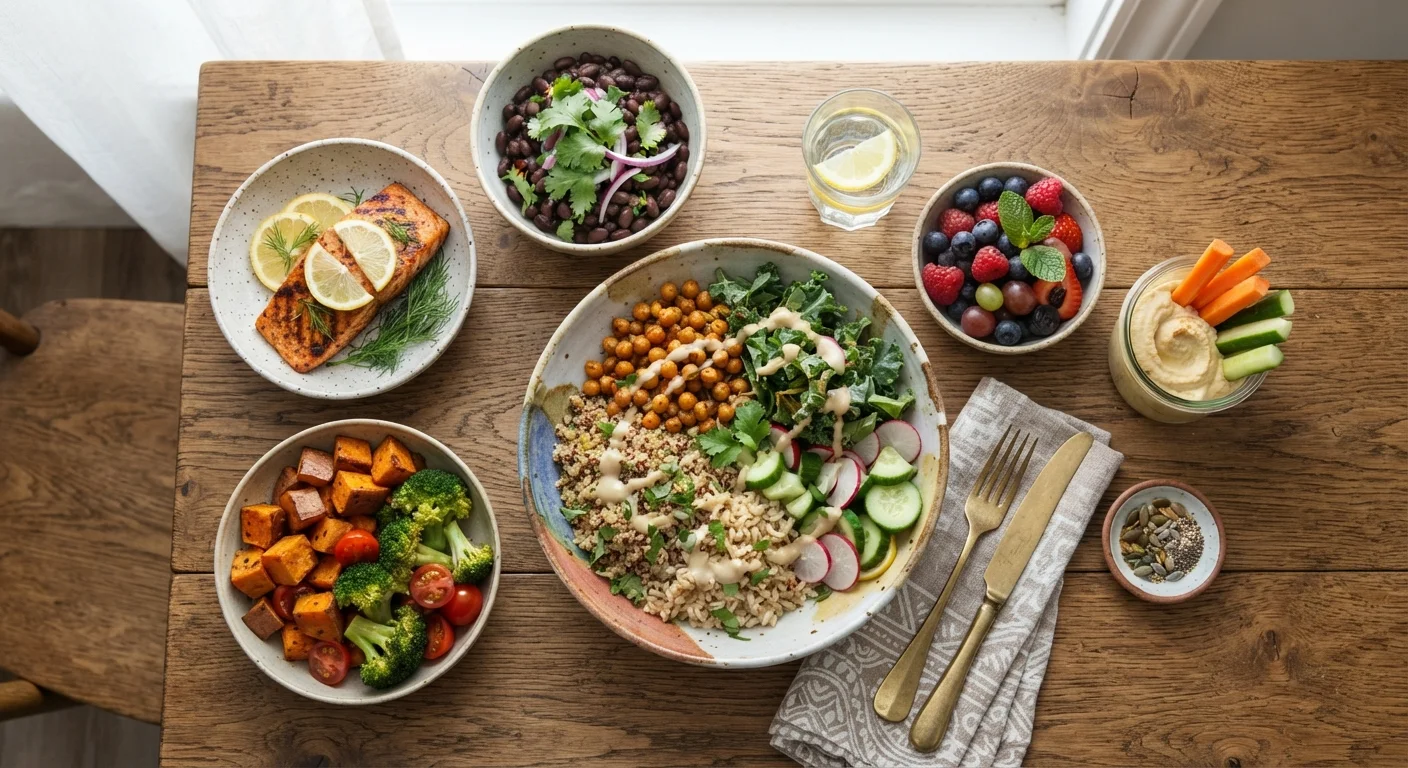
In practical terms, this means meals that regularly feature vegetables and fruits, whole grains, quality protein sources (animal or plant-based), and healthy fats — without consistently over-relying on any one category. For a deeper look at how each macronutrient contributes, see our macronutrients explainer.
90%
Americans not meeting vegetable intake recommendations
According to the Dietary Guidelines for Americans, roughly 90% of U.S. adults consume less than the recommended amount of vegetables — a key indicator of dietary imbalance.
5+
Major food groups in evidence-based dietary patterns
Leading nutritional frameworks, including MyPlate (USDA), identify at least five distinct food group categories whose combined intake contributes to nutritional adequacy.
30+
Essential micronutrients needed for basic body function
The human body requires more than 30 vitamins and minerals to support processes like immune function, bone health, and metabolism — underscoring why dietary variety matters.
What Balance Looks Like in Practice
Balance isn't achieved meal-by-meal — it's a pattern that plays out over days and weeks. A lunch of only white rice isn't inherently problematic if the rest of the day includes vegetables, protein, and healthy fats. Nutrition researchers call this the dietary pattern approach, and it's the framework behind most major national guidelines.
A simple visual heuristic: aim for roughly half your plate to be vegetables and fruit, a quarter whole grains or starchy vegetables, and a quarter protein. Add a small amount of healthy fat through cooking oil, nuts, seeds, or avocado. For practical meal-construction strategies, our meal-building guide translates these principles into everyday decisions.
Use Your Plate as a Planning Tool
Rather than counting nutrients at every meal, try using visual proportions as a rough guide: aim for roughly half your plate to be vegetables and fruit, a quarter whole grains, and a quarter protein. This approach — sometimes called the "plate method" — is used by many registered dietitians as a simple starting framework. It doesn't need to be exact to be effective.
Micronutrients — vitamins and minerals — are largely covered when macronutrient variety is sufficient, but specific populations (pregnant individuals, older adults, those with certain health conditions) may have distinct needs. A registered dietitian is the most qualified professional to assess and address those individually.
Common Misconceptions Worth Clearing Up
Several popular ideas about balanced eating don't hold up well under scrutiny:
- "Carbs are bad." Carbohydrates are the body's preferred energy source. The quality and quantity matter more than their presence. Whole grains, legumes, and vegetables are all carbohydrate sources with strong nutritional profiles.
- "A balanced diet means eating everything in moderation." "Moderation" is almost as vague as "balance." Some foods genuinely deserve to be consumed rarely — not because they're forbidden, but because they offer little nutritional value relative to the space they take up in a diet.
- "You need a perfect diet to be healthy." Long-term dietary patterns matter far more than short-term perfection. Consistent, generally nutritious eating — with room for flexibility — is both realistic and effective.
Understanding how food is labeled can also help. Our guide to reading nutrition labels explains what the numbers on packaging actually mean.
“There are no superfoods that alone make a diet healthy, and no single food that can make a diet unhealthy. It's the overall dietary pattern — what you eat consistently over time — that matters most for health.”
— Walter Willett, Professor of Epidemiology and Nutrition, Harvard T.H. Chan School of Public Health
This article is for general informational purposes only and does not constitute medical or nutritional advice. For guidance tailored to your individual health needs, consult a qualified healthcare professional or registered dietitian.
Frequently Asked Questions
No. Balance refers to your overall dietary pattern over days and weeks, not identical meals each day. Variety is actually a key feature — eating a wide range of foods helps ensure you get the full spectrum of nutrients your body needs.
Yes. Plant-based diets can be fully balanced when thoughtfully planned. Nutrients like protein, iron, calcium, and vitamin B12 require more intentional sourcing from plant foods, but they are achievable. See our <a href="/health-wellness/nutrition/plant-based-eating-a-grounded-introduction-for-the-nutritionally-curious">introduction to plant-based eating</a> for practical guidance.
A useful self-check is whether your meals regularly include a variety of vegetables, fruits, whole grains, protein sources, and healthy fats. For a personalized assessment, a registered dietitian can evaluate your intake and identify any gaps.
Not necessarily. Dietary balance is determined by your overall pattern, not individual choices. Occasional treats can coexist with a healthy diet. The concern arises when calorie-dense, low-nutrient foods consistently crowd out more nutritious options.
Most people meeting their nutritional needs through food don't require supplements. However, certain populations — such as pregnant individuals, older adults, or those with specific health conditions — may have documented needs that benefit from supplementation. Always consult a healthcare professional before starting any supplement.
The content on this site is for informational purposes only and is not a substitute for professional advice. Always consult a qualified professional for guidance specific to your situation.