

Our Verdict
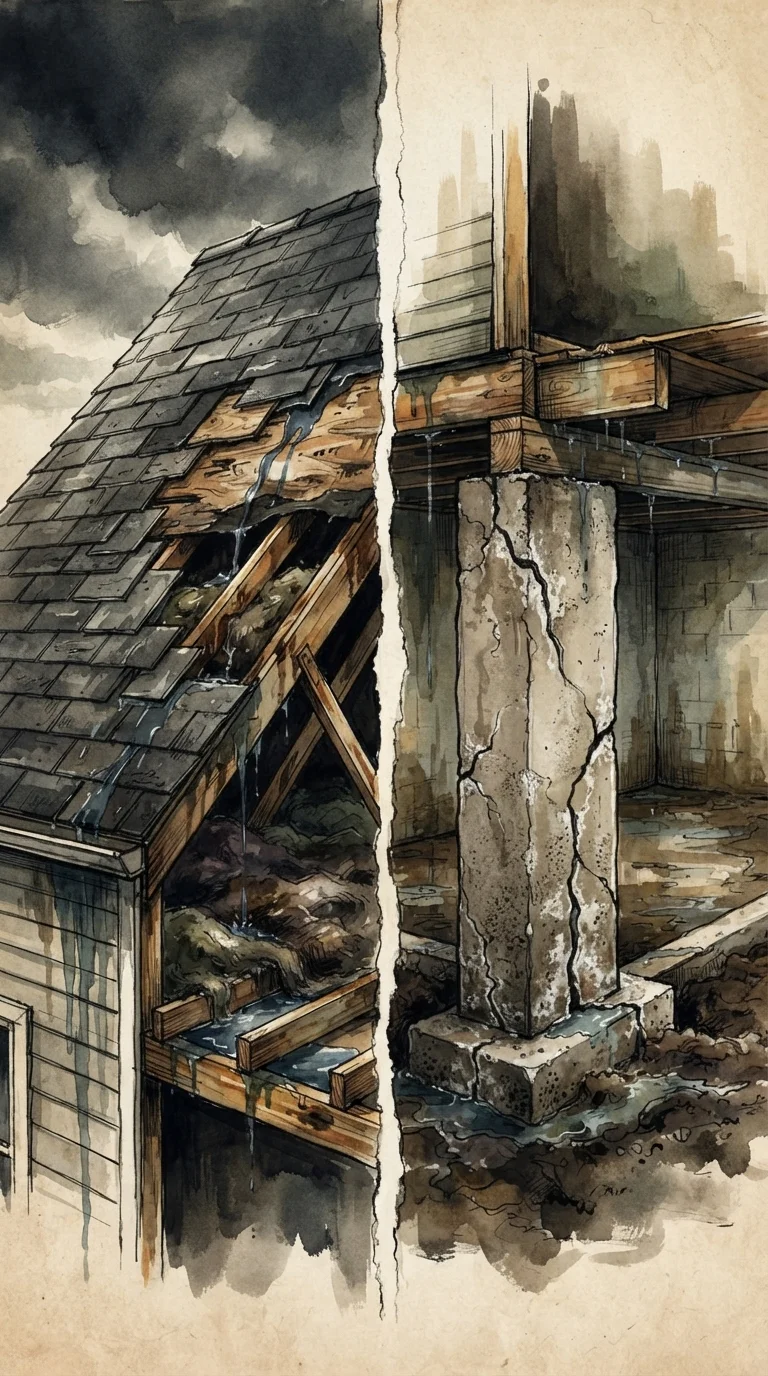
Foundation repairs generally take precedence when both systems need attention, because a failing foundation puts the entire structure — and every other repair you make — at risk. However, an actively leaking roof that is driving water into the home can quickly become just as destructive, and in some cases should be stabilised first. The right answer depends on severity, progression rate, and your specific home.
Homeowners facing competing repair needs on a tight budget who want a clear, evidence-based framework for deciding where to act first.
Why the Order of Repairs Matters
Facing two failing systems with one repair budget is one of the most stressful positions a homeowner can be in. The instinct is often to fix the most visible problem first — but visibility is rarely a reliable measure of urgency. A roof with missing shingles is obvious; a foundation crack that is slowly widening may be nearly invisible from inside the house.
The core question is not which repair costs more, but which failure will cause the most additional damage if left unaddressed. When you understand each system's role in protecting the home, the decision becomes more rational and less overwhelming. If you are planning a broader renovation, a clear-eyed renovation overview can help you sequence work more effectively before spending a dollar.
The Case for Foundation First
The foundation is literally what everything else rests on. When it shifts, settles unevenly, or cracks under hydrostatic pressure, the effects ripple through the entire structure: doors and windows that no longer close properly, floors that slope, interior walls that crack, and in severe cases, load-bearing walls that lose support.
Beyond structural risk, foundation problems tend to accelerate. A small crack caused by soil movement or water infiltration can widen significantly over a single freeze-thaw cycle. Repairing a roof over a shifting foundation may mean that repaired roof ends up misaligned within years — wasting money you could not afford to spend twice. Moisture entering through a compromised foundation also creates conditions for mould growth, which carries its own remediation costs.
When the Roof Should Come First
There are real scenarios where a deteriorating roof earns top priority. If water is actively entering the living space — soaking insulation, pooling on subfloor materials, or running down interior walls — that moisture will reach the foundation eventually. Water damage compounds rapidly: saturated wood invites rot and pests; wet insulation loses its thermal value and becomes a mould medium.
A partial fix is sometimes the right move when budgets are tight. Emergency roofing measures — replacing a section of shingles, sealing flashing, or installing temporary membrane patches — can stop active water entry at relatively low cost while you save for the larger repair. This triage approach buys time without committing to full replacement prematurely.
For guidance on knowing when a job genuinely needs professional hands versus a careful DIY approach, see this framework for evaluating each job.
How to Make the Call for Your Home
No framework replaces an on-site assessment, but these four factors help homeowners think clearly before the contractor arrives:
- Rate of progression: A crack that has been stable for five years is far less urgent than one that has visibly widened in three months. Ask inspectors for their assessment of active versus dormant movement.
- Water entry: Any penetration allowing liquid water into the structure is an active emergency, whether at the roof or foundation level.
- Downstream consequences: Which failure, left another six months, will damage more secondary systems? A failing foundation can invalidate a new roof; a leaking roof can accelerate foundation soil saturation.
- Permit and code requirements: Some structural repairs require permits and licensed contractors by local code. Verify requirements with your local building department before planning the sequence.
25–40%
Additional cost when foundation repairs are delayed
Industry estimates from structural engineering organisations suggest that deferred foundation repairs commonly increase in cost by 25 to 40 percent as secondary damage accumulates.
24–48 hrs
Time for mould growth to begin after water intrusion
According to the U.S. Environmental Protection Agency, mould can begin growing on wet building materials within 24 to 48 hours of water exposure.
Moisture damage is a common thread connecting both systems. Understanding how waterproofing failures escalate elsewhere in the home reinforces why stopping water entry — wherever it occurs — is the highest-leverage repair a homeowner can make. For help thinking through repair costs relative to your overall budget, practical budgeting guidance can provide a useful starting framework.
The content on this site is for informational purposes only and is not a substitute for professional advice. Always consult a qualified professional for guidance specific to your situation.