

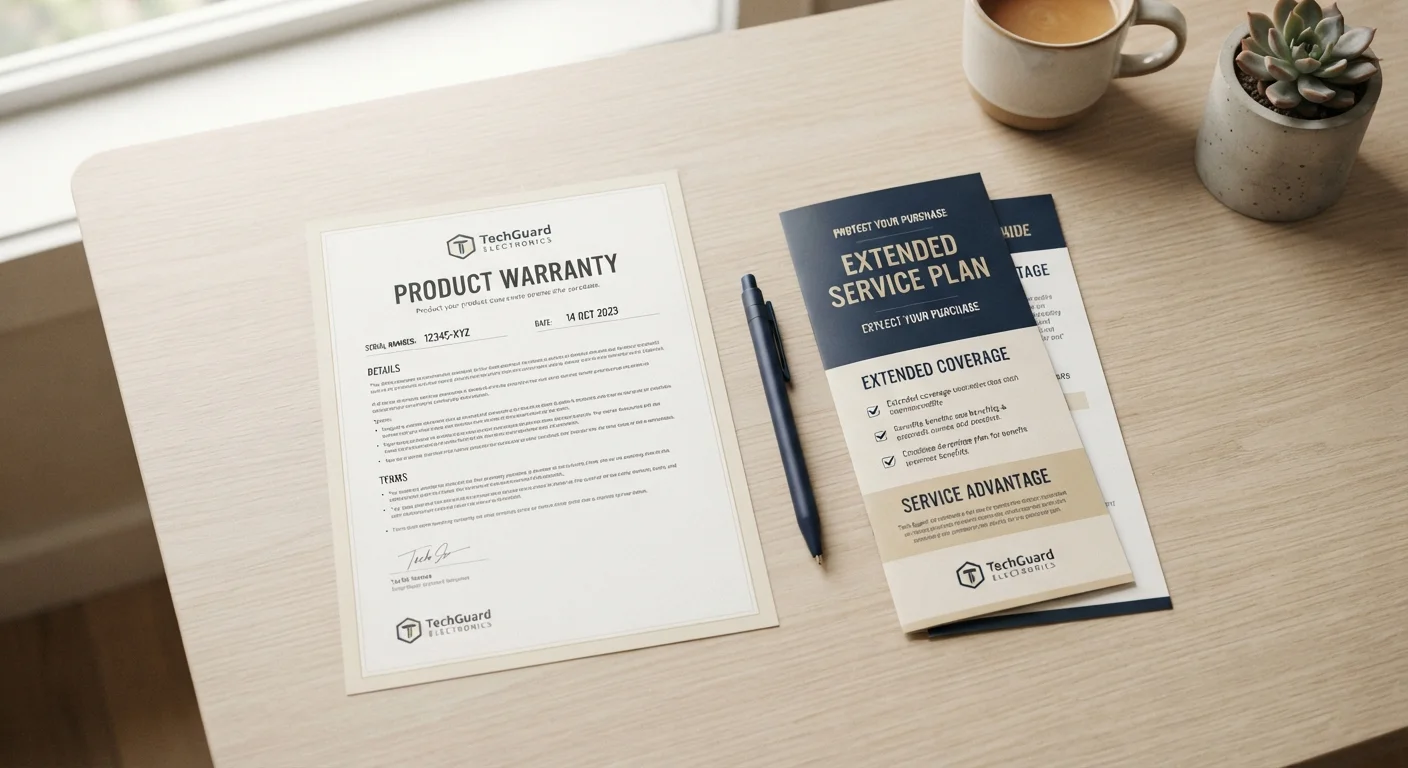
Option A
Manufacturer Warranty
The factory-backed promise included with your purchase.
Best for: Buyers who want baseline, no-cost protection against defects in materials and workmanship from day one.
Option B
Extended Warranty (Service Plan)
An optional, paid protection layer that kicks in after factory coverage lapses.
Best for: Buyers seeking longer protection on high-cost items, though the value depends heavily on plan terms and provider reliability.
What Each Warranty Actually Is
A manufacturer warranty — sometimes called a factory or limited warranty — is a written promise from the company that made the product. It comes bundled with the purchase at no extra charge and generally covers defects in materials or workmanship for a defined period. The maker stands behind the repair or replacement obligation directly.
An extended warranty is a separate contract, purchased independently, that provides repair or replacement coverage beyond — or sometimes overlapping with — the original factory period. Despite being marketed as "warranties," these are legally service contracts in most U.S. states, governed by contract law rather than warranty law. They may be sold by the original manufacturer, a retailer, or a third-party administrator. That distinction matters because it affects who you're relying on to honor the promise.
Understanding what a warranty actually covers — and excludes — is essential before assuming either type protects you fully.
| Criterion | Manufacturer Warranty | Extended Warranty (Service Plan) |
|---|---|---|
| Cost to buyer | Included in purchase price | Separate, additional cost |
| Who backs it | The product manufacturer | Retailer, manufacturer, or third party |
| Typical duration | 1–3 years (varies by category) | 1–5+ years beyond factory period |
| Coverage trigger | Manufacturing defects only | Varies by contract terms |
| Accidental damage | Generally excluded | Sometimes included (check terms) |
| Normal wear and tear | Excluded | Usually excluded |
| Regulated under | Federal warranty law (Magnuson-Moss) | State contract or insurance law |
| Transferability | Often transferable to new owner | Varies widely by contract |
Coverage, Duration, and Who Backs the Promise
Manufacturer warranties typically run one to three years for consumer electronics and appliances, though some categories — like vehicles — can extend to five years or more for powertrain coverage. Coverage is usually limited to manufacturing defects; it excludes accidental damage, misuse, and normal wear and tear.
Extended plans vary far more widely. Some begin the day you buy them (creating overlap with the factory period), while others activate only after manufacturer coverage ends. Coverage can range from comprehensive "bumper-to-bumper" style protection to narrow plans covering only specific mechanical failures. Critically, the financial strength and claims practices of the plan administrator determine whether the promise is worth the paper it's printed on.
~55%
Consumers who rarely or never use extended plans
Consumer Reports surveys have consistently found that a majority of extended warranty purchasers never file a claim, suggesting limited average value for lower-failure-rate products.
40–80%
Retailer margin on extended service plans
Industry analysts estimate retailers retain a large share of extended warranty revenue, reflecting how plan pricing is often structured relative to actual claims paid.
For used or certified pre-owned vehicles, the question of remaining manufacturer coverage is especially worth investigating. Our guide on new, used, and certified pre-owned differences covers how warranty transfer and CPO programs work in practice.
Reading the Fine Print Before You Decide
The most common consumer mistake with extended plans is assuming coverage is broader than it is. Exclusions for pre-existing conditions, cosmetic damage, and parts deemed "consumable" can substantially narrow what's actually covered. Some plans also require repairs only at authorized service centers, which can limit convenience.
Before purchasing any extended plan, confirm: the deductible per claim (if any), whether coverage is parts-only or includes labor, the cancellation and refund terms, and the dispute resolution process. A plan with binding arbitration clauses may limit your legal options if a claim is denied.
Warranty terms decoded is a useful reference for parsing the exact language you'll encounter. And if you're about to make a significant purchase, the pre-purchase verification checklist covers warranty review alongside other due diligence steps.
Federal Law and Warranty Disclosure
In the United States, the Magnuson-Moss Warranty Act requires that written warranties on consumer products costing more than $15 be made available before purchase and labeled as either "full" or "limited." This law applies to manufacturer warranties but does not cover service contracts, which are governed separately. Understanding that distinction helps you know what legal baseline applies to each type of protection you're evaluating.
For refurbished or open-box items, always clarify whether any manufacturer warranty applies at all before evaluating whether an extended plan adds genuine value.
The content on this site is for informational purposes only and is not a substitute for professional advice. Always consult a qualified professional for guidance specific to your situation.