

Our Verdict
Subscription models offer real convenience and genuine savings when the service matches consistent use. The structural risks — silent renewals, cancellation barriers, and trial-to-paid conversion — are predictable once you know what to look for. The agreement terms rarely work in the consumer's favor by accident; they're crafted to reduce churn.
Best suited to consumers who actively audit their recurring charges, read cancellation terms before signing up, and match a subscription to a genuine, ongoing need rather than a one-time want.
How Subscription Agreements Are Actually Structured
A subscription is a recurring billing agreement, not a one-time purchase. When you enter payment details and click "Start My Free Trial" or "Subscribe," you are authorizing future charges at a set interval — weekly, monthly, or annually — until you actively cancel. That distinction matters enormously.
Most subscription agreements invoke negative option billing: your silence is treated as ongoing consent. The Federal Trade Commission (FTC) requires that negative option terms be clearly disclosed before a consumer submits payment, but "clearly disclosed" and "easy to notice" are not the same thing. The disclosure is often buried in dense terms-of-service text or presented in light gray font beneath a prominent sign-up button.
For context on how similar fine-print mechanics work in other recurring agreements, see how lease agreements work — the pattern of consequential terms appearing in low-visibility locations is consistent across contract types.
State-Level Auto-Renewal Protections
Several states — including California, New York, and Illinois — have enacted auto-renewal laws that go beyond federal minimums. These may require affirmative consent before a free trial converts, clearer disclosure of renewal terms, and easier cancellation mechanisms. Requirements vary by state and by service type, so check your state attorney general's website for specifics applicable to your situation.
The Mechanics of Free Trials and Auto-Renewals
Free trials are acquisition tools, not gifts. A company offering a 30-day free trial expects a portion of users to forget to cancel — that's part of the business model. Key mechanics to understand:
- Billing authorization on signup: Your card is verified (and sometimes charged a $0 or $1 authorization hold) the moment you enter it, not when the trial ends.
- No renewal reminder by default: Companies are not legally required in most states to notify you before a trial converts. Some do as a goodwill gesture; many don't.
- Annual vs. monthly pricing traps: Switching to an annual plan locks in a longer commitment and often comes with a more complex refund policy if you change your mind mid-cycle.
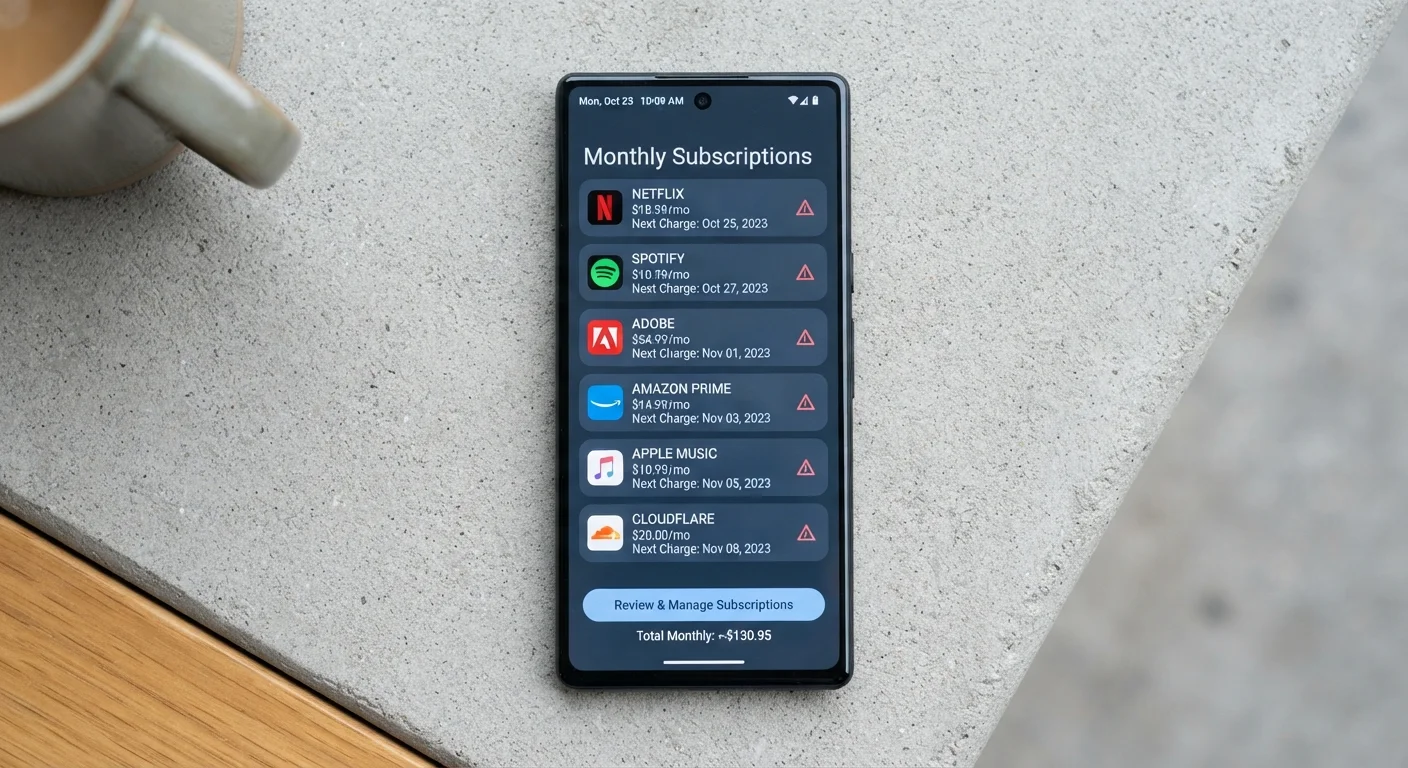
These costs can compound quickly. Auto-renewing subscriptions are among the most common hidden costs consumers routinely underestimate in their monthly budgets.
$91/mo
Average consumer underestimate of subscription spend
A 2022 C+R Research survey found consumers estimated spending about $86/month on subscriptions but actually spent closer to $219/month on average.
42%
Subscribers unaware of all active subscriptions
The same C+R Research survey found nearly half of respondents had active subscriptions they had forgotten about entirely.
Pros and Cons of Subscription Services
Subscriptions aren't inherently bad — they suit genuine ongoing needs well. The problems arise when the structure prioritizes retention over transparency.
Lower upfront cost than lump-sum purchases
Spreading cost over time makes software, media, and services accessible without a large initial outlay, which is genuinely useful for budget-constrained consumers.
Automatic access to updates and new features
Software and streaming subscriptions typically include ongoing improvements without additional charges, reducing the cost of staying current.
Flexibility to scale or pause in some cases
Some services allow pausing, downgrading, or upgrading a plan mid-cycle, offering more adaptability than a permanent purchase.
Bundled value when you use multiple features
If a subscription bundles several services you'd otherwise pay for separately, the per-feature cost can be meaningfully lower.
Silent renewals drain budgets over time
A $12/month charge feels minor at signup but totals $144 annually — and multiple forgotten subscriptions compound this effect significantly.
Cancellation is deliberately made difficult
Multi-step cancellation flows, save-the-sale offers, and phone-only options are designed to increase the chance you'll give up and stay subscribed.
Price increases can occur mid-subscription
Most agreements allow the company to raise prices with notice (often 30 days by email), meaning the rate you signed up at may not hold indefinitely.
You don't own what you're paying for
Unlike a one-time purchase, a subscription gives access rights that end the moment you stop paying — content, files, or features can disappear on cancellation.
Trial terms are designed to convert, not inform
Free trials are structured to maximize conversion by making opt-out harder than opt-in, not to give consumers a fair evaluation period.
Cancellation: What the Process Is Designed to Do
Cancellation friction is a studied, intentional design pattern. Common barriers include requiring a phone call (during limited hours), presenting multiple "are you sure?" screens with discounted offers, hiding the cancel option inside nested account menus, or only allowing cancellation via written mail for certain services.
The FTC's updated Negative Option Rule (finalized in 2024) includes a "click-to-cancel" provision requiring that cancellation be as easy as sign-up. However, enforcement timelines and compliance vary, so you should not assume a service follows this standard yet.
Practical steps that reduce exposure: use a virtual card number with a spending cap for trials, calendar the renewal date immediately after signing up, and screenshot confirmation of cancellation. If an unauthorized charge persists after documented cancellation, a chargeback may be appropriate — though it should be a last resort, not a first move.
Subscriptions also represent a category of post-purchase costs that rarely appear in a product's sticker price, making them easy to overlook until they accumulate.
The content on this site is for informational purposes only and is not a substitute for professional advice. Always consult a qualified professional for guidance specific to your situation.