

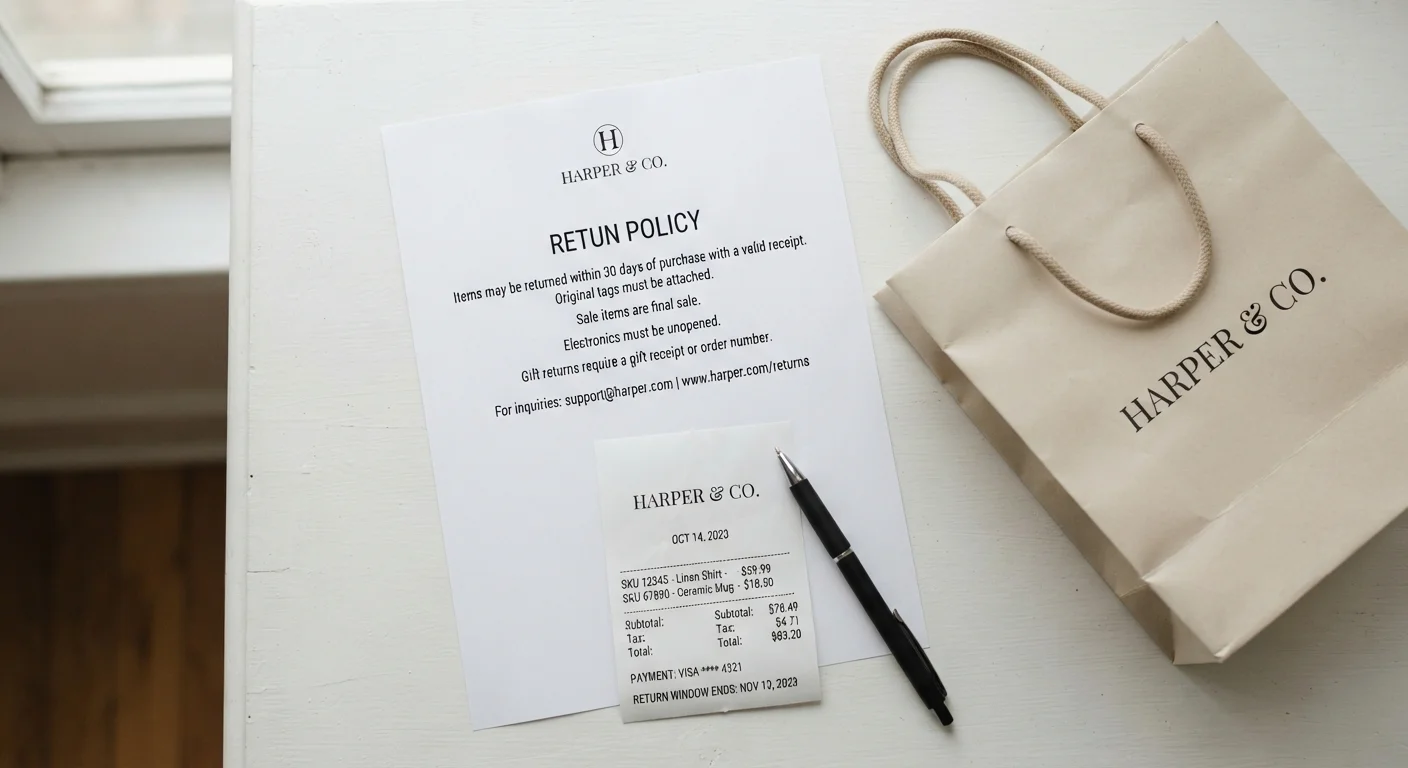
The Anatomy of a Return Policy
Every retail return policy contains a handful of core variables, and understanding each one prevents unpleasant surprises. The key elements to locate before you buy are:
- Return window: The number of days you have to initiate a return. Windows range from as short as 14 days to as long as a year for certain membership programs. The window typically starts at the date of purchase — not delivery — which matters for online orders.
- Item condition requirements: Most policies require original packaging, tags attached, and an unmodified product. Some retailers use broad language like "unused" or "in sellable condition" that gives them discretion to reject returns.
- Proof of purchase: A receipt, order confirmation email, or account record is almost universally required. Without it, even a legitimate return becomes difficult.
- Restocking fees: A percentage deducted from your refund — common on electronics, appliances, and large furniture. Fees typically run 10–25% of the purchase price and are disclosed in fine print that most consumers skip.
- Return method and cost: Who pays for return shipping, and how do you initiate the process? Many online retailers now charge for return labels or require drop-off at specific locations.
These variables combine to determine the real cost of a return. Knowing them upfront — rather than after you open the box — is what separates an informed shopper from a frustrated one. See our pre-purchase checklist for a broader set of questions worth asking before committing.
Online vs. In-Store Return Rules May Differ
Many retailers maintain separate return policies for online and in-store purchases, even for the same items. A product bought online may not be returnable in-store, or may carry a different window or fee structure. Always verify which policy applies to your purchase channel before completing an order.
Where Return Policies Commonly Fail Shoppers
Return policies are written by retailers, for retailers. Several structural patterns consistently catch consumers off guard:
Shrinking Windows on Sale Items
Items purchased during promotional events often carry shortened return windows — sometimes half the standard timeframe. This is rarely flagged at checkout and is easy to miss in the policy.
The 'Final Sale' Category Creep
What started as a label for deeply discounted clearance goods has expanded. Retailers increasingly apply 'final sale' to entire product categories — swimwear, jewelry, intimate apparel, and digital downloads — regardless of price. Understand that this restricts discretionary returns; it does not eliminate your rights if the item is defective. Learn where the legal line falls for 'all sales final' situations.
Restocking Fees Buried in Fine Print
A 20% restocking fee on a $600 appliance costs you $120 before you've received a penny back. These fees are legal when disclosed — but disclosure is often relegated to a policy page few consumers read before purchase. Restocking fees are one of several costs that quietly inflate what you actually spend.
Online Return Friction
E-commerce returns involve more steps: generating a label, repackaging, dropping off or scheduling pickup, and waiting for the retailer to receive and inspect before issuing a refund. Each step creates opportunity for delay, dispute, or denial. Some retailers now charge $5–$10 per return label — a cost that didn't exist a few years ago.
Screenshot the Policy at Time of Purchase
Retailers can update their return policies at any time, and the version in effect when you bought governs your return rights. Take a screenshot or save a PDF of the return policy page immediately after checkout. This simple step gives you documented evidence if a dispute arises later.
What the Law Actually Guarantees
Return policies are largely voluntary — retailers set their own rules. But consumer protection law does establish a floor that policy language cannot undercut:
- Defective goods: If a product doesn't work as described or has a material defect, you typically have legal remedies beyond what the return policy states — regardless of whether the window has closed or the item is marked 'final sale.'
- Misrepresentation: If a product was materially different from how it was advertised, consumer protection statutes (which vary by state) generally entitle you to a remedy.
- FTC Mail Order Rule: For purchases made by mail, phone, or online, the FTC requires merchants to ship within the promised timeframe or give you the option to cancel for a full refund.
- Credit card chargebacks: If a merchant refuses a legitimate return for a defective item, disputing the charge with your card issuer is a parallel remedy — not a replacement for knowing your statutory rights.
Understanding your baseline legal protections is just as important as reading any individual store's policy. For items that came with a manufacturer's promise, warranty terms are a separate but related layer of protection worth decoding.
~17%
Average retail return rate in the US
According to the National Retail Federation's 2023 consumer returns report, approximately 17% of total retail purchases were returned — representing hundreds of billions of dollars annually.
10–25%
Typical restocking fee range
Restocking fees on electronics, appliances, and opened software commonly fall in this range, per retailer policy disclosures reviewed across major US chains.
For a detailed look at which return policy terms signal trouble from the start, see return policy red flags every shopper should recognise.
“Consumers often assume a store's posted return policy is the final word. In reality, statutory protections for defective or misrepresented goods exist independently — and can entitle shoppers to remedies even when the policy says otherwise.”
— Consumer Protection Policy Analysts, Consumer advocacy and retail policy research community
Frequently Asked Questions
Yes — for change-of-mind returns, retailers can set their own rules, including no-refund policies. However, they cannot deny a remedy if goods are faulty, unsafe, or significantly different from how they were described. State consumer protection laws and FTC regulations provide a baseline that store policy cannot override.
'Final sale' means the retailer won't accept discretionary returns. It does not eliminate your statutory rights. If an item is defective or was materially misrepresented, you may still be entitled to a refund or remedy regardless of a 'final sale' label.
Yes, restocking fees are generally legal as long as they are disclosed before purchase. The problem arises when they're buried in fine print. Always search for restocking fee language before completing a transaction, especially on electronics and appliances.
Some credit cards include return protection as a cardholder benefit, reimbursing you when a merchant won't accept a return within a set period. Coverage limits and eligibility vary by card issuer, so check your specific card's benefits guide.
Start by escalating to a supervisor and citing your statutory rights if the item is defective. If that fails, dispute the charge with your credit card issuer (if applicable), file a complaint with your state attorney general's consumer protection office, or contact the FTC.
It depends on the retailer's specific policy. Many start the clock at purchase date, which can shortchange online shoppers who wait for shipping. Always check whether the policy explicitly references delivery date and factor that in when ordering.
The content on this site is for informational purposes only and is not a substitute for professional advice. Always consult a qualified professional for guidance specific to your situation.