

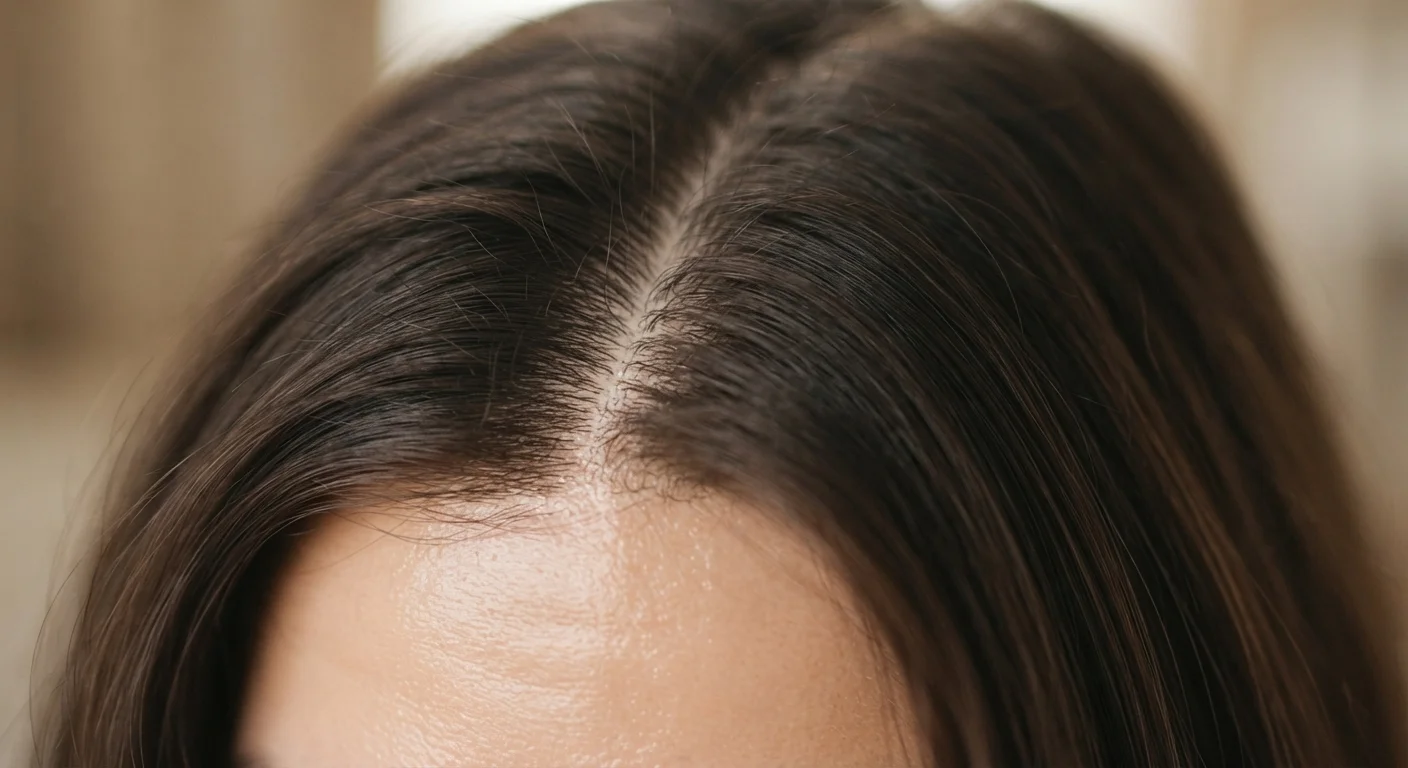
Why the Scalp Is the Starting Point
Most haircare marketing focuses on the strand - shine serums, strengthening treatments, split-end repairs. But the strand itself is dead tissue. It cannot repair from within, regrow, or respond to products the way living cells can. The living part of your hair is entirely underground, inside the follicle, which sits in the dermis layer of your scalp skin.
Each follicle cycles through growth phases - anagen (active growth), catagen (transition), and telogen (rest and shedding). The quality and duration of these phases are influenced by the scalp's health: its circulation, its inflammatory state, its sebum balance, and the microbial ecosystem living on its surface. When that environment is off, the follicle feels it first - and the strand reflects it weeks or months later.
This is why the framing matters. Scalp health is not a separate concern from hair health. It is hair health, just upstream of what you can see.
Hair Growth Is a Long-Cycle Process
Changes at the follicle level - whether positive or negative - take time to become visible at the strand. Because hair grows roughly half an inch per month on average, what you see at the ends today reflects scalp conditions from months ago. This means scalp improvements won't show dramatic results overnight, and patience is part of realistic expectations.
What a Healthy Scalp Actually Looks Like
A healthy scalp is comfortable - not itchy, not tight, not greasy within hours of washing. Its surface should be free from visible scaling, redness, or open irritation. Sebum production keeps it from drying out without creating excess buildup that suffocates follicle openings.
The scalp also hosts a complex microbiome - a community of bacteria and fungi that, when balanced, support barrier function and help regulate inflammation. Malassezia, a yeast naturally present on most scalps, only becomes problematic when it proliferates beyond normal levels, leading to dandruff or seborrheic dermatitis. Disrupting the microbiome through over-washing, harsh surfactants, or repeated antibiotic use can tip that balance.
Understanding your scalp's tendencies - oily, dry, reactive, or balanced - shapes what kind of care it actually needs. This connects closely to broader questions about your hair's physical properties. Hair typing systems can offer useful context, but scalp type is a separate variable worth paying attention to on its own.
~100,000
Average number of hair follicles on the human scalp
Each follicle is an independent structure embedded in the scalp dermis, capable of cycling through growth phases independently throughout a person's lifetime.
2-6 years
Typical duration of the hair growth (anagen) phase
The length of this active growth phase - and therefore how long hair can grow - is influenced by both genetic factors and the health of the follicle's immediate environment.
50-100
Strands shed per day considered normal
According to general dermatological guidance, shedding within this range reflects normal follicle cycling; consistently higher counts may warrant evaluation.
Common Scalp Conditions That Affect Hair Quality
Several scalp conditions directly interfere with normal follicle function. Seborrheic dermatitis causes chronic inflammation that, over time, can affect hair density. Folliculitis - infection or inflammation of individual follicles - can cause localized hair loss if left untreated. Psoriasis on the scalp creates thick plaques that may restrict follicle activity in affected areas.
Even less dramatic imbalances matter. Excess sebum production can create a film that interferes with the follicle environment; chronic dryness can trigger inflammation; product buildup can physically block follicle openings. None of these are cosmetic nuisances - they're physiological disruptions to the structure that produces your hair.
It's also worth noting that internal factors shape the scalp just as much as external ones. Nutrient availability is a genuine variable - nutritional deficiencies can show up in hair and scalp changes, and addressing them is part of the picture.
When to Escalate Beyond Basic Care
If your scalp symptoms - persistent itching, visible flaking, redness, or noticeable shedding - don't improve with straightforward cleansing adjustments over a few weeks, it's worth seeing a board-certified dermatologist. Many scalp conditions are highly treatable once accurately diagnosed, but guessing at the cause and self-treating can delay resolution or make certain conditions worse.
Practical Scalp Care Without the Hype
Caring for the scalp doesn't require a separate ten-step system or a shelf of specialty products. The fundamentals are straightforward: cleanse consistently to remove sebum and buildup, avoid over-stripping the skin barrier with excessively harsh formulas, and pay attention to how your scalp responds over time.
Shampooing is scalp care - and doing it properly means focusing the product on the scalp itself, not primarily on the lengths of the hair. The frequency that works for you depends on your scalp's oil production and activity level. Washing frequency and technique are genuinely influential on scalp condition, not just hair texture.
What the scalp doesn't need: most of what's marketed specifically for it. Expensive scalp serums, growth-boosting elixirs, and detox treatments are rarely supported by strong clinical evidence. If your scalp is functioning well, basic maintenance is sufficient. If it isn't, a dermatologist is more useful than a specialty product line.
For readers building out a broader haircare approach, starting from scratch with a simple routine is often more effective than accumulating products without a clear plan.
This article is for informational purposes only and is not medical advice. If you are experiencing persistent scalp symptoms, hair loss, or other concerns, please consult a qualified healthcare professional or board-certified dermatologist.
Frequently Asked Questions
A dry scalp alone doesn't typically cause permanent hair loss, but chronic scalp inflammation or conditions like seborrheic dermatitis can stress follicles over time. If you notice significant or sudden shedding alongside scalp symptoms, consult a dermatologist rather than self-treating.
Washing frequency depends on your scalp's oil production, activity level, and hair texture. There's no universal rule - the goal is to clear buildup without stripping the scalp's natural barrier. Most people find every 2-4 days works well, but some need daily washing while others can go longer.
Some small studies suggest scalp massage may improve blood circulation to follicles, and one published study noted increased hair thickness with regular massage. However, evidence is still limited, and massage is unlikely to reverse significant hair loss on its own.
Dandruff is typically caused by a yeast-like fungus (Malassezia) and produces oily, yellowish flakes, often with scalp redness. Dry scalp produces smaller, whiter flakes due to lack of moisture. They require different approaches, so distinguishing between them matters before treating.
Yes. Certain ingredients - including heavy silicones, sulfates at high concentrations, and some preservatives - can disrupt the scalp's barrier or microbiome in sensitive individuals. Buildup from styling products can also clog follicle openings if not regularly cleansed.
See a board-certified dermatologist if you experience persistent itching, visible inflammation, unusual or patchy hair shedding, or flaking that doesn't resolve with basic care. Many scalp conditions are treatable, but they require accurate diagnosis first.
The content on this site is for informational purposes only and is not a substitute for professional advice. Always consult a qualified professional for guidance specific to your situation.